The Pumpkin That Wouldn’t Rot

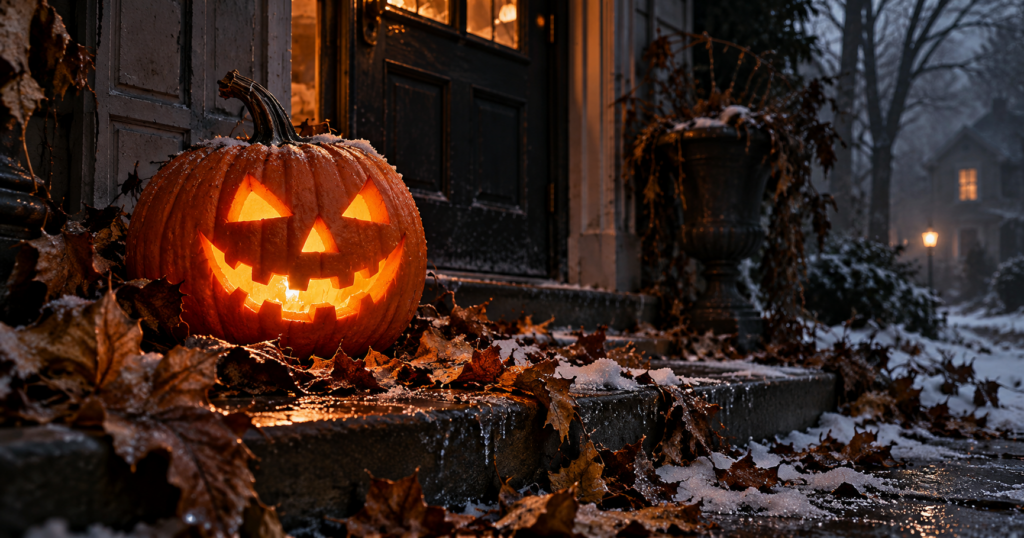
The pumpkin came from a field outside Wrenford where families paid too much money to push wheelbarrows through mud and photograph their children beside hay bales. Sam chose it because it was ugly. One side bulged outward, the stalk bent like a finger, and a pale scar ran from top to bottom where something had scratched it while it was growing. His sister Evie wanted a perfectly round one for the front step. Their father, Daniel, bought both. He had learned that peace sometimes cost the price of a second pumpkin. On Halloween afternoon the kitchen smelled of toasted seeds and wet coats. Evie carved stars into hers. Sam gave his pumpkin an uneven grin with one narrow eye and one large eye, then insisted the scar remain untouched because it made the face look “like it remembers a fight.” Daniel laughed and placed both pumpkins outside. The evening passed normally: doorbell, sweets, children, rain. By midnight the candles had burned down. Evie’s pumpkin sagged slightly at the mouth, already beginning its short journey back to soil. Sam’s sat beside it, scar bright under the porch light.
A week later Daniel carried Evie’s pumpkin to the compost bin. It collapsed when he lifted it, soft underneath and smelling sweetly rotten. Sam’s was still firm. He left it another week, then another. November rain soaked the doorstep. Temperatures dropped. Frost came in thin silver sheets across the cars. The pumpkin did not soften. Its orange skin remained smooth except for the old scar. Even the cut edges of the carved face looked fresh, as if Sam had made them that morning. At first the family treated it as a curiosity. Evie took photographs every few days. Sam named it Captain. Daniel searched online for explanations involving wax coatings, preservatives and unusually low moisture. His wife Leah suggested someone at the pumpkin farm had sprayed the fruit with something. They brought it inside and examined it beneath the kitchen lights. There was no chemical smell. No hidden plastic. It weighed exactly what Daniel remembered, perhaps a little more. When he pressed his thumb against the skin, it felt cool and strangely resistant, almost like pressing against a living muscle.
“Put it back outside,” Leah said. Daniel did. December arrived. The pumpkin survived three hard frosts and one morning of snow. A fox knocked over the recycling bins but left it alone. Birds pecked at the ground around it without touching the exposed flesh of its carved mouth. Sam began checking it before school and saying goodnight to it through the front window. What had started as a joke made Daniel uneasy. He carried the pumpkin to the compost bin one Saturday and placed it on top of a heap of leaves. That night, at two seventeen, something struck the front door hard enough to wake the house. Daniel went downstairs holding the heavy torch he kept beside the bed. He expected teenagers or a fallen branch. Instead, the pumpkin sat squarely on the doormat. Mud streaked its underside. A trail of wet leaves crossed the path from the side gate. Daniel stood looking at it for a long time. Then he opened the compost bin. The lid was still closed. The heap beneath showed a round indentation where the pumpkin had been. No footprints crossed the garden. No marks suggested anyone had climbed the fence.
In January, Sam became ill. Nothing dramatic at first: headaches, tiredness, a cough that lingered. The doctor said viral infection and recommended rest. Then the fever came. Sam slept for fourteen hours, woke confused, and asked why there was a man standing beside his wardrobe. Leah turned on the light. No one was there. At the hospital, blood tests led to more tests, and the family’s world narrowed suddenly to corridors, plastic chairs and words spoken carefully by specialists. Sam had a serious blood disorder. Treatment began within days. The pumpkin remained outside through all of it. Daniel forgot about it until one evening when he returned from the hospital alone to collect clothes. The house felt too quiet. On the step, beneath a dusting of snow, the pumpkin looked exactly as it had on Halloween. Anger rose in him so quickly that he kicked it into the flower bed. It struck the frozen ground and rolled upright. The carved grin faced him. Daniel picked it up with both hands, carried it to the shed and brought down a spade. He intended to split it cleanly in two.
When the blade touched the pumpkin, Sam screamed from three miles away in a hospital bed. Daniel did not know that yet. He only knew the spade bounced from the rind with a shock that travelled into his wrists. His phone rang almost immediately. Leah’s voice was sharp with panic. Sam’s heart rate had suddenly spiked. He had woken crying and said someone had hit him in the chest. Daniel lowered the spade. The pumpkin rested at his feet. For the first time he noticed that the pale scar on its side had darkened. It looked almost purple, like a bruise. He carried it back to the doorstep. After that Daniel kept a private record. When Sam’s temperature climbed, the pumpkin felt warm. When bruises appeared on Sam’s arms from needles and treatment, faint dark patches appeared beneath the pumpkin’s skin. During the worst week, when Sam barely ate and slept under thin hospital blankets, the pumpkin shrank slightly around its carved mouth. Daniel told nobody at first because saying it aloud would make him sound desperate. Eventually he told Leah. She listened without interrupting, then drove home with him and stood in the rain touching the pumpkin with the tips of her fingers. She did not laugh.
Spring came slowly. Sam improved. His blood counts moved in the right direction. He came home in April thin, pale and furious that everyone still treated him like glass. The pumpkin remained on the step, though now it had changed. The skin had lost its colour. Wrinkles gathered around the carved eyes. One side had softened. Sam crouched beside it for a long time. “It’s tired,” he said. On the first warm day of May, the pumpkin finally collapsed. There was no dramatic sound. Daniel opened the front door and found it folded inward on itself, dark and soft, months of decay apparently arriving all at once. Sam was in the kitchen eating cereal. His latest hospital appointment had been the day before. The doctors had used the word remission carefully, with all the qualifications adults attach to hope. They buried the pumpkin at the back of the garden instead of composting it. By late summer, vines appeared over the soil. Daniel had not planted seeds. Neither had Leah. The vines produced one small pumpkin in October, round and bright, with a pale line running down one side. Sam picked it himself. This time he did not carve a face. He placed it on the doorstep whole and set a candle beside it. When trick-or-treaters asked why, he simply said some pumpkins had already done enough.


