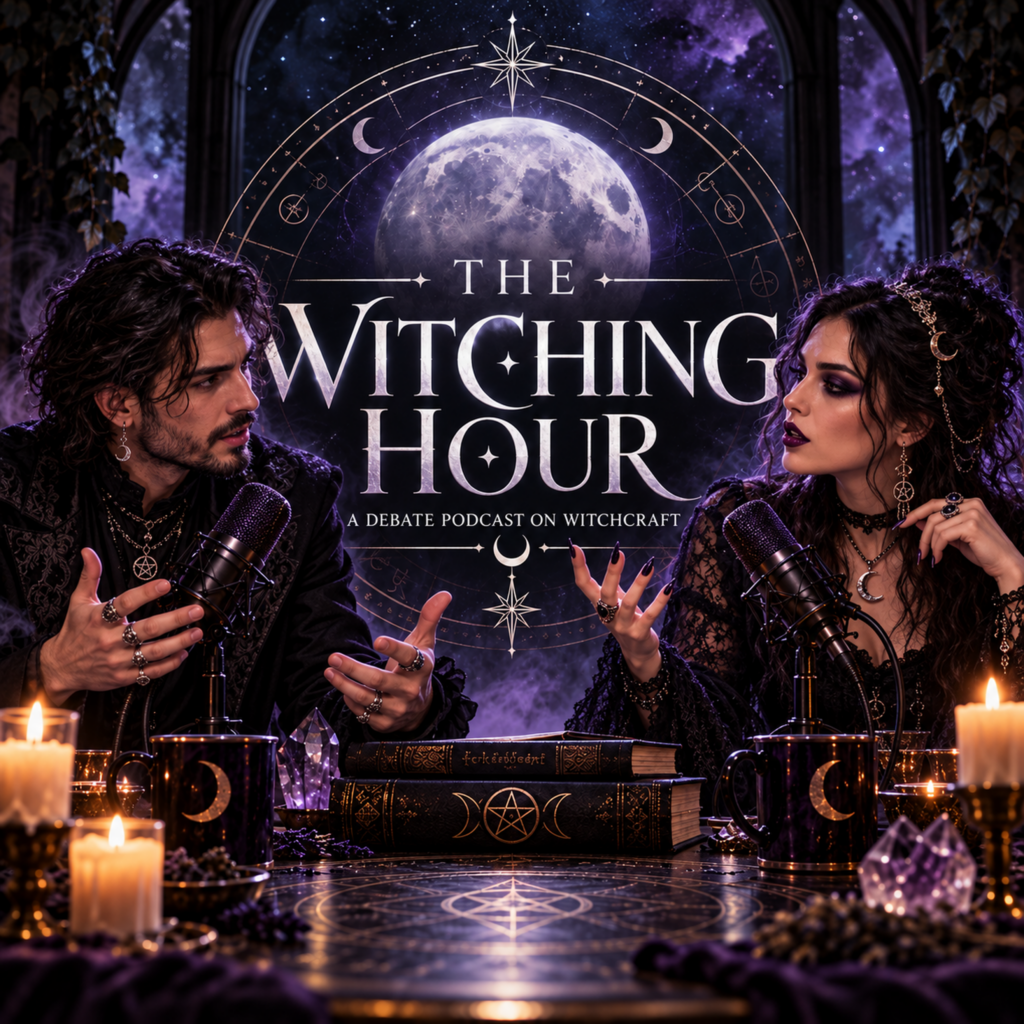
Show notes
In episode 29 of The Witching Hour, Morgana, Adrian and Dr Ellis debate witchcraft as a case study in why freedom of conscience protects diverse spiritual lives. The discussion makes a constructive case for witchcraft while testing its limits and separating practical value from unsupported certainty.
In this episode: People should not need majority approval for a spiritual practice to deserve basic freedom, provided they respect the rights and safety of others; Witchcraft demonstrates why outward appearance is a poor test for legitimacy: candles, pentacles or unusual language can look threatening to outsiders while functioning peacefully for practitioners; Pluralism requires reciprocity; Workplaces and schools benefit from viewpoint-neutral rules: safety, conduct and scheduling standards should apply consistently rather than singling out unfamiliar religions; Freedom of conscience includes the right to change one’s mind, combine influences, practice privately or leave a tradition altogether.
The Witching Hour distinguishes documented history, research, folklore, personal experience and metaphysical belief. Nothing in the episode is medical, legal or financial advice.