
🌾 July 12 – The Wildflower Offering

Collecting Blooms for Altar and Blessing Rituals
By the twelfth day of July, the world is in full blossom. Hillsides shimmer in hues of gold, violet, and white; meadows hum with bees drunk on nectar; and every path seems softened by petals. The earth, radiant and generous, spills over with wild beauty. Today’s sacred act — The Wildflower Offering — is an ancient gesture of devotion, gratitude, and communion with nature’s living spirit. It is not about possession, but about participation: the mindful gathering of what is freely given, and the heartfelt offering of beauty back to the source of all creation.
To gather wildflowers is to walk through the world as a pilgrim, not a collector. It is to recognize that every blossom holds a story, every scent carries a memory of sunlight and soil. In Pagan traditions across the world, flowers have always been more than decoration; they are the living prayers of the Earth. The Celts saw them as the laughter of the land — fleeting but potent expressions of joy. The Greeks wove them into crowns for gods and heroes, symbols of victory and mortality alike. Indigenous European and Near Eastern traditions honored flowers as offerings to the spirits of place — the unseen guardians of groves, rivers, and stones. To gather them with intention is to engage in one of the oldest forms of devotion: to meet the divine in its simplest, most fragrant form.
Begin your practice of the Wildflower Offering with reverence. Step into the day with open senses. Walk slowly, breathing deeply, feeling the pulse of sunlight through the air. Do not rush to pick the first blooms you see. Instead, pause and listen. The plants will call to you — not in words, but through intuition, color, or feeling. A particular flower may seem to shine brighter or sway toward you. That is invitation, not coincidence. When you feel drawn, approach the plant quietly and place your hand near it without touching. Offer gratitude before you gather. You might say softly: “Spirit of this flower, I honor your beauty and your place in the web of life. May I take what you offer in harmony and respect.”
When you gather, take sparingly — one or two blossoms from each patch, leaving plenty for the bees, the wind, and the future. The Wildflower Offering is not a harvest but a conversation between giver and receiver. Each flower you gather carries the blessing of its landscape: the warmth of the field, the hum of the bees, the murmur of water nearby. Carry them gently in a basket or cloth, as you would carry sacred relics, for in truth, you are.
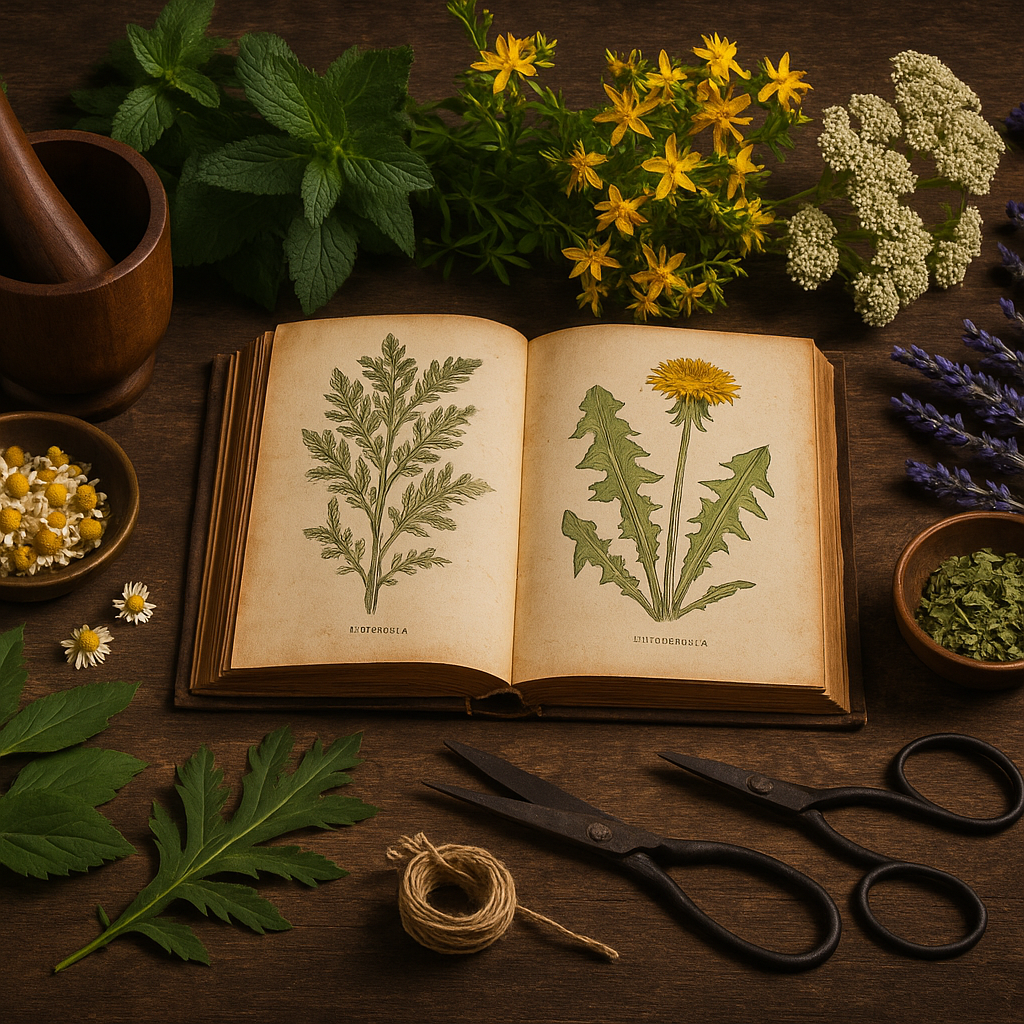
Every flower carries symbolic and energetic meaning, and learning to read them deepens your connection to the spirits of the land. Daisies bring innocence and simplicity, reminding us to find joy in the ordinary. Yarrow offers protection and courage, its feathery leaves a shield against harm. Clover embodies luck and the blessings of the fae. Lavender soothes the mind and purifies energy. St. John’s Wort burns with the power of sunlight, warding off shadows of despair. Wild roses, blooming fierce and fragrant, speak of love that is both tender and strong — love of self, of others, and of the world itself. As you gather, let the diversity of flowers mirror the diversity of blessings in your life.
Once your flowers are gathered, take them home and prepare your offering. Clear a small space — an altar, a windowsill, or even the corner of your garden. Place a cloth or bowl, and lay the blooms upon it in a pattern that pleases you. The act of arranging them is itself a meditation — a ritual of balance and beauty. As you lay each flower down, speak aloud what it represents for you: “For peace,” “For strength,” “For gratitude,” “For love.” Feel the energy of each intention weave together, forming a living tapestry of prayer.
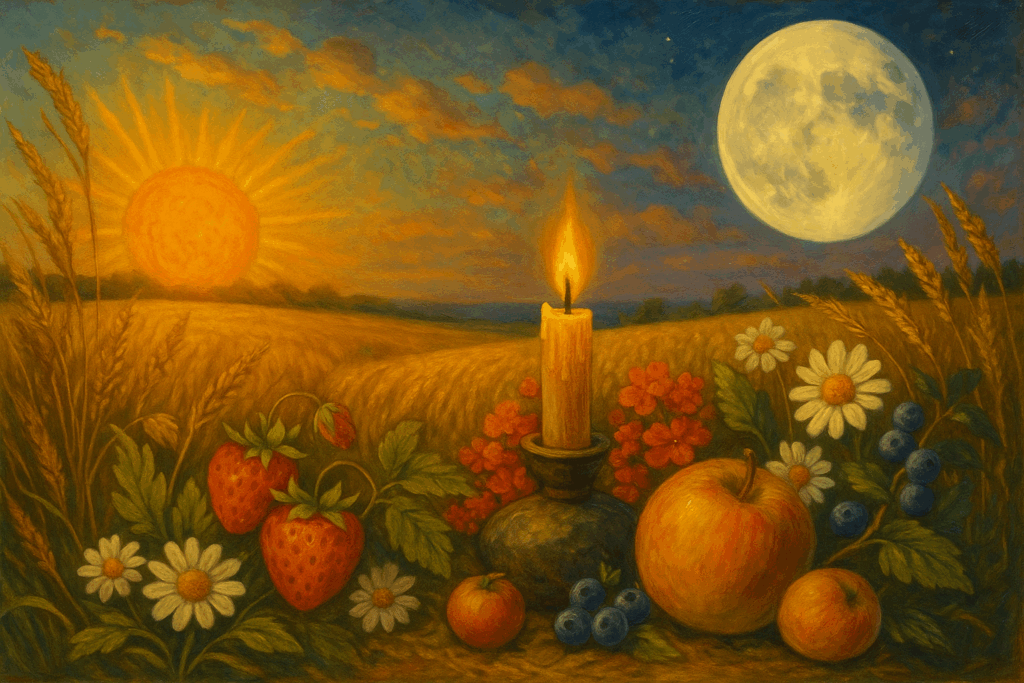
If you wish, you may anoint your flowers with a few drops of water or oil, symbolizing the life force that flows through all things. Light a candle nearby — a small sun — and let its warmth bless the offering. Then, in your own words, give thanks. Thank the Earth for its abundance, the wind for carrying seeds, the rain for nurturing growth, and the unseen spirits for guiding your steps. In doing so, you complete the cycle: receiving and returning, taking and giving, breathing in beauty and breathing out gratitude.
The Wildflower Offering is also a practice of humility. Wildflowers remind us that not all beauty seeks cultivation — some blossoms thrive in the cracks of stones, along forgotten roads, or in places untouched by human care. Their resilience is a lesson in quiet strength and natural grace. When we gather them, we learn to see value in what is unplanned, unpolished, and freely given. In this way, the ritual becomes not only an act of devotion but a reflection on our relationship with the world — how we can live in harmony without dominion, how we can love what is wild without needing to own it.
To extend this ritual, you might weave the flowers into garlands or wreaths. Hanging them over doorways blesses your home with the protection and vitality of nature. Placing them on an altar invites harmony and inspiration. If you dry them, they become charms — reminders of the high summer days when life bloomed at its fullest. Later, when the season turns toward autumn, these dried offerings can be burned in gratitude, releasing their essence back to the air as fragrant smoke — the return of beauty to spirit.
In meditation, visualize yourself standing in an endless meadow beneath a vast blue sky. The flowers ripple like waves around you, each one glowing faintly with its own light. A breeze passes, carrying their scent and voices — a soft chorus of blessing. You kneel, touch the ground, and feel the pulse of life beneath your fingers. In that moment, you understand: every flower is a heartbeat of the Earth, every color a word in its language of joy. And you — the witch, the wanderer, the child of nature — are part of that great song. You need no temple, no grand ritual. You need only presence and gratitude.
When the day fades and the sky burns orange, take your flowers outside once more. Scatter a few petals to the wind or place them in running water. Speak these words:
“As these flowers return to earth and air, so too does my thanks. May beauty ever bloom, and may the Earth be blessed.”
Watch as the petals drift away, carried by the same forces that brought them into being. That is the essence of offering — to let go in love.
The Wildflower Offering teaches us to live as the flowers do: to bloom fully in our season, to give freely of our beauty, and to trust the wind to carry our gifts where they are needed most. In this way, every act of appreciation becomes sacred, every gesture of gratitude becomes magic. The Earth, in her abundance, needs not our possession — only our recognition. And in recognizing her, we remember ourselves: living blossoms in her infinite, wild meadow.
Responses