🌾 July 5 – The Spirit of the Wheat

Honoring Growth and Patience Before the Harvest
As dawn unfurls across the midsummer fields, the world glows gold. Waves of wheat ripple beneath the breeze, each stalk bending gracefully as if bowing in rhythm to an ancient song. There is a quiet majesty to the grain — humble, steadfast, and sacred. Its beauty is not the wild bloom of spring flowers nor the ripe abundance of late summer fruit, but a strength born of endurance. The Spirit of the Wheat embodies patience, perseverance, and the sacred process of becoming. It is the slow, deliberate pulse of life that teaches us to trust the unseen growth beneath the surface. On this day, we honor the growing grain — the embodiment of promise not yet fulfilled, the manifestation of faith that all labor bears fruit in its time.
In nearly every culture, wheat has been a symbol of divine sustenance. It is the grain of civilization, the body of the Earth made manifest, the bridge between survival and spirit. The Egyptians saw it as the gift of Osiris, the resurrected god of the green world. In ancient Greece, it belonged to Demeter, mother of abundance and protector of harvests. The Celts honored it through the first sheaves offered to the land spirits and the Corn Mother, who was said to dwell in the last standing stalk. Even in Christian symbolism, the wheat becomes sacred — transformed into the bread that represents the divine made flesh. Thus, from the earliest dawn of human ritual, this simple grain has carried the same eternal truth: that life renews itself through the cycle of giving, growing, and letting go.
The Spirit of the Wheat teaches us the sanctity of process. Growth takes time, and patience is not passive. Just as the grain must root deep into the soil before it reaches toward the sun, so too must we cultivate inner stability before we can bloom in the outer world. In the fast pace of modern life, we are conditioned to expect immediacy — instant results, rapid success, constant harvest. But the land reminds us that true creation cannot be rushed. There are seasons of sowing, of tending, of waiting. The wheat fields teach us to find peace in that waiting, to trust that beneath stillness, life is unfolding in its quiet way.
To connect with the Spirit of the Wheat, step outside where the earth is open and the wind can be felt. If possible, visit a field of grain — or, if not, hold a handful of seeds or flour in your palms. Close your eyes and imagine the journey each grain has taken: the seed nestled in darkness, the first tender sprout, the long weeks of sun and rain, the steady ascent toward ripening. This is the same journey your own intentions take. Feel gratitude for the unseen forces that sustain that growth — the soil of your efforts, the rain of compassion, the sun of purpose. Whisper softly: “Spirit of the Wheat, teach me patience, teach me trust. May I grow in grace as you do in gold.”
In this midsummer moment, the wheat is not yet ready for harvest. Its green stalks are still maturing, the kernels not yet full. This stage mirrors the spiritual truth of becoming — that there is a beauty and holiness in the almost, in the not yet complete. The Spirit of the Wheat reminds us that transformation is often imperceptible while it is happening. The work we do in silence, the love we nurture behind the scenes, the healing that happens beneath the surface — all of these are the hidden roots that will one day feed our harvest. To rush them is to weaken the yield.
The ritual of honoring the Spirit of the Wheat can be both simple and profound. Begin by creating a small space of offering. A few stalks of dried grass, oats, or wheat — or even a loaf of bread — can represent the living grain. Light a candle of warm gold or amber, symbolizing the sun that nourishes the fields. As the flame steadies, take a moment to reflect on what in your life is still growing. What seeds have you planted that require patience? What parts of your spirit are not yet ready for harvest, but are quietly maturing beneath the surface? Speak these truths aloud. Acknowledge that they are works in progress, and bless them for the stage they are in.
The Spirit of the Wheat also invites gratitude for labor. Every ear of grain that ripens is a testament to effort — of nature’s forces and of human hands. In ancient rites, farmers would bless their tools, the soil, and the spirits of fertility before cutting the first sheaf. Today, we can echo that reverence by honoring the work we do in the world, whatever form it takes. Whether through creative endeavors, acts of care, or personal growth, our labors are extensions of that same sacred cycle of cultivation. When we bless our work, we align ourselves with the rhythm of the earth — a rhythm that balances action with rest, ambition with surrender.
Spiritually, the wheat embodies nourishment — not only of the body, but of the soul. In meditation, visualize yourself standing within a field of tall, golden stalks swaying in the summer breeze. The air hums with warmth and quiet promise. Each movement of the wind carries whispers of ancient wisdom — voices of ancestors who once harvested under the same sun. Feel the energy of the field surround you, pulsing with abundance and patience. Imagine that energy flowing into your heart, grounding you in serenity. You are part of this cycle — a living seed within the great body of the Earth.
In mythology, the cutting of the grain was often seen as a sacred sacrifice. The Corn King, the spirit of the harvest, was symbolically slain so that life might continue. This imagery reminds us that all creation requires surrender — that to be renewed, something must be released. Yet on July 5, the Spirit of the Wheat is not yet ready for that sacrifice. It stands tall, full of life, teaching us to cherish the stage before completion. To honor the wheat now is to honor patience itself, to find reverence in the waiting and gratitude in the tending.
The lesson of this day is gentle but profound: trust the rhythm of your own unfolding. Growth is rarely visible until it bursts suddenly into fruition. The Spirit of the Wheat encourages us to care for our lives as farmers care for their fields — to tend the soil of our thoughts, to nurture with love, and to allow time to do its sacred work. When we walk among the fields, we walk among teachers. Each stalk is a testament to endurance; each kernel is a promise kept by the Earth.
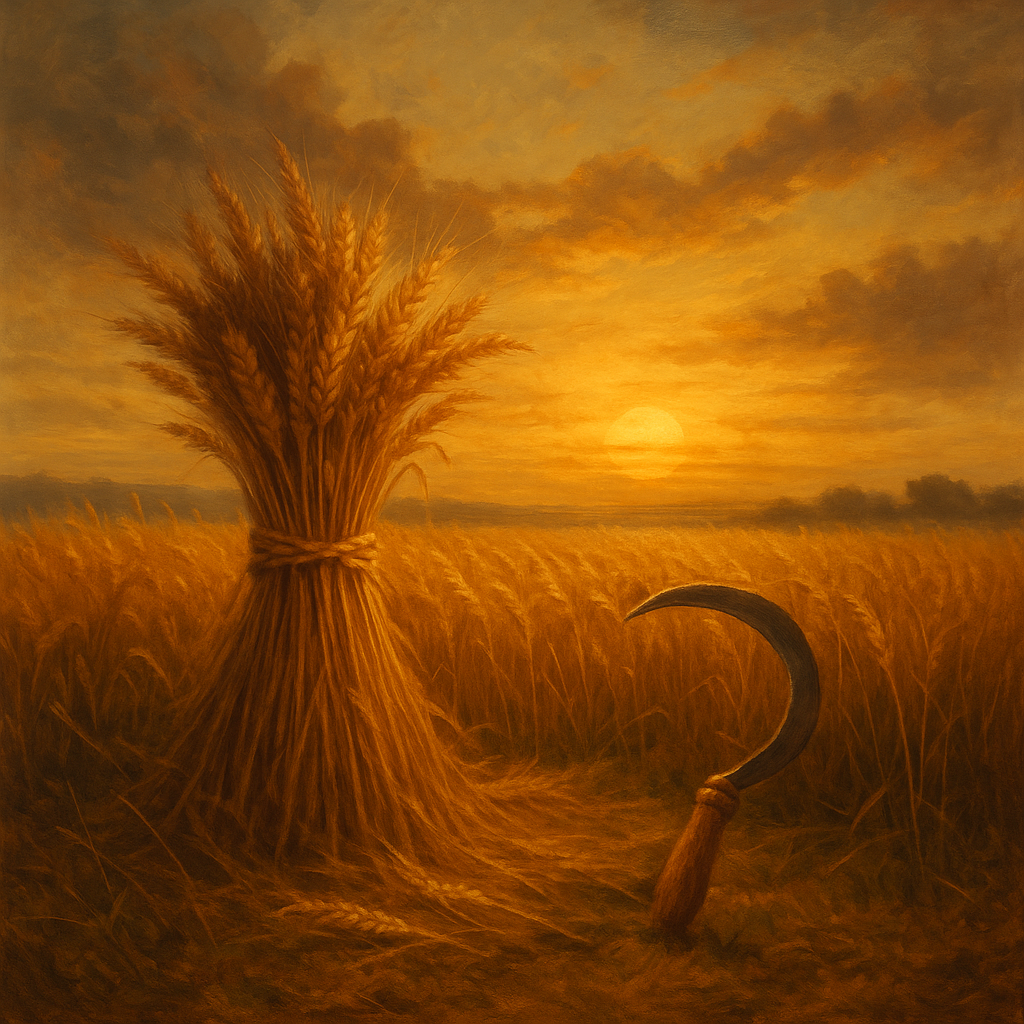
As the sun sets over the grain, painting the fields in molten gold, take a moment to reflect. Feel gratitude for the patience that sustains your path, for the quiet progress that has brought you to this point. Whisper thanks to the Spirit of the Wheat for reminding you that there is sacredness in every stage of becoming. Then, as the evening breeze moves through the stalks, listen — for in that soft rustle is the voice of the Earth itself, saying: Be still. You are growing. Trust the light that ripens you.