🔥 May 6 – The Green Man’s LaughterHonoring wildness, joy, and the spirit of the forest

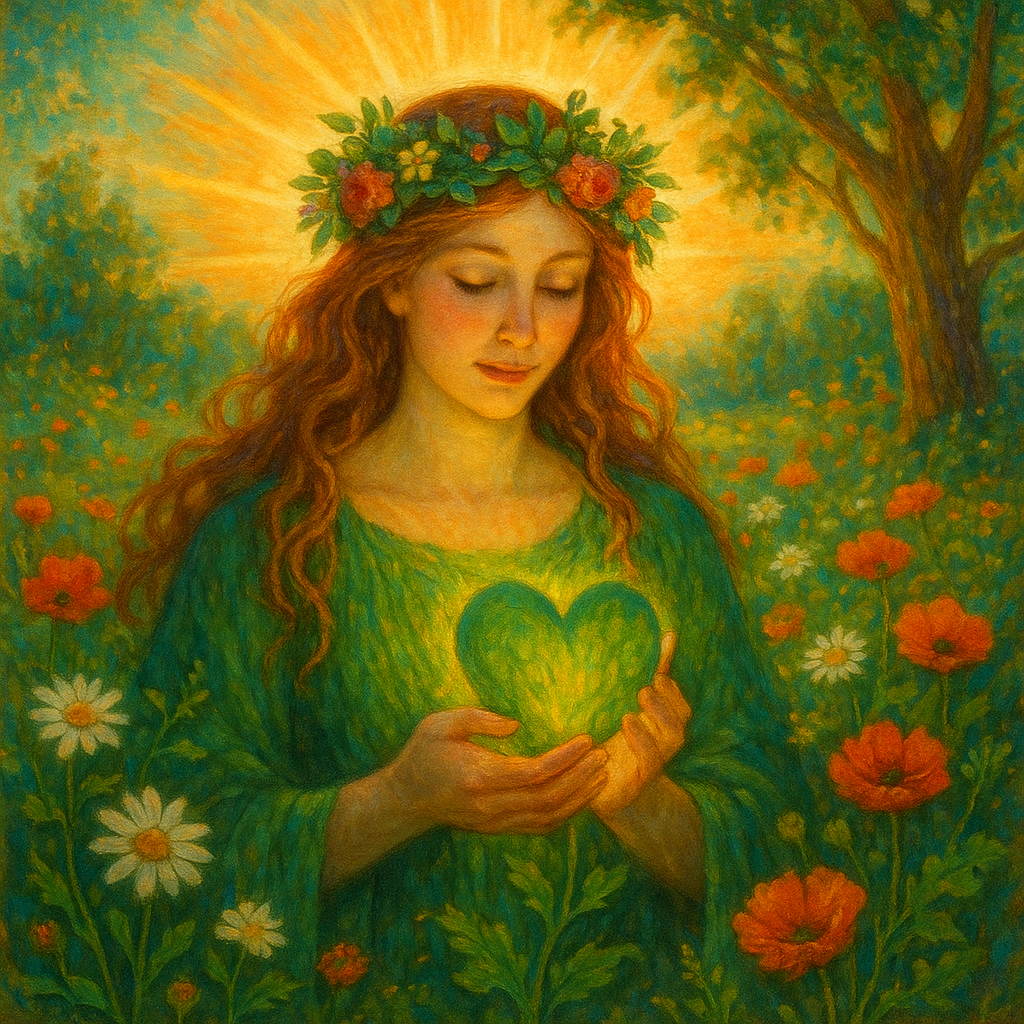
By the sixth day of May, the Earth is no longer simply awakening — she is alive, throbbing with life force. The forests, once tender with the pale greens of early spring, now stretch wide in full verdant splendor. The air hums with insects, the birds sing their choruses from dawn until dusk, and everywhere the pulse of growth can be felt like the heartbeat of the world itself. On this day, we honor the Green Man — the timeless guardian of the wild places, the laughter of the woods, the spirit of life eternal. He is the sap rising through the trees, the viridian breath of the world, the face that peers through the leaves with eyes bright as sunlight through emerald glass. His is the laughter that shakes the branches, that fills the air with joy and reminds us that to live is to grow, to breathe, to become.
The Green Man is one of the oldest and most universal of symbols. His visage — a face formed of leaves, sometimes bearded with vines or crowned with oak — can be found carved into cathedrals, temples, and ancient stones across continents and centuries. Though his names and stories differ, his essence remains constant: he is the living soul of nature, the embodiment of renewal, the masculine counterpart to the Earth’s fertile feminine. Where the Goddess gives form and abundance, the Green Man gives motion and vitality — he is the spark that animates the forest, the spirit that urges the seed to sprout and the flower to open.
To the pagan mind, the Green Man is not a mythic abstraction but a living presence. He is the consciousness of the wild — not apart from humanity, but a part of us that civilization has tried to forget. His laughter is the call of freedom, the invitation to remember our roots in soil and sun. To honor him is to remember that wildness is sacred, that joy and vitality are not luxuries but spiritual necessities.
This day, May 6, is one of celebration and communion. After the sweetness of the Honey Moon, we return to the pulse of the Earth itself — to dance once more with the primal rhythms of life. The Green Man’s laughter echoes through the forest, calling us to join him in play, to rediscover the part of ourselves that is unashamed, untamed, and unbroken. He invites us to laugh, to run, to breathe deeply of the green-scented air, to shed the layers of fear and conformity that stifle our souls.
The Green Man is the lover of the Earth, yet also her child. He is the divine masculine in its most natural form — protective, passionate, life-affirming, and joyfully chaotic. Unlike the stern patriarchal gods of later ages, the Green Man rules not through dominance but through harmony. His power lies in his participation with life, not in control over it. He is the consort of the Goddess, yes, but also the living reflection of her own abundance — the leaf to her root, the sunbeam to her soil. Their love is not hierarchical; it is cyclical, mutual, an endless dance of giving and receiving.
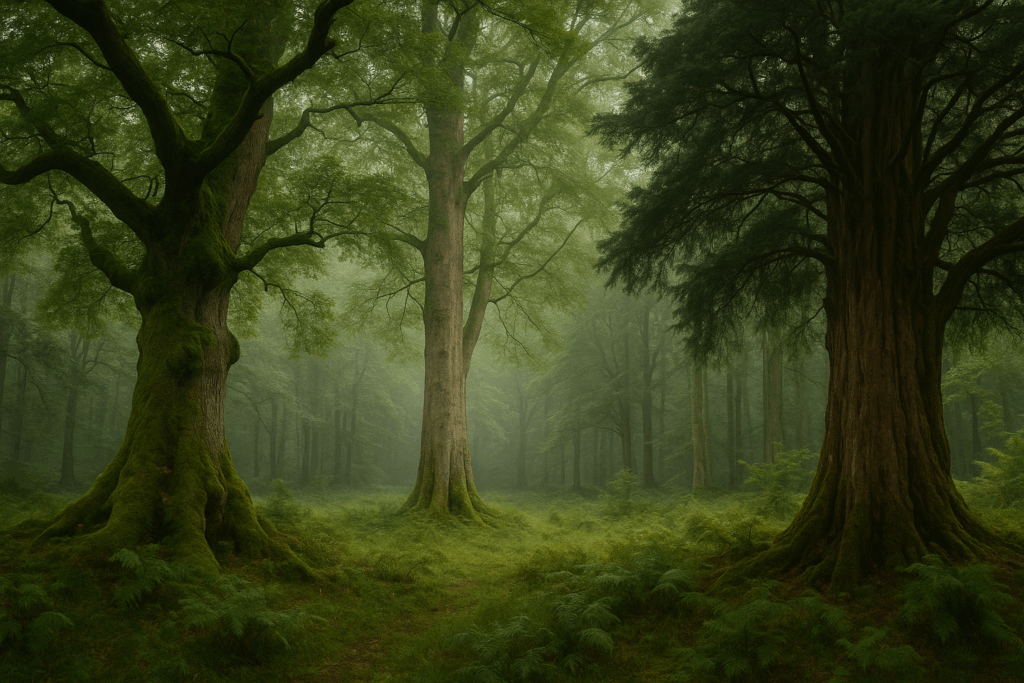
To connect with the Green Man, one must step outside — not only physically, but spiritually. Find a grove, a park, or even a single tree that calls to you. Stand quietly and listen. The forest speaks in whispers — the rustle of leaves, the creak of branches, the hum of insects. Within these sounds, there is laughter — the kind that comes not from mockery, but from sheer delight in existence. The Green Man’s laughter is the music of the living world, and when you hear it, you remember that you too are part of that song.
In ritual, honoring the Green Man can be simple yet profound. Bring offerings of water, bread, or fruit — gifts of life for life. Touch the bark of a tree and feel its strength beneath your palms. Close your eyes and breathe in deeply, imagining the green energy of the forest flowing into your lungs, your blood, your bones. Let it fill you, restoring vitality and joy. Speak to the trees as you would to old friends. Whisper your gratitude for the shade, the air, the sustenance they provide. The Green Man dwells in this exchange — in the breath shared between human and leaf, in the giving and receiving that sustains all.
There is deep wisdom in his laughter. It reminds us not to take life so gravely that we forget to live it. The modern world, in its haste and rigidity, often strangles joy, reducing existence to labor and consumption. The Green Man teaches a different rhythm — one of play, creativity, and presence. When we laugh with him, we remember that life is not merely survival; it is celebration. Each leaf unfurling, each bird song, each burst of color is a cosmic joke — the divine delighting in its own expression. The Green Man’s laughter is the sound of creation rejoicing in itself.
He also teaches resilience. Every autumn, he falls — cut down with the harvest, his leaves turned to flame and dust. Yet each spring he rises again, renewed and radiant. His story mirrors the eternal cycle of life, death, and rebirth — a reminder that decay is not the end, but the prelude to renewal. In his evergreen grin we find the courage to face our own transformations, to trust the process of becoming. The Green Man laughs because he knows there is no true death — only change, only the continual turning of the wheel.
For those who walk a magical path, the Green Man is also a powerful ally in spellcraft and meditation. His energy strengthens vitality, encourages healing, and restores creative flow. Call upon him when you feel weary or disconnected. Visualize him rising from the roots, his body composed of vines and moss, his eyes shining with sunlight. Feel his laughter bubbling up from the core of the Earth, awakening your own inner fire. He does not speak in words, but in sensations — the thrill of wind on skin, the rustle of leaves, the sudden joy that arises for no reason. In his presence, we remember that to be alive is itself a blessing.
The Green Man’s laughter is also the laughter of the trickster — gentle, mischievous, and wise. He reminds us that nature cannot be controlled or contained. Like ivy reclaiming stone, life always finds a way. His humor cuts through arrogance and despair alike, teaching humility and wonder. When we become too serious, too detached from joy, he shakes the branches and lets the petals fall around us, laughing until we remember to laugh too.
This day, therefore, is a festival of joy — a celebration of wildness without fear, abundance without guilt, life without restraint. Dance beneath the trees, sing with the birds, drink from streams if you can, or simply walk barefoot upon the grass and feel the pulse of the Earth. Let laughter rise from you freely, unforced, like water bubbling from a spring. In doing so, you honor the Green Man not as a distant deity, but as the wild heart within yourself.
As evening falls, the forest shifts again — golden light dapples through leaves, and the shadows grow deep and cool. The Green Man’s laughter softens into a hum, a low rhythm that seems to come from everywhere and nowhere. Sit in that twilight stillness, and feel it in your bones. This is the heartbeat of the world, steady and eternal. Whisper your gratitude to him — for life, for laughter, for renewal — and know that as long as the world grows green, his spirit will endure.
For in truth, the Green Man is not only in the forest. He is in every breath we take, every garden we tend, every act of creation and care. He is the living proof that joy and wildness are divine, that laughter can heal, and that life — no matter how tangled or tumultuous — always returns to the light.