
🌾 July 22 – The Stag’s Song

Animal Totems of Summer Strength and Freedom
By the twenty-second of July, the forest breathes with quiet majesty. The light deepens into gold, and shadows stretch long through glades where deer tread lightly. Among them, the stag stands as a living symbol of nobility, freedom, and spiritual sovereignty — the embodiment of nature’s wild grace. The Stag’s Song is not a literal melody, but a vibration, a call that echoes through the heart of the summer woods. It speaks of strength without aggression, power held in balance, and the sacred duty of leadership rooted in harmony with the land. Today we honor the stag as totem, guardian, and teacher — a being who reminds us to walk our paths with courage, humility, and awareness of our sacred place in the circle of life.
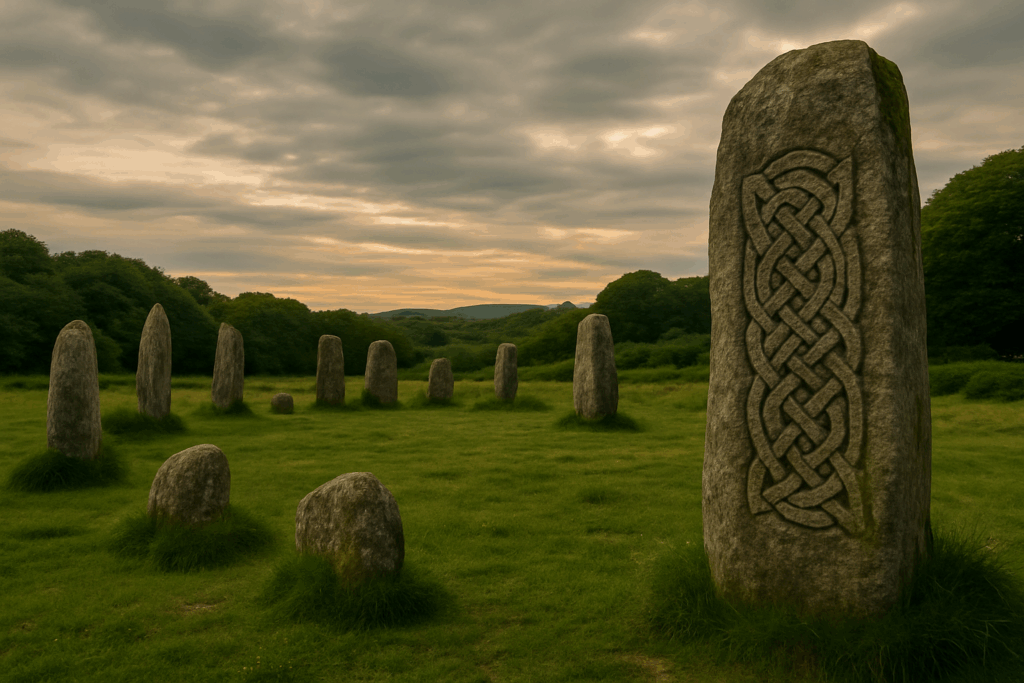
In ancient Pagan and animist traditions, the stag was revered as a creature between worlds — one whose antlers reached toward the heavens while its hooves touched the sacred earth. Among the Celts, he was the emblem of Cernunnos, Lord of the Wild, the Horned God who ruled the cycles of birth, death, and rebirth. His image adorned stones and shrines as the mediator between humankind and the forest spirits. In Norse lands, the stags that fed on the branches of Yggdrasil represented vitality, renewal, and the eternal nourishment of life. To the Druids, the stag’s antlers symbolized spiritual elevation, the crown of connection between body and divine consciousness. To see one was to be reminded that divinity walks not in distant heavens but among the green shadows of the living world.
The Stag’s Song teaches the paradox of power — that true strength is not domination but harmony, not the roar of force but the quiet assurance of being aligned with purpose. When we walk with the spirit of the stag, we learn that confidence need not be loud; it can stride silently through the woods, steady and sure. The stag defends his herd when needed, but he wastes no energy on needless conflict. His is the power of stillness, of instinct refined by wisdom. His song is the rustle of leaves at dawn, the rhythm of hooves in the moss, the breath of freedom in the morning mist.
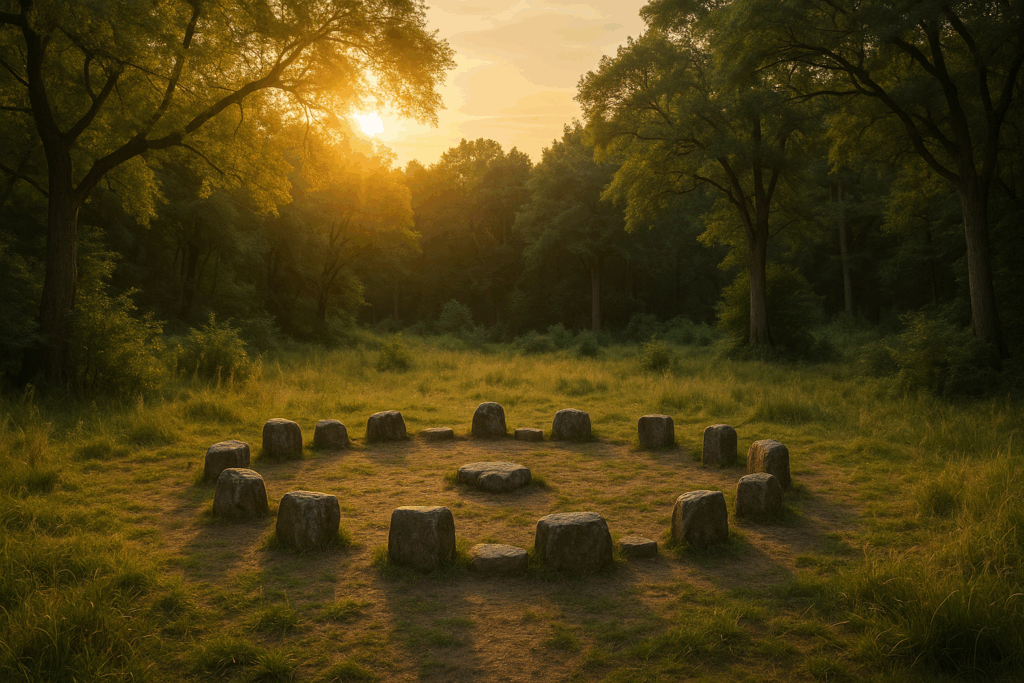
To begin this ritual, seek a natural space — a forest, grove, or even a shaded park where trees grow tall and the air carries the scent of soil and life. Stand quietly, feeling your feet planted firmly on the ground. Close your eyes and take three deep breaths, inhaling through the nose and exhaling through the mouth. With each exhale, release tension and thought. With each inhale, draw in the vitality of the wild. Listen — truly listen — to the world around you. Birds, insects, the rustle of wind through branches — all are part of the Stag’s Song.
When you are ready, speak softly:
“Spirit of the Stag, King of the Forest, I call upon your wisdom. Teach me the strength that listens, the freedom that respects, the power that serves.”
Visualize the stag before you — tall, magnificent, his antlers a living crown of branches and light. His eyes are dark and steady, reflecting the forest itself. Feel his presence enter your heart — calm yet commanding, ancient yet alive. He does not speak in words but in impressions, in sensations that rise through your body. You may feel warmth in your chest, a tingling at your brow, or a rush of grounded energy through your legs. This is the stag’s gift: the awakening of embodied awareness.
Now, begin to move. Slowly, deliberately, walk as the stag walks — poised and purposeful. Let each step be an act of intention. Imagine his grace flowing through you, his awareness expanding your senses. You are not moving through the forest; you are moving with it, every sound and breath attuned to its rhythm. This movement meditation aligns you with the energy of nature — a dance of mutual recognition between your spirit and the living world.
After a few moments, stop and place your hand upon your heart. Whisper your personal prayer for strength or freedom — whatever you seek from this communion. Perhaps it is courage to stand tall in your truth, or peace in the midst of change, or the wisdom to lead with compassion. Speak it aloud:
“By the spirit of the Stag, I stand in my strength. By the antlers of wisdom, I rise to my truth. By the freedom of the forest, I walk in harmony with all life.”
You may wish to carry a small token to symbolize this connection — a feather, an acorn, or a piece of fallen antler if found ethically. These are not trophies, but reminders of the lesson learned: that power flows best through those who honor its source.
In magical work, the energy of the stag is invaluable for spells of confidence, leadership, and independence. It helps to restore sovereignty to the spirit — especially for those who have lost their sense of direction or personal authority. To invoke this energy, light a candle of deep green or brown and place it beside a bowl of water (representing life’s flow). Hold your hands over both and say:
“Fire and water, strength and grace — within me they unite. By the antlered lord of wild places, I claim my voice, my freedom, my power to serve life’s song.”
You may then anoint yourself with a few drops of the water, touching your forehead, heart, and hands, to seal the intention.
Another aspect of The Stag’s Song concerns the divine masculine — not as dominance or control, but as creative energy, protection, and purpose guided by love. The Horned God in his summer aspect is the protector of life and the consort of the Goddess, whose abundance he safeguards. His strength is inseparable from his tenderness, his authority balanced by service. In this, he reminds us that leadership, whether of self or others, must always honor life rather than command it.
At dusk, as the world glows in amber light, sit quietly and listen once more. The forest grows still; even the wind seems to pause. If you are lucky, you might hear the distant cry of a deer, or the soft snapping of twigs underfoot. This is the echo of the Stag’s Song — a soundless resonance that vibrates through the soul. Close your eyes and breathe deeply. Within that stillness, you may hear the echo of your own inner song — your wild truth, your instinctual voice. Let it rise in your mind, clear and strong. It may come as words, as feeling, or as simple peace. Whatever form it takes, it is sacred.
Before leaving, give thanks to the spirit of the Stag and to the land itself. Offer a handful of grain, an apple slice, or simply your breath as a token of gratitude. Whisper:
“For your wisdom and your strength, for the wildness within and without, I give thanks. May your song continue through me.”
As you walk away, carry the stag’s grace within you. Move through the world with awareness — head high, heart open, feet sure. Remember that true power is quiet, self-possessed, and born of harmony with all things.
The Stag’s Song is a call to remember the ancient rhythm that connects all beings — the pulse that moves through forest, mountain, and soul alike. It teaches that freedom is not rebellion but reverence, that strength is service, and that every step taken in mindfulness is an act of sovereignty.
When night finally descends, look up at the stars scattered across the dark canopy. The constellations seem like antlers against the heavens, reaching outward in celestial reflection of the stag’s crown. In that moment, feel yourself mirrored between Earth and sky — wild and wise, radiant and still. The song continues, soft yet endless, weaving through the silence of the world: “Stand tall, live true, and remember — you are free.”
Responses