
🌾 July 17 – The Faery Queen’s Banquet

Exploring the Magical Balance of Indulgence and Restraint
By the seventeenth of July, the veil between the human world and the unseen realms of nature shimmers thinly in the golden air. Twilight lingers longer, the meadows hum with unseen life, and in the hush between sunset and moonrise, something otherworldly stirs. The Faery Queen’s Banquet is a night of enchantment and offering — a celebration of beauty, abundance, and pleasure balanced with reverence and restraint. It is the time to honor the spirits of nature, the faery hosts who dwell just beyond the edge of perception, and to learn from their delicate wisdom: that indulgence is sacred when it flows from gratitude, and that pleasure, when balanced with humility, nourishes both body and spirit.
The ancient Celts believed that midsummer through late July marked one of the year’s most potent faery tides — when the folk of the hollow hills, the sidhe, moved more freely among mortals. Offerings of milk, honey, and bread were left upon doorsteps, stiles, and sacred wells to ensure goodwill between worlds. These gifts were not acts of appeasement but of respect — an acknowledgment that the unseen spirits share the same Earth we do. The Faery Queen’s Banquet draws upon this tradition, inviting us to participate in a feast of harmony: between mortal and spirit, excess and moderation, gratitude and joy.
The Faery Queen — known by many names: Aine, Titania, Fand, the Lady of Elphame — is the embodiment of midsummer’s radiance. She is the wild grace of the Earth personified, the glittering intelligence of nature itself. Her realm is one of both delight and discipline, where beauty is sacred, and every pleasure carries a price of mindfulness. To approach her feast is to enter a space where every sensation becomes holy — where taste, touch, and sight awaken into acts of devotion. Yet, the wise witch knows to approach with balance. For the faery realm is alluring, and those who overindulge in its charms risk forgetting the path home.
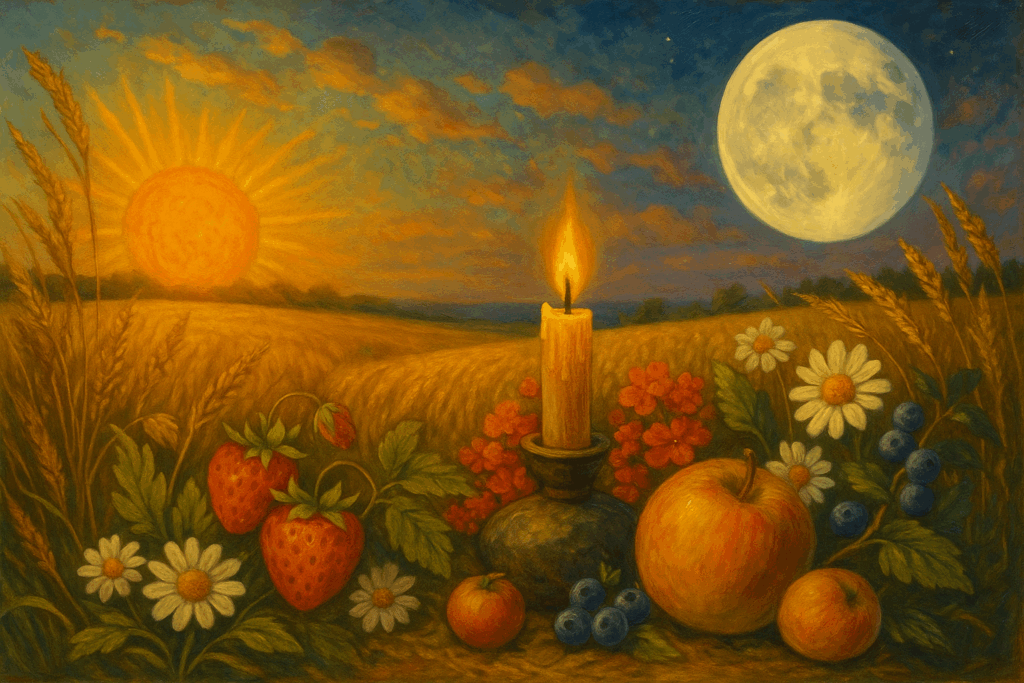
To prepare for the Faery Queen’s Banquet, cleanse yourself and your space with incense or floral water. Dress in natural fabrics or soft colors that blend with the landscape — greens, golds, silvers, or rose hues. Adorn your altar or table with wildflowers, fruits, and candles in shades of gold and pink. Scatter a few drops of honey or wine on the ground as an offering to the land spirits before you begin. If possible, perform your rite outdoors, where the night air carries the scent of flowers and the hum of life.
Your feast need not be elaborate — what matters is intention. Choose foods that reflect the season’s abundance: berries, honey, bread, cream, mead, or fresh herbs. Before you eat, take a moment to bless the meal. Hold your hands above the table and say:
“Spirits of Earth and Air, of Fire and Water, I share this feast with gratitude. May the Faery Queen and her kin be honored, and may balance dwell within this abundance.”
Then, eat slowly and mindfully, savoring each flavor as a sacred offering. Between each bite, reflect on the gifts of the Earth that made it possible — the soil, the rain, the bees, the unseen labor of life. This act transforms indulgence into reverence, and consumption into communion.
As you feast, consider the deeper meaning of this day — the tension between pleasure and moderation, passion and patience. The Faery Queen’s Banquet is not a call to gluttony but to presence. The faeries remind us that joy, when celebrated consciously, becomes a bridge between worlds. When we delight in life without greed, we feed both our spirits and the spirits of nature. But when we take without gratitude, we drain the magic from our world. The lesson of the banquet is this: pleasure is sacred when it is shared, balanced, and born of love.
To invite faery blessings into your life, prepare a small dish as an offering after your meal. This might include a few berries, a piece of bread spread with honey, or a small cup of milk or mead. Place it outside, ideally under a tree, near a garden, or by running water. Whisper softly:
“Queen of the Shining Hosts, Lady of Light and Laughter, I offer this feast in friendship. May harmony flow between your realm and mine, now and always.”
Do not look back as you leave the offering. The gift is complete once given; to linger is to question the magic.
In meditation, you may visualize yourself walking through a meadow at twilight. Fireflies shimmer like drifting stars, and the air hums with quiet music. Ahead, you see a long table set beneath an ancient oak — candles flickering, goblets gleaming, plates laden with fruits and flowers that seem to glow from within. The Faery Queen sits at the head of the table, radiant in silver and green, her eyes ancient and kind. She gestures for you to join her. As you take your seat, you realize that this feast is not about consumption but communion — the joining of worlds in joy and respect. You may ask her for a blessing, or simply sit and listen as her voice moves through the rustling leaves: “All beauty is sacred. All joy is holy. But remember: give as you receive.”
This is the heart of the Faery Queen’s wisdom — balance. The natural world thrives through the interplay of generosity and restraint. Flowers bloom, but only for a season; rivers flow, but always return to the sea. The banquet reminds us to enjoy the sweetness of the moment without clinging to it — to dance, to taste, to laugh, and then to let go with gratitude. It is the art of living in rhythm, not excess; of honoring joy as a fleeting, sacred gift.
For those who practice magic, tonight is an ideal time for spells of harmony, beauty, and creative inspiration. Work with offerings of flowers, honey, or dew collected at dawn. Speak your intentions softly, for the fae are drawn to sincerity, not demand. You might say: “By the grace of the Faery Queen, may beauty guide my actions and joy illuminate my path.” Allow the energy to flow through you lightly, without grasping. Faery magic is subtle — it moves like wind and glimmers like moonlight.
As the night deepens, extinguish your candles one by one, whispering a word of thanks for each: “For beauty, for balance, for blessing, for joy.” Sit in the soft glow of the last candle until it too burns low, symbolizing the fading of the feast and the return to the mortal world. You leave the table nourished, not only in body but in spirit — reminded that abundance is not measured by possession, but by appreciation.
When you step outside into the night air, pause. Listen. The world feels alive — charged with unseen laughter, the whisper of wings, the scent of honeyed flowers. Somewhere in the stillness, the Faery Queen smiles, her banquet continuing in the shimmer of dew and starlight. You walk away lighter, more radiant, carrying her gift within you: the ability to find enchantment in the simple, to taste holiness in the everyday, and to balance joy with reverence.


Responses