☀️ June 12 – The Witch’s Bonfire — Fire Rites for Purification, Laughter, and Renewal

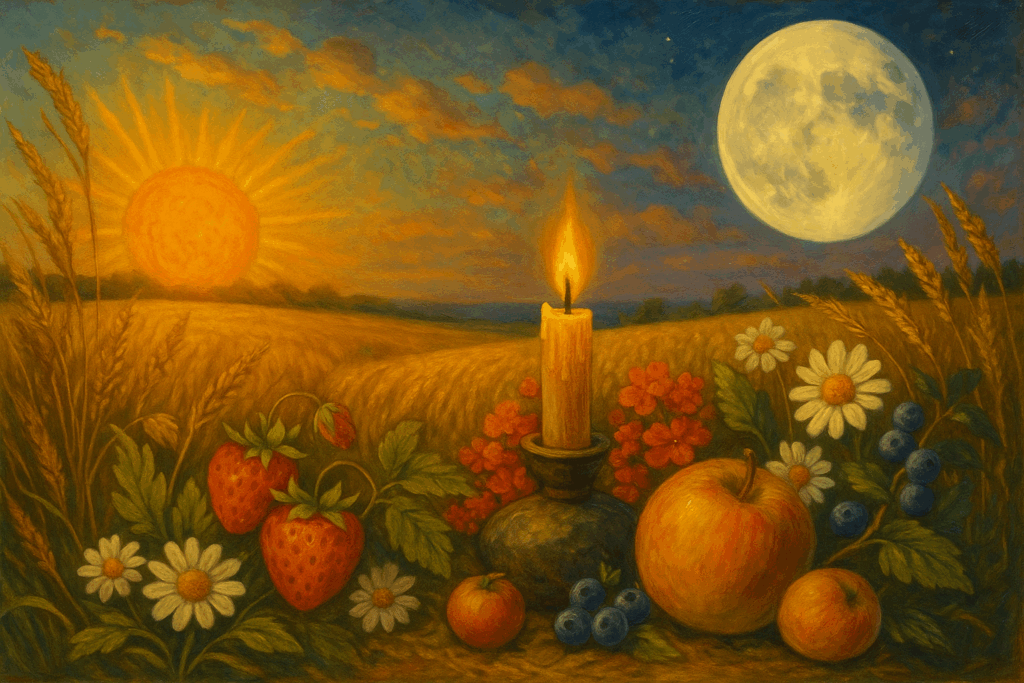
The twelfth day of June glows like an ember in the long twilight — a day caught between the gathering brilliance of the solstice and the hum of the earth’s full vitality. This is the day of The Witch’s Bonfire, a sacred celebration of flame and fellowship, of renewal through laughter, dance, and light. As the sun climbs toward its zenith, its fire burns not just in the sky but in the hearts of those who honor the living rhythm of the earth. The Witch’s Bonfire is both a rite and a remembrance — a way to purify the self, to release what no longer serves, and to rekindle the joy that is the soul’s truest fire.
Fire, among the elements, is the most transformative. It consumes, but it also illuminates. It destroys, yet it clears the path for new growth. To the pagan spirit, fire is not merely a physical force but a divine intelligence — the sacred energy of change. In ancient times, witches, druids, and villagers alike would gather in circles of flame on nights before great turnings of the year. They would leap over fires for luck, carry torches through the fields for blessing, and cast into the flames their worries, their regrets, their old stories — trusting that fire would cleanse and transmute them. On June 12, the Witch’s Bonfire continues this lineage of light, calling us to remember that renewal is born through release.
To prepare, find or create your fire — a bonfire beneath the open sky if possible, or a candle flame upon your altar if you dwell within walls. It is not the size of the fire that matters, but the sincerity of the flame. As twilight falls, gather symbols of your past season’s burdens: a small paper upon which you’ve written what you wish to let go, a dried leaf to represent fatigue, a thread to symbolize tangled emotions. Arrange them near your flame. Then, before lighting it, pause in silence and breathe deeply. Feel the air within your lungs — the breath that feeds the coming fire. Speak softly: “Spirit of flame, sacred transformer, I honor your power. Burn away the old, bless what remains, and awaken my joy anew.”
As the fire catches, gaze into its core. See there not only light but intelligence — a living spirit that understands your purpose. Fire has no patience for falsehood; it consumes all but truth. As you watch the flames move, reflect upon what must be purified. Fear, bitterness, self-doubt — these are the shadows that gather quietly through the year. They cannot survive the honesty of fire. When you feel ready, feed your written burdens into the flame. As they burn, imagine those energies dissolving into smoke and ascending to the heavens, transformed into light. Whisper: “What once bound me now frees me. What once pained me now teaches me.” Let the words feel final — the closing of a chapter, the clearing of sacred ground.
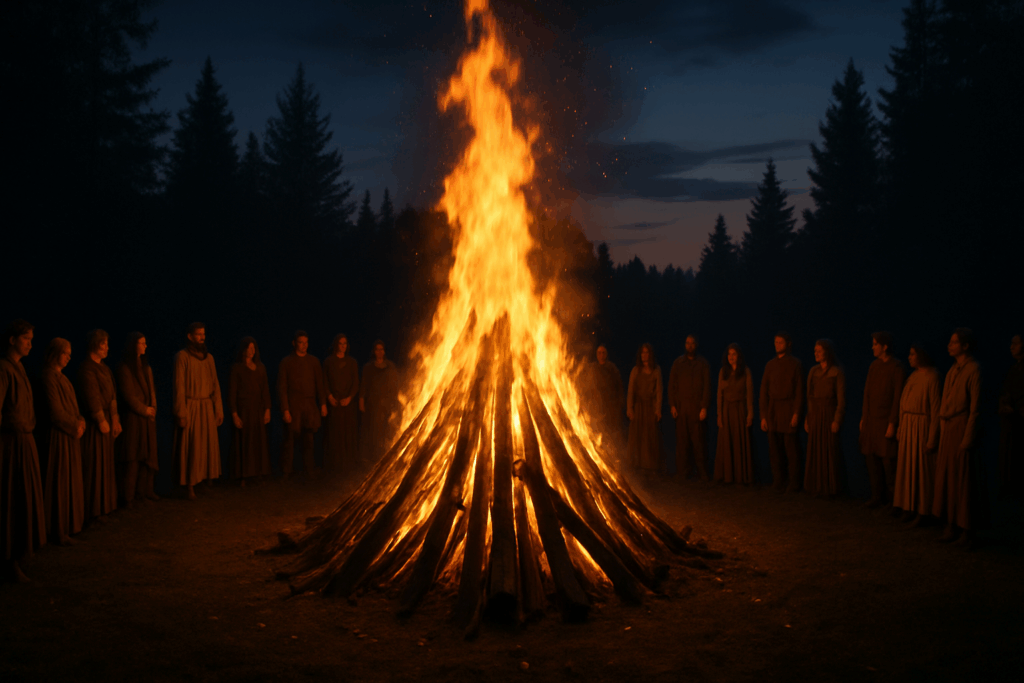
The Witch’s Bonfire is not a solemn rite but a joyful one. After the purification comes the laughter — for laughter itself is fire in the voice, the spark of the soul made audible. In old midsummer traditions, people would sing and dance around the flames, celebrating the abundance of the earth and the strength of community. The witch, too, dances — not merely for joy, but as an act of magic. Movement releases stagnant energy and invites vitality to return. If you can, move around your fire in slow, spiraling motion. Let your arms rise and fall like flames themselves. Feel the heat on your skin, the pulse of life in your chest. This dance is an invocation of renewal. Each step says: I am alive. I am free. I am part of the eternal fire of creation.
Invite laughter into your ritual — not forced, but spontaneous. Fire responds to joy; it grows brighter in its presence. Share stories if you gather with others. Sing songs of gratitude to the turning year. If alone, hum softly or beat a drum, letting rhythm become prayer. The Witch’s Bonfire burns best when tended with delight. To honor the element of fire is to honor passion, creativity, and the courage to be fully oneself. The flame does not apologize for its brightness — it burns because it must, and through that burning, life is renewed.
You may also choose to anoint yourself with a small amount of oil — cinnamon for vitality, orange for joy, or clove for protection. Touch the oil to your forehead, heart, and hands, saying: “By the fire’s grace, I am cleansed. By its light, I am guided. By its warmth, I am reborn.” This act seals the purification and consecrates your energy for the days leading to the solstice.
Historically, bonfires in June were not only for celebration but also for blessing the land. People would drive their cattle between twin fires for health, carry burning torches through fields to ensure fertility, or toss herbs into the blaze to strengthen its magic. You can continue this tradition symbolically by burning small bundles of sacred herbs such as rosemary for protection, sage for clarity, and lavender for peace. As the fragrant smoke rises, imagine it carrying blessings across your home, your family, and your community. The fire becomes a beacon — a message of renewal sent to the unseen forces of the world.
At the heart of the Witch’s Bonfire lies a paradox: it is an act of surrender that creates empowerment. We feed the flames not to lose ourselves but to remember who we are beneath the ashes of distraction and doubt. Fire strips away the unnecessary, revealing the essence that endures. After the dancing and laughter, when the flames begin to soften into glowing embers, sit beside them in quiet reflection. Let the warmth seep into your bones, the smoke curl through your thoughts. In that silence, you may feel something vast and ancient move within you — the same spirit that burns in stars, in hearths, in every living cell. It is life itself, eternal and unbroken.
Whisper a final prayer to the flame: “Thank you, sacred fire, for your lessons of release and renewal. As you fade, may my spirit burn bright with purpose and love.” Allow the fire to die naturally, trusting that its energy remains. If you have burned herbs or paper, scatter the cooled ashes into the earth or upon the wind. They carry your intentions forward, fertilizing new beginnings.
The Witch’s Bonfire is not only a night of magic but a mirror for the soul. It teaches us that joy and purification are not opposites but companions. Laughter cleanses as deeply as tears, and fire — when met with reverence — becomes a bridge between destruction and creation. Every spark in the darkness reminds us that renewal is always possible.
As you rise from your ritual, you may notice that the world feels lighter, your heart unburdened, your mind clear. You have walked through fire and come out shining. The days ahead will lead toward the solstice, but the inner transformation has already begun. The Witch’s Bonfire has burned away what was heavy, leaving only brilliance. Walk forth knowing that you, too, are a living flame — warm, radiant, eternal.