
🌾 July 30 – The First Sheaf

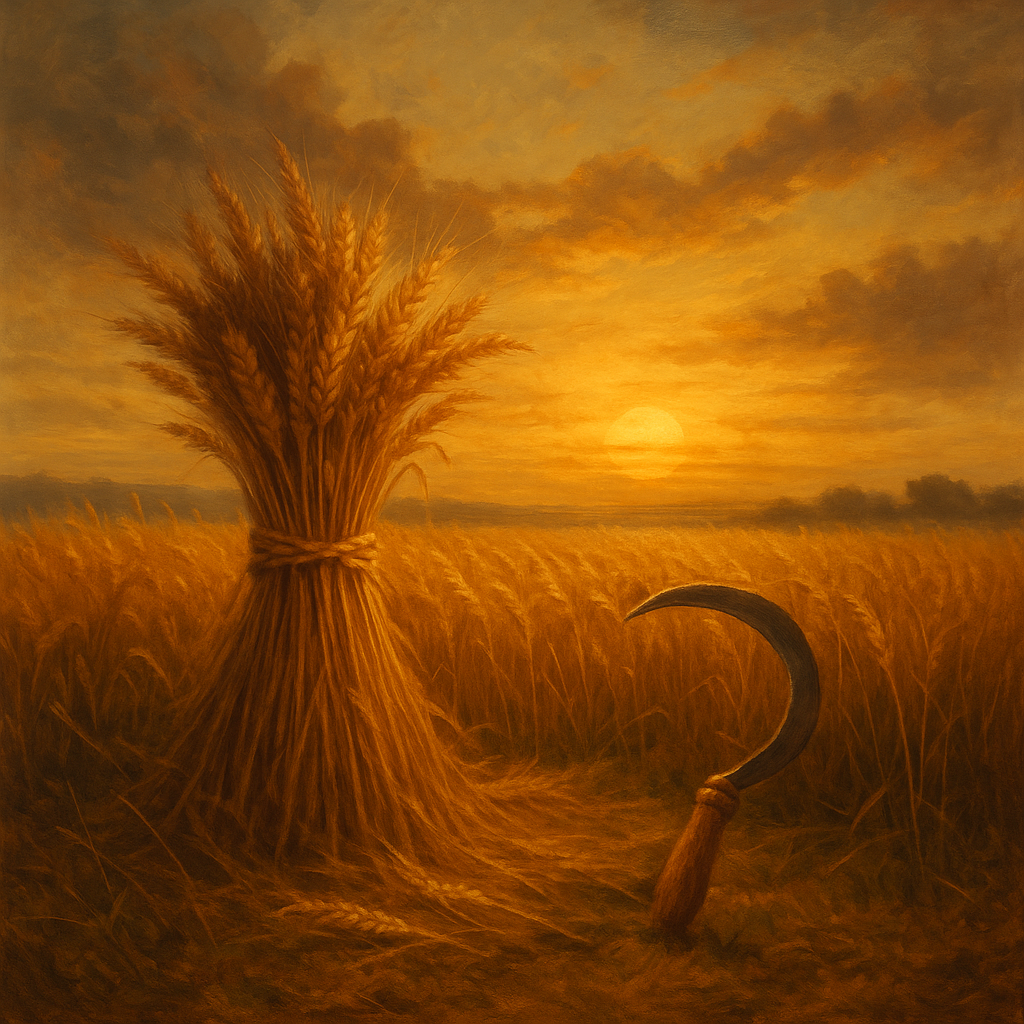
Blessing the Early Harvest — Humility and Gratitude
By the thirtieth of July, the fields shimmer with gold, and the air is filled with the scent of ripening grain. The first sheaves are cut, marking both an ending and a beginning — the threshold between labor and reward, between growth and gratitude. This day, sacred to the ancient heart of the harvest, is known as The First Sheaf. It is a time to bless the earliest fruits of the field and to give thanks for the partnership between human hands and the living Earth. The festival of Lughnasadh, or Lammas, stands just ahead, but the First Sheaf reminds us that gratitude must precede celebration. It is the bow before the feast, the prayer before the loaf.
In the agrarian rhythms of old Europe, the cutting of the first sheaf was one of the most sacred acts of the year. The first handful of grain to fall beneath the sickle was not taken for human use but offered to the gods — to the Earth Mother, to the spirits of fertility, and to the Sun whose light ripened the fields. It was believed that the spirit of the crop dwelled within that first bundle, and by honoring it, the people ensured the continued fertility of the land. From this ancient practice grew traditions of offering bread, beer, or sheaves to the divine — gestures of humility recognizing that abundance is a gift, not a guarantee.
The First Sheaf is a spiritual mirror of that same truth. It reminds us to acknowledge what we have received before claiming what is ours. Gratitude is not a passive feeling; it is an act of devotion that completes the circle of creation. As we harvest the fruits of our labor — in field, home, or heart — we must first give back to the source that made them possible.
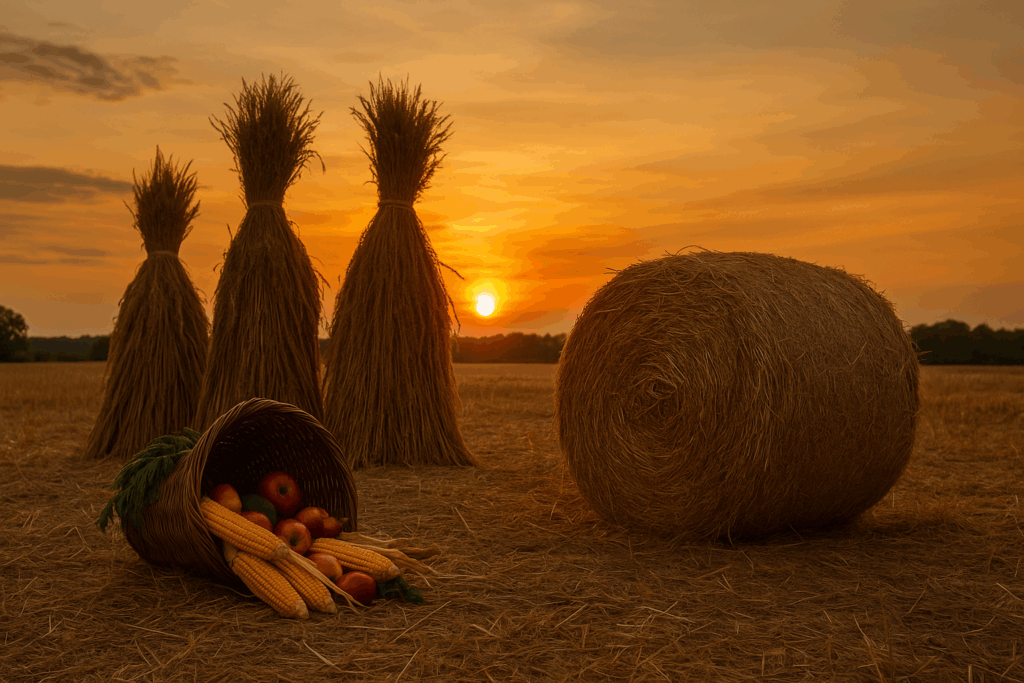
To honor The First Sheaf, you may begin your ritual outdoors among growing things — a field, garden, or even a potted plant that you have tended. If this is not possible, create an altar of harvest symbols: wheat or oats, bread, apples, a candle for the Sun, and a bowl of water for the nourishing rain.
Take a moment to center yourself. Breathe deeply, feeling the weight and warmth of summer. Close your eyes and listen — the hum of bees, the rustle of grain, the heartbeat of the land beneath your feet. Whisper softly:
“Mother of grain, Father of light, I honor the first fruits of your union. Through your bounty, we live.”
If you have access to a standing crop, approach it respectfully. With a small blade, sickle, or even your hands, gather a single handful of stalks. As you do, say:
“With reverence I cut, not to claim but to honor. Spirit of the field, accept my gratitude.”
Bind the stalks gently with a ribbon of red or gold and hold them aloft, facing the Sun. The light will shimmer through them like threads of gold — a visible prayer of thanksgiving. Whisper:
“From seed to sheaf, your work is done. From Earth to hand, I give my thanks.”
This first sheaf becomes an offering — a symbol of your gratitude to the divine and to the land. You may place it on your altar for the duration of the harvest season or burn it in sacred fire at Lughnasadh to release its blessing back into the cycle. If burning is not possible, return it to the soil, saying:
“As this sheaf returns, so may life renew. The seed shall sleep and rise again.”
For those who wish to craft bread, this is a perfect day to bake a Loaf of Thanks. Use any grain you have — wheat, rye, barley, or cornmeal — and knead it with intention. As your hands work the dough, speak blessings aloud: gratitude for sustenance, family, the fruits of your labor, and the Earth that sustains all life. Before baking, press your thumb into the center of the loaf and whisper:
“May this bread carry the memory of sunlight and soil. May all who share it be nourished in body and spirit.”
When baked, place the loaf upon your altar beside the first sheaf and light your candle. Say:
“I offer this bread as a token of thanks. May the blessings of Earth and Sun continue to flow through the turning year.”
Break off a small piece of the loaf and set it aside as an offering — to the spirits, the ancestors, or the land itself. Then share the rest with those you love, for gratitude grows when shared. Eat slowly, remembering that every bite is a story of rain, soil, sunlight, and human care.
Spiritually, The First Sheaf carries the vibration of humility. It asks us to pause at the moment of success and remember that we are part of a larger whole. The grain does not grow through human effort alone — it grows because the Earth allows it. The Sun shines without our asking, the rain falls without our command, and the soil births abundance from its own mystery. In honoring the first sheaf, we acknowledge our dependence upon these unseen gifts and reaffirm our place within the circle of reciprocity.
In magical practice, this day is ideal for workings of gratitude, grounding, and abundance through service. To draw prosperity that is sustainable and balanced, take a handful of grain or rice and bless it, saying:
“As grain multiplies in the field, so may my blessings multiply through kindness.”
Then scatter the grain in the wind or across the soil, giving freely of what you wish to receive. The act of giving opens the flow of abundance more than any charm of acquisition ever could.
The energy of The First Sheaf also supports ancestral veneration. Our ancestors, especially those of agricultural heritage, lived and died by the rhythm of the harvest. To them, the first sheaf was both sustenance and symbol — hope for survival through the coming winter. To honor them, place a portion of your bread or grain offering on your ancestral altar, light a candle, and say:
“For those who sowed before me, whose hands fed generations, I give thanks. May your spirits be at peace, and may your wisdom guide my path.”
As evening falls and the fields glow like embers beneath the setting Sun, take your sheaf or a handful of grain and walk to an open space — a hill, garden, or even your doorstep. Hold the sheaf to the horizon, where the sky and land meet, and whisper:
“The Sun descends, the harvest begins. In gratitude, I stand between light and shadow, between effort and reward.”
Then, either plant a few grains in the soil or scatter them gently upon the wind, saying:
“May the seeds of today become the blessings of tomorrow. The cycle continues, and I give thanks.”
Sit quietly for a moment longer, watching as twilight deepens and the world softens into stillness. The hum of the fields, the chirp of crickets, the scent of grain — all are hymns of gratitude. Feel them rise within you, merging your spirit with the heartbeat of the Earth.
The First Sheaf reminds us that every ending is a beginning, that giving thanks is itself a form of creation. When we bless what we have, we make space for more. When we honor the first harvest, we honor the entire cycle of life that brought it forth — seed, soil, sunlight, and spirit.
Before you close your ritual, extinguish your candle and whisper:
“The first sheaf is gathered, the circle turns. With gratitude, I walk the path of the living Earth.”
Carry this sense of humility and abundance into the coming days, as the wheel turns toward Lughnasadh and the full celebration of harvest. The first sheaf has been lifted, blessed, and returned — the covenant between humanity and nature renewed once more.
Responses