🔥 May 27 – The Joyous OfferingPracticing gratitude through song and gesture

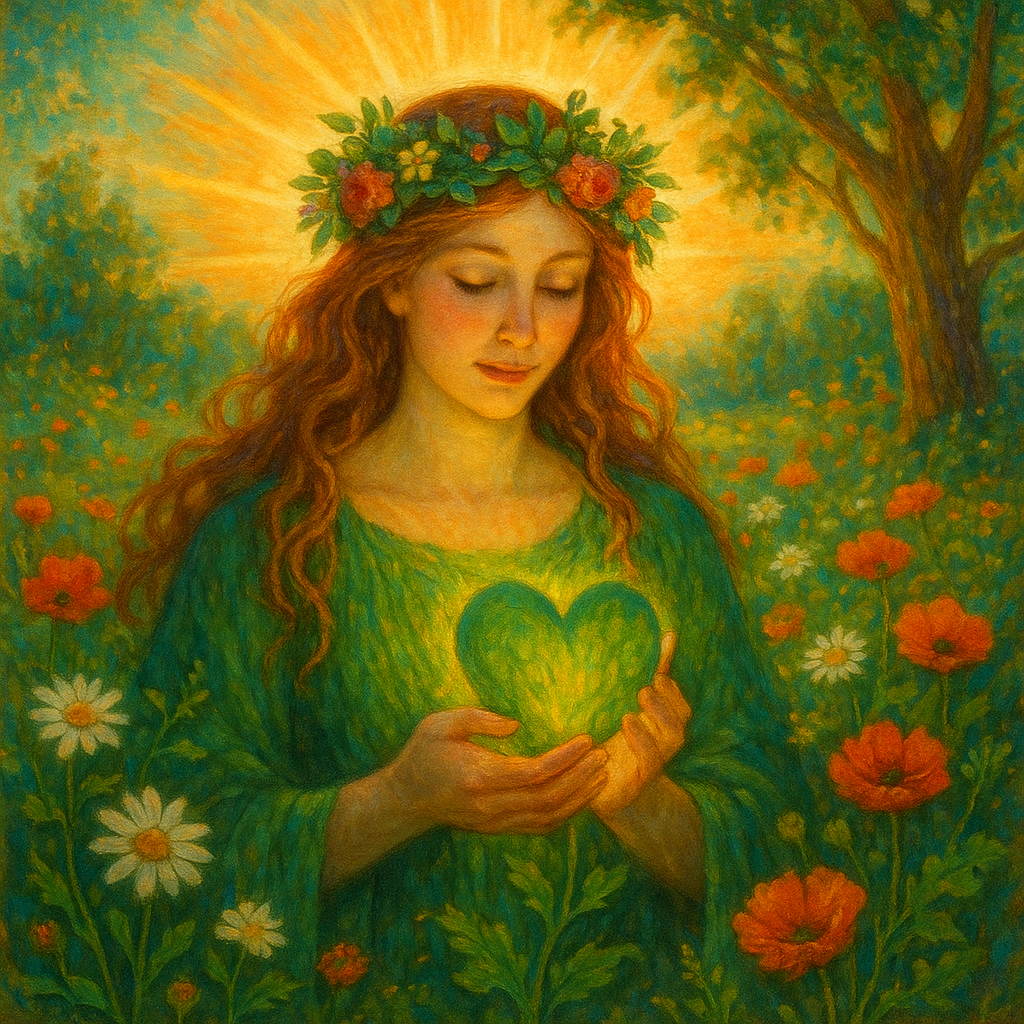
By May 27, the Earth hums with music. The air itself feels alive — vibrating with birdsong, the low murmur of bees, and the rustling of leaves that sound like distant applause. The long days of light stretch open before us, and the world offers itself freely: fruit forming on branches, rivers glittering, fields alive with color. Today we celebrate The Joyous Offering — a day devoted to gratitude, to giving back, and to remembering that all we have, and all we are, flows in reciprocity with the living world.
Gratitude is one of the oldest forms of magic. Before there were written spells or sacred texts, there were offerings — songs sung to rivers, hands raised to the Sun, bread and milk left at the edge of the forest. The act of giving thanks is the first and truest spell, for it aligns us with the rhythm of creation. In every tradition, to offer is to honor — to participate in the cycle of abundance that sustains all life. When we give with joy, we open the heart to endless flow.
The Joyous Offering is not about sacrifice or loss, but about celebration — a conscious act of harmony. We give not because we must, but because the heart overflows. We give because the world is beautiful, and we are blessed to be part of it.
The Spirit of Gratitude in Pagan Tradition
In the old ways, gratitude was never a mere emotion; it was a living practice. Farmers gave thanks for rain and sunlight. Fisherfolk sang blessings to the sea before casting their nets. Every harvest, every hunt, every hearth fire began and ended with offerings. The people understood that to take without giving was to unbalance the sacred web of life.
This awareness is woven into the pagan understanding of the Law of Reciprocity — the truth that energy moves in circles, not straight lines. What we give returns to us, magnified through the cycles of the Earth. Gratitude strengthens that current, ensuring that our lives flow with ease rather than resistance.
When we express thankfulness — whether through prayer, song, or simple mindfulness — we renew our covenant with the Earth. We acknowledge that we are not separate from her but part of her dreaming. Every act of gratitude becomes a seed planted in the soul of the world.
The Joy of Giving Back
True offering comes not from obligation but from joy. The Earth gives constantly — sunlight, water, nourishment, beauty — and she gives without asking for repayment. When we give back in our own ways, we mirror her generosity and participate in the sacred dance of abundance.
An offering can be anything made or given in love: a handful of wildflowers placed at the foot of a tree, a song sung to the wind, a loaf of bread baked with intention, or a moment of stillness spent in reverence. What matters is the spirit behind it.
Today, walk with the awareness that every gesture can be a blessing. When you smile at a stranger, speak kindly, or share food, you are performing an offering. When you tend a plant, honor an ancestor, or light a candle in gratitude, you contribute to the great harmony of being.
Offerings are not always physical. They can be gestures — a bow to the morning Sun, a whispered “thank you” to the soil as you walk upon it, or a breath released in awe at the beauty of a passing cloud. Such acts, though simple, ripple through the unseen realms like music.
Ritual: The Song of Gratitude
This day’s ritual centers around sound — the pure expression of gratitude through voice. You need no instrument or training, only sincerity.
You will need:
- A candle (gold, green, or white)
- A small bowl of water or wine
- A natural space — a garden, forest, or open window will do
- Prepare your space. Light the candle and place the bowl before it. Take three deep breaths, feeling the air move through you like the breath of the Earth herself.
- Speak aloud your thanks. Begin simply:
“I give thanks for this day, for the light and the life that fills it.
I give thanks for my body, for breath, for love, for all that sustains me.” - Then, let your gratitude flow freely. Speak or sing whatever words rise from your heart — not rehearsed, but spontaneous. It may be a hum, a melody, or a chant. It does not need to sound beautiful; it only needs to be true.
- As you sing, imagine your voice as light moving outward — through your home, through the land, through the air. See it touching trees, rivers, and all living beings.
- When you feel your heart overflowing, lift the bowl and offer its contents to the Earth, pouring it onto soil or grass, saying:
“From love I give, to love I return.
May the world be nourished, and so may I.”
End the ritual in silence, listening to the echoes of your song as they dissolve into the world.
Offerings in Motion: Acts of the Day
Gratitude becomes most powerful when carried into daily life. On this day, let every action be an offering:
- Cook with intention. As you stir your food, whisper blessings for those who will eat it.
- Tend your space. Cleaning, when done mindfully, is a ritual of respect for the home spirit.
- Give something back to nature. Scatter seeds, pick up litter, or pour clean water onto the roots of a tree.
- Honor your ancestors or deities. Leave a small portion of your meal or a few drops of drink on the Earth as thanks.
- Sing while you work. Let your joy and gratitude fill the air; sound is a form of sacred vibration.
Each gesture creates harmony, tuning your life to the frequency of abundance.
The Power of Song and Gesture
Music is one of the oldest languages of the divine. Before words, there was vibration — the hum of creation. When we sing in gratitude, we return to that primordial expression. Our voices become instruments of the Earth’s own joy.
Similarly, the body can speak gratitude through movement. Raise your arms to the sky as the Sun rises, bow your head in reverence at dusk, sway to the rhythm of wind through trees. Dance if your spirit calls you to — even a few simple steps barefoot on the ground will align your energy with the pulse of life.
To live magically is to live embodied — to remember that our gestures, like our words, shape the world. A bowed head, a lifted hand, a smile — these are offerings as potent as incense or wine.
The Heart as Altar
Ultimately, the Joyous Offering is not about ritual objects, but about cultivating the heart as a living altar. Gratitude transforms perception; it opens the inner eye to the abundance already present. The more we give thanks, the more we see to be thankful for.
The practice is simple yet profound: pause often throughout the day to whisper, “Thank you.” Thank the Earth for her beauty, your body for its strength, your spirit for its endurance. Thank the unseen forces that guide you. Each “thank you” is a thread in the tapestry of magic that connects you to all that is.
When gratitude becomes habitual, it changes the texture of your energy. Negativity dissolves, and life responds with synchronicity and blessing. Gratitude is not payment for gifts received; it is participation in the infinite exchange of existence.
Closing Meditation: The Circle of Giving
As the evening falls, sit quietly and watch the fading light. Reflect on all you have received today — the breath in your lungs, the food you’ve eaten, the kindness you’ve shared or witnessed. Feel your heart swell with appreciation. Then whisper:
“From Earth to sky, from sky to Earth,
The circle turns, the song rebirths.
What I give returns in grace,
Blessing all in time and space.”
Imagine golden light flowing from your heart into the world, circling outward, then returning to you multiplied. This is the eternal rhythm of offering and blessing — the pulse of life itself.
As you rise, smile. The act of gratitude is complete when it fills you with joy. The world has received your thanks, and you have received the world in return.
The Joyous Offering reminds us that every day can be sacred when we give with love, that to live in gratitude is to live in harmony. The Earth’s song is constant — our task is simply to add our own melody, a voice of joy rising from the human heart to join the music of creation.