
🌾 July 9 – The Serpent in the Grain

Earth Mysteries of Fertility and Cyclical Wisdom
As midsummer deepens and the fields sway golden in the wind, an ancient presence stirs beneath the soil. It moves unseen, winding its way through the roots of wheat and barley, coiling in the hidden chambers of the Earth’s dreaming. This is the Serpent in the Grain — a primal, sacred force representing fertility, transformation, and the eternal cycle of life and death. Its energy is the heartbeat of the land, pulsing with wisdom older than human memory. To honor the Serpent in the Grain is to recognize the mysterious spirit of renewal that animates all growing things — the silent power that sleeps beneath the surface until the season calls it forth.
In myth and magic, the serpent has long been the symbol of Earth’s living consciousness. It embodies both life and death, creation and destruction, healing and poison. Across cultures, the serpent is revered as a teacher — from the kundalini energy of the East, coiled at the base of the spine awaiting awakening, to the Celtic representations of serpent dragons as guardians of wells and mounds, to the ouroboros, the serpent devouring its own tail, representing infinity and the continuous renewal of existence. In the grain fields, this symbol takes on a particularly earthy manifestation. The serpent moves through the fertile soil, unseen yet essential, aerating and enlivening the ground. It is the sacred energy of transformation that ensures the harvest to come, whispering that death and life are not opposites, but companions in an endless dance.
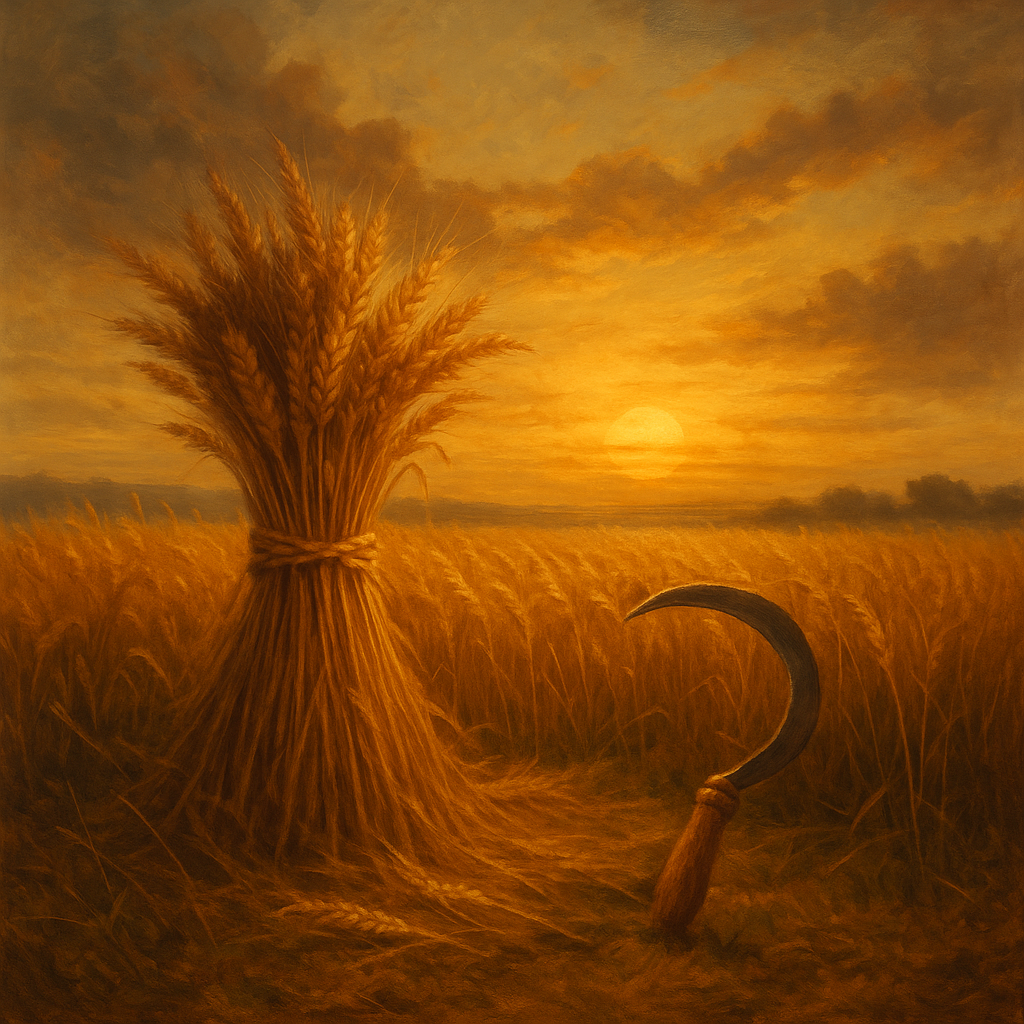
The “Serpent in the Grain” was a concept deeply rooted in pre-Christian Europe. Folk traditions held that the spirit of the harvest — often called the Corn Mother, Corn Spirit, or the Green Man’s consort — dwelled within the grain itself, sometimes depicted as a serpent or dragon that must be respected, never angered. To harvest too greedily or without gratitude risked disturbing this spirit, bringing misfortune upon the fields. Thus, farmers would leave a small portion of grain standing, the “last sheaf,” as a home for the serpent spirit, ensuring that it would return to bless the crops again next year. This act symbolized reverence for the life-force that sustains all fertility — the Earth’s breath, the serpent’s wisdom, the cycle unbroken.
To commune with the Serpent in the Grain is to honor that deep rhythm of regeneration. Begin by grounding yourself. Sit or stand upon the earth — a field if possible, or any place where life grows abundantly. Close your eyes and imagine the soil beneath you teeming with hidden vitality: worms, roots, and the coiled energy of the land’s dreaming. Visualize a great serpent made of golden light winding through the ground, its scales glinting like sunlit grain. Feel its power — ancient, calm, and infinite. With each breath, draw its strength upward through your body, from the soles of your feet to the crown of your head. This is the rising of the Earth’s kundalini — the serpent energy awakening within. It fills you not with fire, but with fertile peace, with the steady knowledge that all things are born, die, and return again.
In spiritual practice, serpent energy teaches cyclical wisdom — the understanding that endings are beginnings in disguise. The serpent sheds its skin not in despair but in grace, allowing the old to fall away so the new may emerge. Likewise, the fields, after the harvest, lie fallow for a time, resting before the next planting. When we align ourselves with this rhythm, we stop resisting change and begin to flow with it. The Serpent in the Grain asks us: What must you shed now, so that life may continue to grow through you? What old identity, fear, or attachment must return to the soil as nourishment for your becoming?
You may embody this wisdom through a simple ritual of renewal. Take a piece of snake-like vine, cord, or even a length of grass. Hold it in your hands and breathe upon it three times, infusing it with your intention to release and renew. Whisper what you are ready to shed — whether it be doubt, exhaustion, or a habit of fear. Lay the cord upon the earth and say:
“Serpent of the grain, guardian of the land, I honor your eternal cycle. As you shed and rise, so do I. As the fields renew, so shall my spirit.”
Then, cover the cord lightly with soil or leave it in a natural place to decay, symbolizing the return of what is no longer needed to the womb of the Earth.
Fertility, in the deepest sense, is not merely about reproduction — it is about creativity, potential, and the capacity to bring forth life in all its forms. The serpent’s power awakens this fertile current within us. When we attune to it, ideas flow like sap, passion stirs, and our dreams begin to take form. This is the perfect day to engage in acts of creation: writing, crafting, cooking, dancing — any expression that allows your inner fire to move through you into form. Just as the grain transforms sunlight into sustenance, so too does the witch transform inspiration into reality.
The serpent also teaches humility. It moves close to the earth, reminding us that true power does not seek to rise above nature but to move in harmony with it. Its wisdom is grounded, patient, and cyclical. In meditation, imagine yourself as both serpent and field — your spine the furrowed line of the land, your breath the wind through the wheat. With each inhale, draw energy from the soil; with each exhale, release back into it. Feel yourself as part of the great pulse of life, neither master nor servant, but participant in the eternal exchange between matter and spirit.
In folklore, serpents were sometimes feared as symbols of temptation or danger, yet within the Pagan heart, they represent the sacred mystery of transformation — the power to hold both poison and cure. This duality is the key to understanding the magic of life itself: everything that destroys also has the power to heal when balanced in wisdom. The Serpent in the Grain reminds us that our shadow — our buried fears and instincts — is not to be denied but integrated. The soil needs both light and darkness to bear fruit; so, too, do we.
By twilight, when the fields shimmer in the last light of day, take a final walk among the grain. Run your hand along the stalks and listen to the soft rustle — a sound like a thousand whispers of the Earth’s secrets. This is the song of the serpent spirit, winding unseen through the harvest-to-be, whispering of the eternal promise: that what falls shall rise again, that life and death are lovers, and that the world is always renewing itself through the embrace of both.
Offer a token of thanks — a small stone, a strand of hair, a few drops of water poured into the soil. Speak softly: “To the Serpent in the Grain, keeper of cycles, I give my gratitude. May your wisdom guide the turning of my days.” Then, walk away in silence, leaving your offering and your words to be absorbed by the living land.
The Serpent in the Grain is both mystery and mirror — it shows us that within the depths of matter lies divinity, and within every ending, the seed of new life. Its lesson is as old as the Earth itself: all things return, all things transform, and nothing is ever truly lost. Beneath the golden fields of summer, the serpent sleeps, dreaming of harvests yet to come. And in that dream, if we listen closely, we hear our own souls coiling and uncoiling — endlessly reborn in the rhythm of the Earth’s great heart.


Responses