
🌾 July 29 – The Shadow of the Scythe

Recognizing the Approach of the Year’s Descent
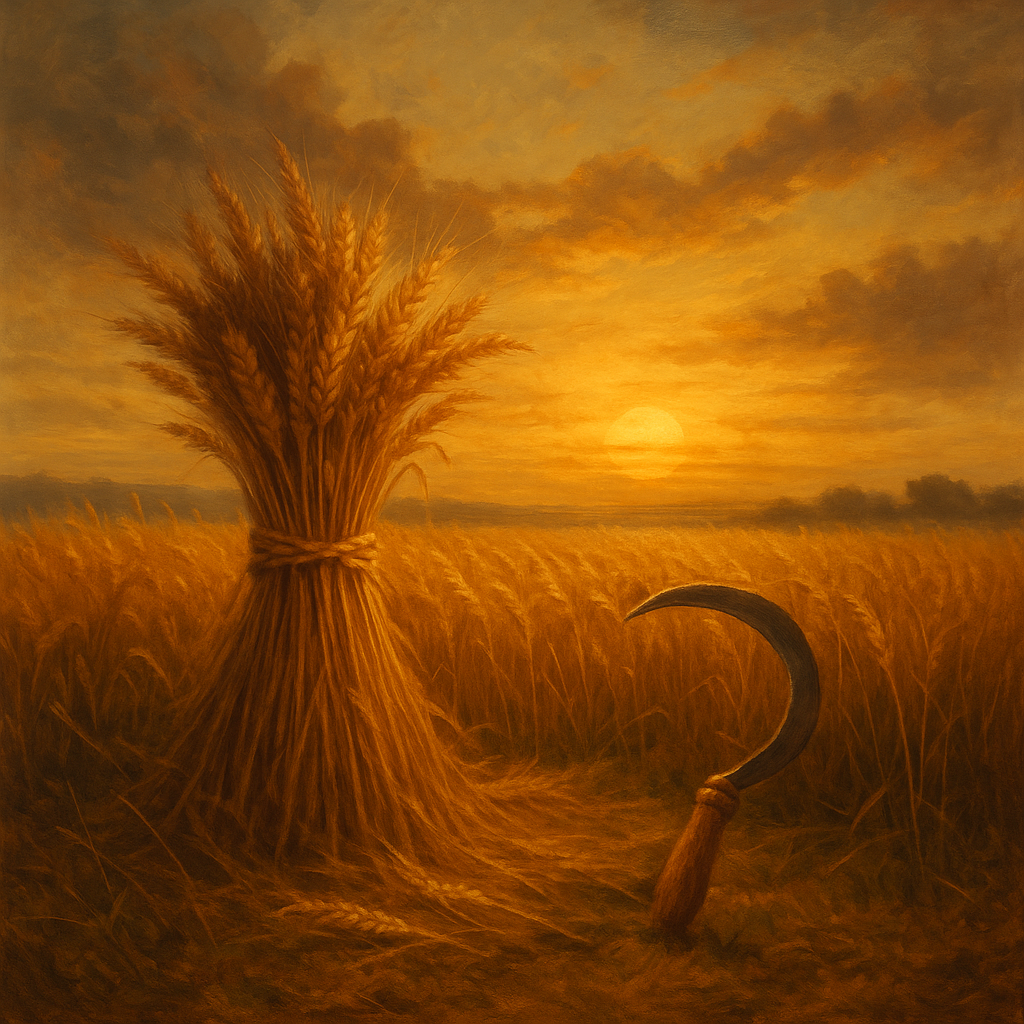
By the twenty-ninth of July, the golden brilliance of midsummer begins to dim at its edges. The fields stand ready for harvest, yet beneath their abundance lingers a subtle awareness — that the height of growth has passed, and the great turning of the year is upon us. The light lingers a little less each evening; the air carries a hint of coolness before dawn. It is here, in this quiet threshold, that we meet The Shadow of the Scythe — the moment of recognition that all cycles, no matter how radiant, must yield to change.
The scythe, ancient symbol of both death and reaping, is not merely a tool of endings. It is an emblem of transformation — the sacred act of cutting away what has ripened so that life may begin anew. To the Pagan mind, this day is not one of fear, but of reverence. The shadow that accompanies the scythe is not doom, but wisdom. It reminds us that no field can bear fruit forever, that rest and renewal are as essential as creation and growth. The Sun has shone, the Earth has yielded, and now both prepare to turn inward once more.
The Shadow of the Scythe teaches acceptance — of impermanence, of letting go, of the beauty that dwells in endings. It calls us to examine what in our own lives has reached its peak, what must be harvested, and what must be gently released back to the soil of the spirit. Just as the farmer knows when to cut the grain, we too must learn the timing of our own transformations.
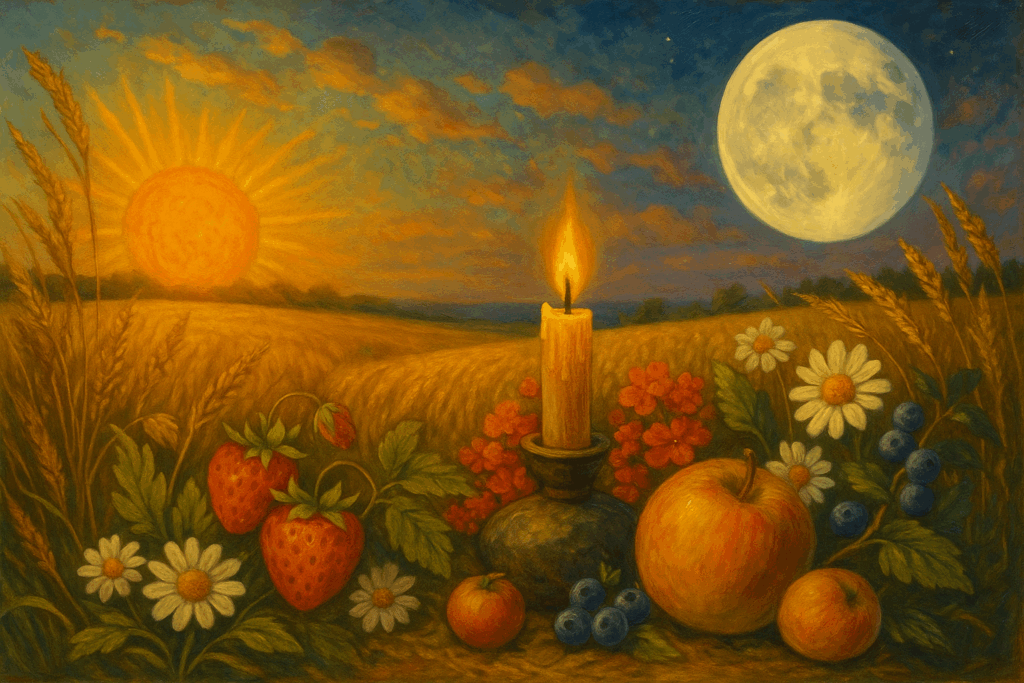
To observe this day, prepare a simple ritual space outdoors if possible — a place where you can feel the waning strength of the Sun and the whisper of the wind through ripening plants. If you cannot be outside, bring symbols of harvest into your home: a bundle of dried herbs, a loaf of bread, or a single stalk of wheat. Place them upon your altar along with a candle to represent the enduring flame of life that persists even as cycles end.
Begin by sitting quietly before your altar or in the field, eyes closed. Breathe deeply, feeling the rhythm of life around you — the buzzing insects, the rustle of leaves, the distant hum of the Earth. Each sound is part of the great harvest song. On your inhale, draw in the fullness of the season; on your exhale, release attachment to what is passing. After several breaths, open your eyes and say softly:
“The Sun begins his rest, the fields prepare for change. I stand between the bright and the fading light, grateful for both.”
Now, take a moment to reflect on what has come to fruition in your life this year. What have you grown, created, or nurtured that now stands ready to be reaped? It may be a project, a relationship, a personal transformation, or even a newfound understanding. Write these on a piece of parchment or paper — your harvest record.
Then, consider what must be released — the energies, habits, or attachments that have completed their purpose. Write these, too, on a separate paper. Lay both before you, side by side. The first represents the fruit of your labor; the second, the chaff to be returned to the soil.
Light your candle and hold your hands over the flame, feeling its warmth. Say:
“All things grow, and all things fade. What has served me, I honor. What has ended, I release. As the scythe cuts the field, so does wisdom shape my path.”
Now, if it feels right, take the paper of release and carefully burn it in the candle’s flame (using a safe dish or cauldron). Watch the smoke rise, carrying away the remnants of what no longer needs to remain. Whisper:
“From the ashes of ending, new life shall arise.”
Take the paper of harvest — the record of what has flourished — and fold it neatly. Place it upon your altar, beneath the candle, to remain there until Lughnasadh or Lammas, when you will give thanks for the full bounty. This act symbolizes that even as endings begin, gratitude anchors the soul in light.
The Shadow of the Scythe also offers a moment to meditate on mortality — not in fear, but in awe of the natural order. Every living thing, from seed to star, follows this rhythm. In recognizing our own impermanence, we learn to cherish each moment as sacred. To honor this truth, stand and raise your arms to the twilight sky, saying:
“Life and death are one breath — exhaled and inhaled by the cosmos. I walk in balance, neither clinging nor fleeing.”
Close your eyes and feel the pulse of your own heartbeat, steady and eternal in its rhythm. This is your scythe — the reminder that every beat cuts through time, shaping the pattern of your existence. The shadow of the scythe does not destroy; it defines. Without contrast, light would have no form. Without harvest, the seed could not return.
You may also choose to perform a symbolic cutting ritual. Take a piece of dried grass or wheat and hold it before your candle. Speak aloud what you are releasing, then with a small blade, scissors, or even your fingers, gently cut the stalk in two. Place one half on your altar and bury the other half later in the earth, saying:
“I honor what has been. I return it to the soil of becoming.”
This act aligns your personal cycle with that of the land, binding your transformation to nature’s wisdom.
For those who walk a magical path, the energies of this day are potent for shadow work, ancestral communication, and preparation for harvest magic. The veil between worlds begins to thin in subtle ways as the Sun wanes — not in darkness, but in the deepening light of understanding. To meditate upon your ancestors or spirit guides during this time is to listen to the whisper of those who have walked this cycle before you.
You may end your ritual by offering a piece of bread or grain to the earth, along with a libation of water or wine, saying:
“To the Earth that receives all, to the Sun that gives all — I offer my thanks. May the balance be kept, and may life return again.”
Sit quietly afterward, watching the candle burn. The flame flickers softly — steady, yet fragile. This is the nature of all things: brilliance held in the tender hands of time. As you watch, allow a sense of peace to settle in your chest. There is beauty in the curve of the scythe, in the knowing that endings are holy.
When you extinguish the candle, whisper:
“The light rests, but does not die. In shadow, it gathers strength.”
Carry that truth with you as you move toward Lughnasadh — the great festival of harvest that awaits just beyond the horizon. You have met the shadow, acknowledged its grace, and stepped forward in harmony with the turning wheel.
The Shadow of the Scythe teaches one final lesson: that gratitude and release are two edges of the same blade. To live fully, we must honor both.

Responses