
🌸 Mar 31 – Blessing of the Blossoming WorldRitual gratitude for life’s returning abundance

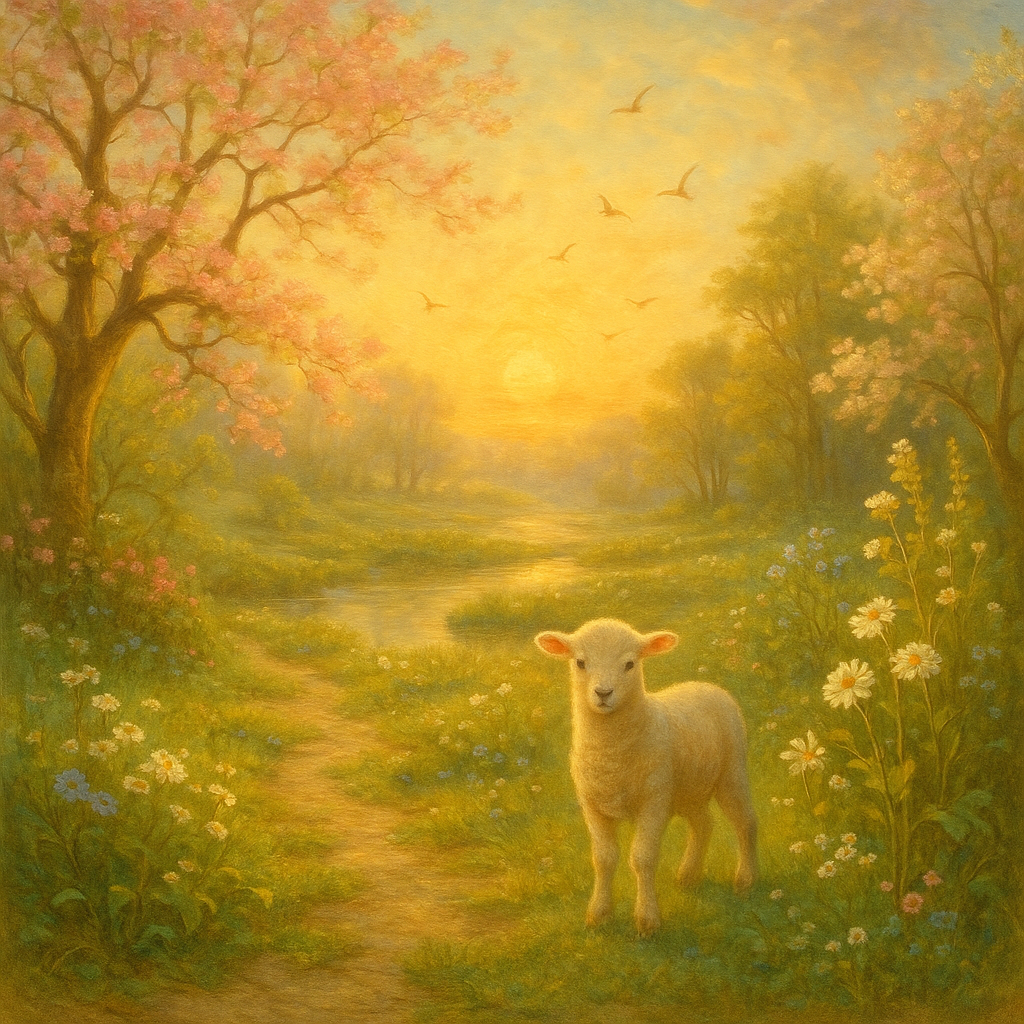
The last morning of March arrives fragrant and full. The land has cast off the last remnants of winter’s restraint. Everywhere, life surges upward in song and color: blossoms unfurl like prayer flags upon the wind, birds build and sing with unbridled devotion, streams sparkle with snowmelt and sunlight. It is the Earth’s own hymn of renewal. On this day, we celebrate the Blessing of the Blossoming World — a rite of gratitude and reverence for the living abundance that surrounds and sustains us.
This day marks the culmination of the month’s great turning — from awakening to blooming, from balance to expansion. We have witnessed the Earth’s slow rising from her slumber, felt the pulse of growth beneath our feet, honored the elements in their dance of renewal. Now we pause to offer thanks. Gratitude is the crown of every cycle, the closing and opening of each season’s sacred circle. To bless the world is to remember that we are not separate from it. We breathe its breath, share its heartbeat, and move as one life in countless forms.
In Pagan and nature-centered spirituality, gratitude is not a mere sentiment but a form of magic. It acknowledges reciprocity — the exchange between self and world that keeps the wheel turning. When we give thanks, we feed the very life that feeds us. Gratitude is the energy of continuity, the promise that what is honored will endure.
The Morning of Blossoms
To begin this day, step outside as early as you can. Let the first light of morning touch your face. Inhale deeply — the scent of wet earth, open flowers, and greening air. These are the breath and body of the Earth in her full awakening. Whisper softly:
“Blessed be the morning, bright and fair.
Blessed be the life that fills the air.
Blessed be this Earth, in bloom and song,
Whose love sustains my spirit strong.”
If you have a garden, a patch of wildflowers, or even a single potted plant, visit it with mindfulness. Touch a leaf or bloom gently and offer your thanks. The simple act of speaking gratitude aloud begins the ritual. If you live in an urban space, greet the sky, a tree on your street, or even the sunlight reflected on a windowpane. Every place holds a pulse of life waiting to be recognized.
Creating the Blessing Offering
For the main rite, prepare a blessing bowl — a vessel that will hold symbols of Earth’s abundance and your gratitude in return. You may use a wooden or earthen bowl, or anything that feels sacred to you. Fill it with elements that reflect spring’s fullness: blossoms, seeds, herbs, grains, and fresh water. Each item represents a facet of the Earth’s gift.
As you place each into the bowl, name your gratitude aloud:
- For the flowers, I give thanks for beauty and renewal.
- For the grains, I give thanks for sustenance and labor.
- For the seeds, I give thanks for hope and potential.
- For the water, I give thanks for flow and cleansing.
- For the air, I give thanks for song and breath.
- For the fire of the Sun, I give thanks for warmth and vision.
As your bowl fills, feel your heart filling with the same abundance. Let this become a living symbol of your relationship with the world — a reminder that to bless life is also to be blessed by it.
The Blessing Walk
Once your bowl is complete, carry it outdoors — to your garden, a park, a forest path, or even your doorstep. Walk slowly, carrying it as if bearing sacred water to the heart of the world. With each step, murmur your gratitude:
“Thank you for this breath.”
“Thank you for this light.”
“Thank you for the green beneath my feet.”
This walking prayer transforms the very act of movement into offering. Gratitude expressed through motion grounds spirit in the body and aligns intention with the living Earth.
When you find a place that feels alive — a patch of grass, a tree in bloom, a gentle stream — stop and set your bowl upon the ground. Kneel or stand quietly, and with both hands extended, offer your blessing to the land:
“Beloved Earth, radiant and kind,
I honor your body, your breath, your mind.
In your blossoms I see my soul reborn,
In your light I find my form.
Receive my thanks for all that lives —
For every gift the season gives.”
You may choose to pour the water from your bowl onto the ground, returning its energy to the soil. Scatter the petals and seeds as symbols of your continuing bond with the cycles of life. As they drift or sink into the earth, imagine blessings rippling outward — flowing through roots, rivers, and hearts across the world.
The Inner Blessing
Return indoors or sit quietly outdoors after your offering. Close your eyes and visualize blossoms blooming within your heart — soft petals unfolding with each breath. Each flower represents a blessing: one for health, one for love, one for peace, one for joy, one for growth. See them glowing gently, alive with color and fragrance. Whisper:
“As the world blooms, so do I.
As life renews, I am renewed.”
Stay in this meditation for as long as you wish, letting gratitude settle into your being like sunlight on soil. The more deeply you feel it, the more it radiates outward, blessing others in unseen ways.
Gratitude is a quiet power — it transforms without demand. It does not seek to change the world, only to recognize its beauty. Yet in that recognition, everything changes. The one who blesses becomes the blessing.
Evening Benediction
At sunset, you may close this day’s observance with a simple benediction. Stand facing the west, where the golden light fades into rose and violet. Lift your hands and say:
“Day’s light fading, life’s song complete,
I give thanks for the joy beneath my feet.
For breath and bloom, for work and rest,
For all I hold, I am truly blessed.”
Take a moment to feel the pulse of life all around you — the insects singing, the wind in the grass, the heartbeat of the world beneath your feet. Everything is alive with gratitude, returning your blessing in silence.
You may then take the remaining items from your bowl and return them to nature — perhaps burying them near your home or scattering them to the wind. This final act closes the circle of giving and receiving, sealing your gratitude into the living world.
The Meaning of the Blessing
Spiritually, The Blessing of the Blossoming World is more than a celebration of abundance — it is a renewal of relationship. It reminds us that we are not separate from nature’s flourishing but participants in it. Every breath we take is an exchange: we inhale the exhalation of trees, we exhale what they require to live. This reciprocity is the true essence of magic — the knowing that life sustains life.
In offering thanks, we affirm our belonging. In blessing the Earth, we remember that we are Earth. To love the world is to love the divine in its most immediate form — tangible, fragrant, and radiant beneath our fingertips.
The blossoms we honor today will one day fade and fall, yet from their decay new seeds will form. Gratitude ensures that we see beauty not only in the flower but in its falling. When we live with thankful awareness, every moment — even endings — becomes sacred.
So on this last day of March, let your heart open as wide as the world’s own blossoms. Speak your thanks aloud — not only to the Earth but to all that has carried you to this point: your joys and your hardships, your teachers and your mistakes. Everything has played a part in your growth.
Stand beneath the vast sky, breathe deeply, and whisper:
“I am a flower in the garden of life.
I am a song in the choir of Earth.
May my gratitude bloom forever.”
And as twilight deepens into night, feel the peace of fulfillment — the circle complete, the Earth alive, the spirit renewed. The world blossoms, and you blossom with it.

Responses