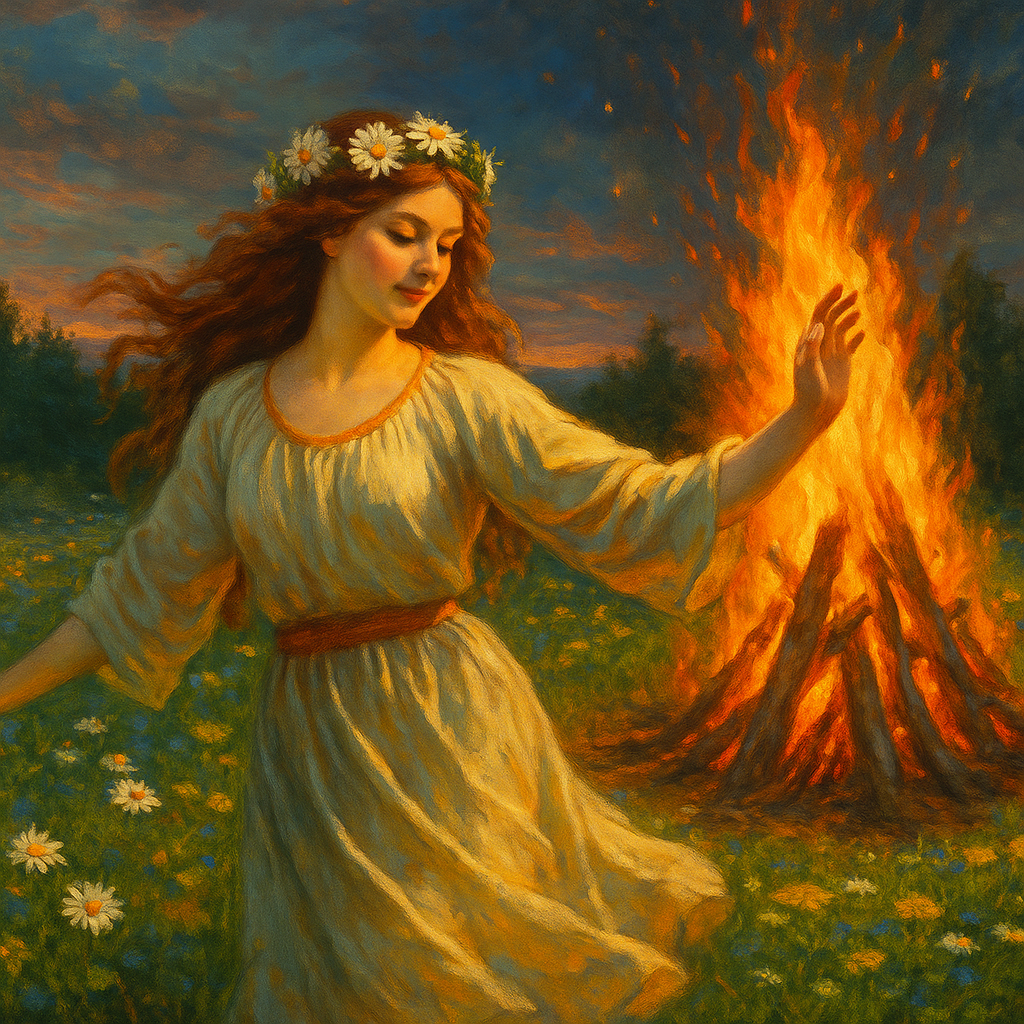
🌸 Mar 21 – The Feast of BlossomsOfferings of gratitude to the awakening Earth

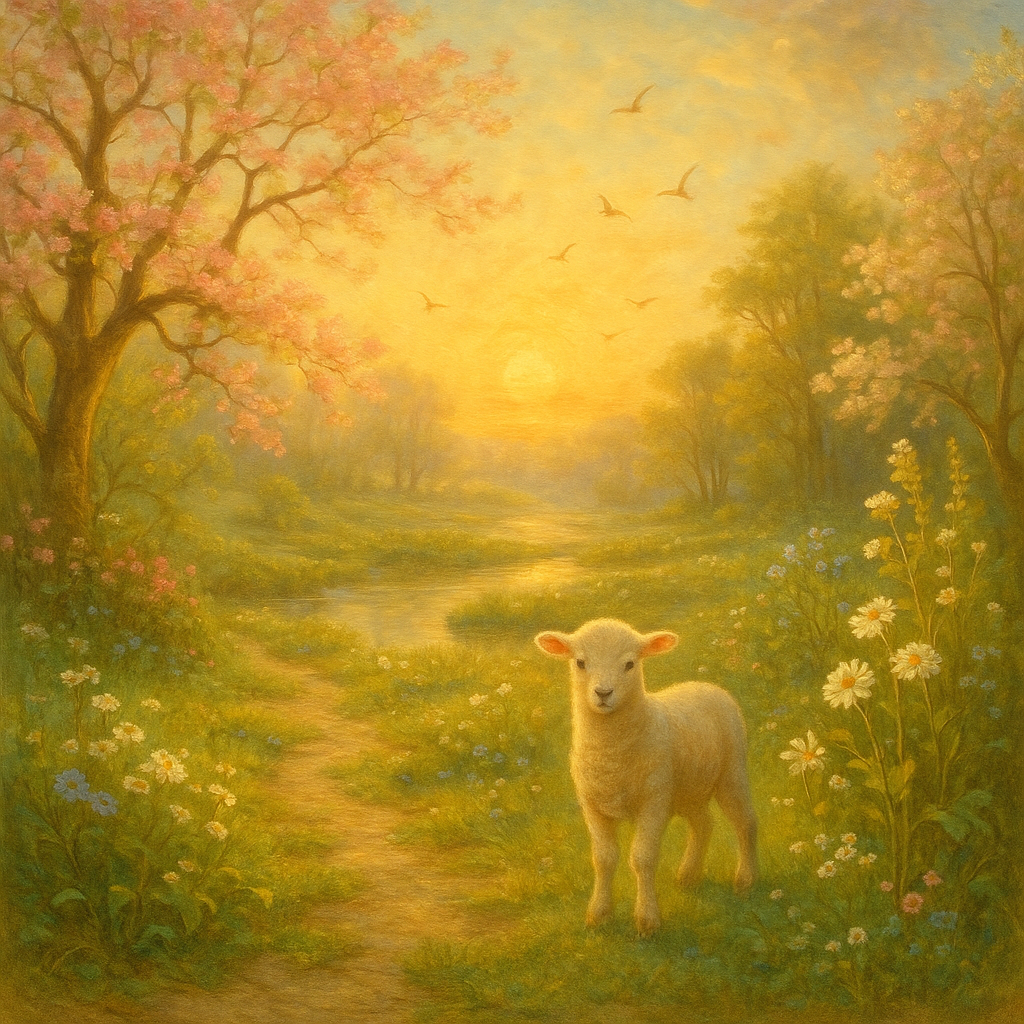
The morning after the equinox dawns with a rare sweetness. The world feels lighter, as though it has exhaled the breath it held through winter. Sunlight spills gently across fields and hedges now dappled with bloom — crocus, daffodil, primrose, cherry, and plum — each a chalice lifted toward the sky. The songs of birds fill the air, the scent of pollen and soil weaves a heady perfume, and life hums audibly in every corner. It is the perfect day for The Feast of Blossoms — a celebration of gratitude to the awakening Earth, a communion of beauty, nourishment, and joy.
Where the equinox marked balance, today marks gratitude — the conscious act of rejoicing in that balance and honoring the life that springs from it. In ancient pagan cultures, this was the season of thanksgiving to the land. Offerings of milk, honey, bread, and flowers were placed at sacred groves, springs, and standing stones to thank the gods and spirits for the Earth’s renewal. Feasting was not only indulgence but devotion — a shared meal with the divine, an acknowledgment that the same life animating the world also fills our bodies.
The Feast of Blossoms invites us to participate in this timeless act of thanksgiving — not as consumers of Earth’s bounty, but as kin returning to visit a beloved elder. Gratitude transforms how we see the world. It turns every flower into an altar, every meal into a blessing, every breath into prayer. When we offer thanks, we do not merely honor the land; we awaken our connection to it, remembering that we are not separate from the blooming, but part of it.
To begin your observance, step outside and let your senses awaken. Notice the colors around you — the tender greens, the pale yellows, the blush of new petals. Listen to the murmur of bees and the whisper of wind through budding branches. Feel the warmth on your skin, the living breath of the Earth rising through the air. This awareness itself is a form of worship. The first act of gratitude is to see, to feel, to be fully present.
If you wish to create a ritual for The Feast of Blossoms, prepare a small meal using fresh, natural ingredients — bread, fruit, greens, and perhaps a touch of honey or herbal tea. As you cook or gather your meal, do so with mindfulness, whispering thanks to each element:
“To the grain and the ground, I give thanks.
To the fruit and the tree, I give thanks.
To the bee and the flower, I give thanks.
To the fire that cooks, I give thanks.
To the hands that share, I give thanks.”
Set a portion of your meal aside as an offering. This can be a slice of bread, a cup of tea, or a few petals from the flowers you’ve gathered. Later, you will return it to the Earth. This simple act transforms your feast from consumption into communion — a mutual exchange between you and the living world.
Before you eat, take a moment of silence. Look upon your food as though seeing it for the first time. Recognize the miracle it represents — the sunlight transformed into nourishment, the rain and soil that gave it birth, the countless beings involved in its journey to your hands. Whisper softly:
“Blessed be this meal, born of Earth and Sky.
May my heart be full as the world is full.
May gratitude be my harvest.”
Eat slowly, savoring each bite. Taste becomes a meditation — each flavor a voice of the Earth singing through your senses. As you eat, reflect on the abundance that surrounds you, not only in food but in friendship, love, and opportunity. This is the essence of the Feast of Blossoms: to see life as an overflowing table, continually renewed.
After your meal, gather your offering and go outdoors to a place of living beauty — a garden, field, or even a patch of grass. If flowers grow nearby, greet them. They are the emissaries of the Earth’s joy, the bright laughter of the land. Place your offering at their base or upon the soil, saying:
“Mother Earth, whose body blooms,
I offer back what you have given.
May my heart be as open as your flowers,
My life as generous as your spring.”
Pour a little water or milk over the offering if you wish, completing the circle of nourishment. Watch how the Earth receives it silently, as she always does, transforming all gifts into growth.
In many traditions, flowers are the language of prayer. Each bloom carries meaning — daffodils for hope, violets for humility, tulips for love, and daisies for innocence. You may create a floral offering bowl for your altar, floating petals in water as a symbol of life’s beauty and impermanence. As you do, think of what you are thankful for, naming each blessing aloud as you place a flower into the bowl. The water becomes a mirror of gratitude, reflecting abundance back to you.
If you wish to deepen your practice, consider sharing your feast with others — human or otherwise. Invite friends for a meal outdoors, or feed the birds, leave seeds for wildlife, pour honey for the bees. The spirit of Ostara thrives on generosity. The more we give, the more the cycle continues. Gratitude is never stagnant; it ripples outward, blessing all it touches.
The Feast of Blossoms is also a day for joy — for laughter, music, and dance. If you can, spend part of the day moving freely in the open air. Let your body mirror the world’s awakening: stretch like branches, sway like grass, spin like petals on the wind. Movement itself is an offering — a wordless way of saying, “I am alive, and I am thankful.”
For those drawn to magic, this day’s energy is bright and creative. Any spell for abundance, love, or renewal will find strong support now. Use petals, seeds, or honey in your workings, focusing on sweetness, harmony, and growth. As you weave your intention, remember that gratitude amplifies all magic. A heart that thanks easily attracts blessings easily.
At sunset, return once more to your flowers or offering place. The golden light will cast every blossom in gentle fire. Sit quietly and reflect on the day. Feel the peace of fullness, the calm joy of connection. Whisper:
“Day and night now flow as one,
Seed and bloom beneath the sun.
In gratitude my heart does sing,
For life’s return, for endless spring.”
The Feast of Blossoms reminds us that gratitude is not only for what we have, but for the very act of being alive. Every petal that unfolds is a hymn; every breath is an offering. When we live in awareness of this, our entire life becomes a feast — not of excess, but of appreciation. We eat with reverence, speak with kindness, walk with wonder. The Earth gives freely; our task is simply to notice and to thank her.
As night falls, and the first stars appear, know that your gratitude joins countless others across time — those who offered bread to the soil, who danced among the flowers, who lifted their hearts in praise of the living world. You are part of that lineage of reverence. The blossoms you see today are the descendants of ancient prayers, still opening, still singing, still grateful.
And so, the cycle continues: the Earth blooms, we give thanks, and through that gratitude, she blooms again.