🌸 Mar 13 – The Song of RiversWater as teacher, healer, and guide

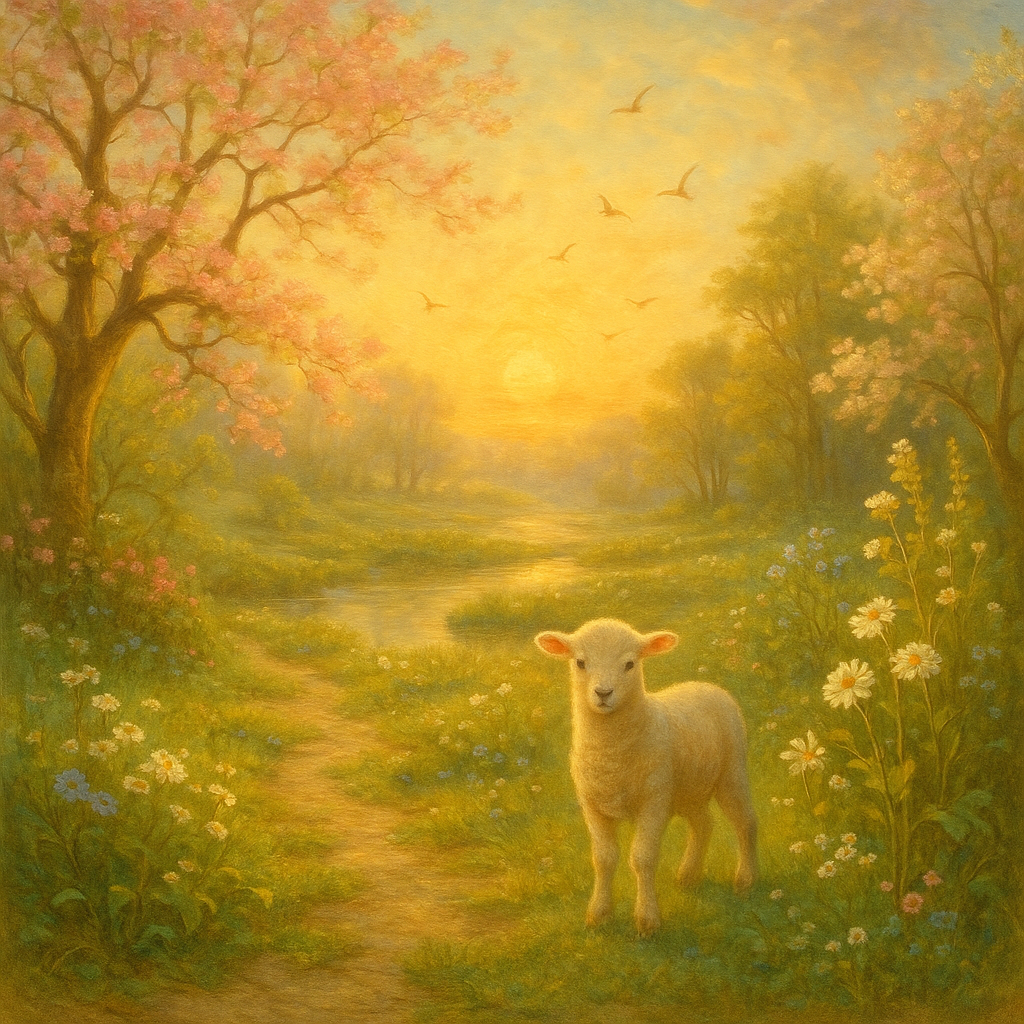
By the thirteenth of March, the landscape is alive with movement. The still ponds have thawed, streams are running freely again, and rivers, swollen with rain and melt, course through the land like living arteries of the Earth. If we listen, truly listen, we can hear them singing — a low, endless hymn that carries both memory and promise. The rivers are the voice of time itself, whispering of cycles older than humanity, of journeys that began in mountain snows and will end in the vast embrace of the sea. Today we honor The Song of Rivers — the sacred current that teaches us how to move, how to heal, and how to trust the flow of life.
In pagan thought, water is the element of emotion, intuition, and transformation. It is the mirror of the soul — reflective, receptive, ever-changing. Rivers, in particular, hold a special power among the waters. Unlike still lakes or deep oceans, the river is both stable and moving. It is born from the joining of many sources — streams, rains, underground springs — and it travels tirelessly toward unity. To walk beside a river is to be reminded of life’s continuity: how we are each a confluence of moments and influences, and how, no matter the twists in our path, we are all flowing toward the same sea of spirit.
The Song of Rivers speaks through rhythm. If you stand beside flowing water and close your eyes, its voice will find you — a blend of murmurs, rushes, and silences. There is wisdom in that sound. It tells of letting go, of persistence without struggle. The river does not resist the stones that block its way; it moves around them, reshaping them over time. In this, water becomes a teacher of patience and grace. We, too, encounter obstacles on our path. The river teaches us to move with them, to keep flowing, to allow change to shape us rather than break us.
To commune with this energy, find your way to a river, stream, or even a small flowing creek. If none is nearby, a bowl of water can serve as a symbolic river, for all water is connected. Begin your ritual by standing quietly at the water’s edge. Take three deep breaths — in through the nose, out through the mouth — and allow your thoughts to slow until they match the rhythm of the current. Feel the pull of that flow, steady and eternal.
Say softly:
“River of life, river of song,
Teach me to flow, to heal, belong.”
If you feel moved to do so, kneel and touch the water. Let it flow over your hands, cool and clear. Imagine it drawing away tension, sorrow, or confusion — carrying these burdens downstream to be transmuted. Whisper your thanks as they leave you: “As you flow, so do I. As you heal, so am I renewed.”
For those who practice magical work, river water is an extraordinary ally. Its energy is dynamic, purifying, and wise. Collected respectfully, it can be used in rituals of emotional cleansing, divination, and spiritual renewal. When gathering, always ask permission first and offer something in return — a prayer, a flower, or a few grains of salt. Never take more than you need. Keep the water in a glass vessel, and use it to anoint your tools or to cleanse your altar before new beginnings. River water carries the vibration of movement; it encourages what is stagnant to release and what is meant to flow to find its way.
The river also teaches connection. Every droplet within it once fell as rain somewhere far away. The water that touches your hand today may have flowed through forests, mountains, or even the veins of other living beings centuries ago. In this way, the river unites all places and times. It reminds us that life is a continuum — that separation is illusion. To meditate upon a river is to remember that your own spirit is part of a vast cycle of giving and receiving, of ebb and return.
You might create a simple meditation by sitting at the river’s edge (or before your bowl of water) and gazing into its surface. Watch how light dances upon it, how shadows pass and distort, how it never truly holds one shape. As you watch, imagine that your thoughts and emotions are like the reflections on that surface — moving, changing, yet unable to disturb the depths beneath. Beneath every ripple lies stillness. Beneath every turbulence, clarity waits. This awareness is at the heart of water’s teaching: emotion is sacred, but it is also transient. Feel it, honor it, let it pass.
In many traditions, rivers are also seen as pathways between worlds. They mark the boundaries of the living and the spirit realms, and crossing them in myth often symbolizes transformation. The Celts honored river goddesses such as Sequana and Boann, each embodying healing and inspiration. The ancient Hindus revered the Ganges as a living goddess whose waters purified sin. Wherever humanity has settled, rivers have become sites of pilgrimage and prayer — testaments to the power of moving water as a conduit between mortal and divine.
In pagan practice, one might offer to the river a token of gratitude — a biodegradable flower, a pebble marked with a rune, or a whisper of thanks. Stand beside the flow and speak from the heart:
“Waters of Earth, bearer of time,
Carry my blessings where you will.
May all who touch your path be healed.”
Such offerings are not about possession, but participation. They remind us that magic is not an act of domination but of harmony — moving with nature’s current rather than against it.
The river’s song can also guide our inner journeys. When life feels uncertain, imagine yourself as a small boat upon its surface. The current will carry you — you need only steer gently, adjusting with awareness but not resisting the flow. This visualization is particularly powerful for those undergoing transitions or seeking clarity about purpose. The river does not worry about its destination; it trusts the pull of the sea. Likewise, we are drawn by unseen forces toward our own fulfillment. Trust the current within you.
Water’s healing extends to the body as well as the spirit. If you can, immerse your hands or feet in running water, allowing it to soothe tension. You may even bathe in a natural river, asking it to cleanse and renew you. If this is not possible, fill a bath with intention. Add sea salt, lavender, or rosemary, and visualize the river flowing through it, connecting your home to the world’s living waters. As you soak, imagine the currents washing through your aura, releasing what no longer serves you. When you drain the water, whisper: “Flow onward, carrying what I release.”
The Song of Rivers also teaches us to listen — not only outwardly, but inwardly. Each of us has an inner river, a current of emotion and intuition that moves beneath the surface of our daily lives. When we ignore it, stagnation occurs. But when we honor it, creativity and healing flow freely. You may hear this inner river in your heartbeat, in the rhythm of your breath, in the silent knowing that rises from within. Trust its direction.
At day’s end, when the light softens and the river turns to silver, stand once more beside it and give thanks. You might say:
“River of time, river of grace,
In your reflection I see my face.
Carry my dreams, my fears, my song,
Back to the sea where all belong.”
Watch the water as it continues on its way — always moving, never lost. Its journey is your journey: one of flow, of surrender, of endless renewal.
The Song of Rivers reminds us that healing is not a single act but a rhythm — a continual washing, an eternal return. Like the river, we are shaped by every bend and stone along our path, but the essence of who we are — the water of our spirit — remains pure, fluid, unbreakable. When we learn to move as the river does, we become part of the world’s song: ever-changing, ever-returning, eternally alive.