
🌦️ April 4 – Song of the Meadow Spirits

Offerings to Land Wights and Fae of the Green Places
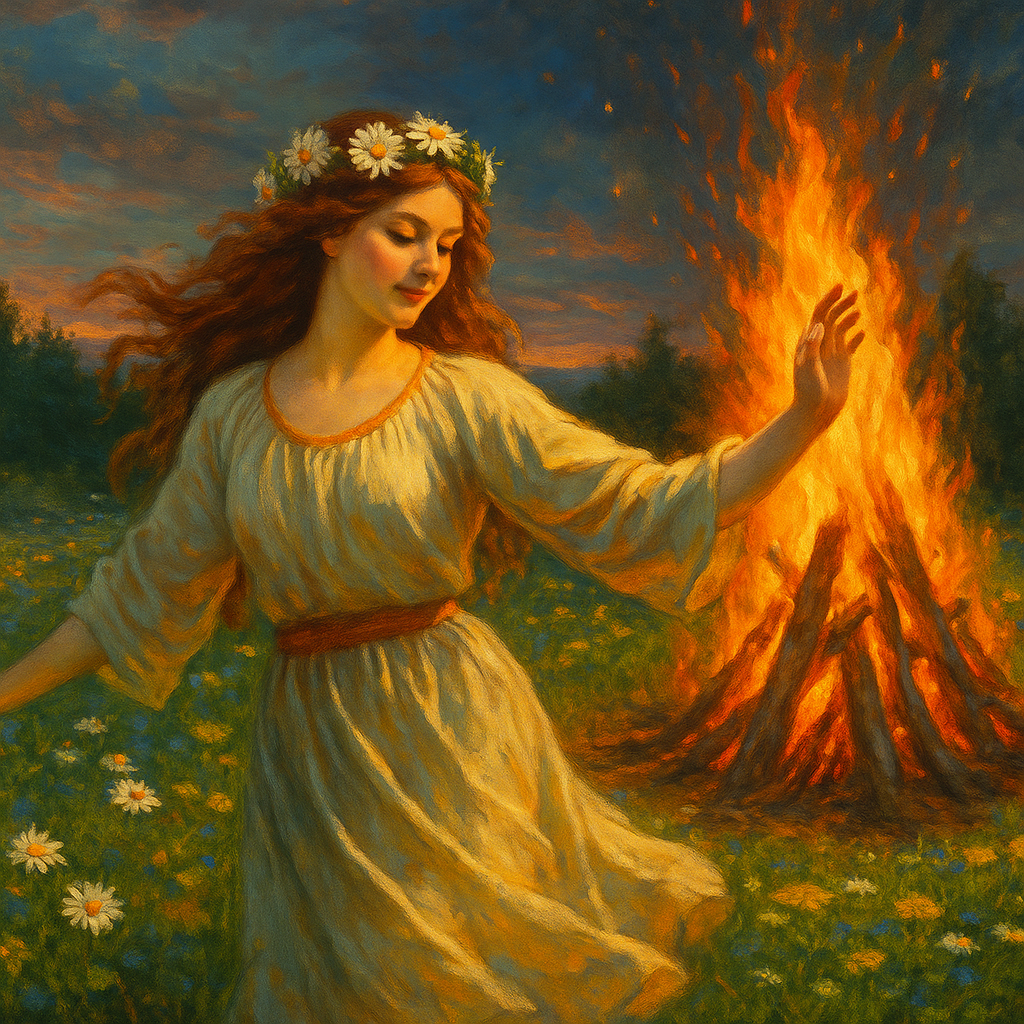
There is a hush that lives in the meadows when the wind pauses and the sunlight drifts across the grass like a slow-moving dream. It is in that stillness that the hidden ones stir — the spirits of leaf and dew, the wights of root and blossom, the quiet intelligence of the green world. To the old pagans, these beings were never superstition, but kin. They were the unseen neighbors, the keepers of place and season, the guardians of balance between human and wild. On April 4, as spring’s breath deepens and flowers begin to open their eyes to the sun, we turn our attention to these ancient presences and raise our hearts in a Song of the Meadow Spirits.
To honor the land wights and fae is to remember that the Earth is alive and aware — that every stone, tree, and blade of grass hums with consciousness. Modern paganism, though diverse in practice, continues this ancestral reverence. The spirits of place are not abstractions but companions; their favor nourishes our work, their neglect withers it. When we live in harmony with them, magic flows naturally, like wind over wildflowers.
The Spirit of Place
Every place on Earth carries its own soul, its genius loci, a personality born from its history, ecology, and energy. The ancients perceived this instinctively: the Romans made offerings to the household and land spirits, the Norse to the landvættir, the Celts to the Aos Sí. Each grove, hill, and stream was recognized as a living being, capable of relationship.
The meadow, in particular, is a space of threshold — open to sky yet rooted in soil, home to bees, birds, and unseen presences that shimmer between sunlight and shadow. It is neither forest nor field, but the meeting ground of both — a place of gentle abundance and soft power. When you step into a meadow, you step into an ancient temple where the ceiling is sky and the altar is green.
These spirits are subtle and often shy of human noise or intrusion. To meet them requires respect, patience, and presence. They are not ours to command; they are allies, not servants. Approach them as you would approach a wise elder or a wild animal — with humility, curiosity, and a listening heart.
Hearing the Song
The song of the meadow spirits is not sung in words but in vibration. It is the hum of bees, the rustle of tall grass, the murmur of insects, the sigh of wind through blossoms. It is a harmony that can be felt in the body more than heard by the ear. To perceive it, you must first still the human noise within — the chatter of thought, the rush of task, the heavy tread of expectation.
Find a patch of grass, even if small, where you can sit quietly for a time. Breathe slowly. Let your senses expand outward. Notice the sway of plants, the pattern of light and shadow, the gentle choreography of movement all around you. You may begin to feel a tingling at the edge of awareness — a subtle shift, as if the world itself were breathing with you. That is the beginning of communion.
The meadow’s song is one of belonging. It tells you that you are not separate, that the air in your lungs was once leaf, that your heartbeat echoes the rhythm of the Earth. To hear it is to remember that the sacred is not confined to temples or altars, but lives in the quiet pulse of every living thing.
Offerings to the Hidden Folk
Offerings are the language of gratitude. They are gestures of reciprocity, acknowledging the gifts of the land and returning blessing for blessing. In traditional practice, offerings to the land wights or fae were simple: a bowl of milk, a piece of bread, honey, mead, or a handful of flowers left beneath a tree or near a stone. The key is sincerity, not extravagance.
Before leaving an offering, take a moment to introduce yourself to the spirits of the place. Speak your name and purpose aloud:
“Spirits of this meadow, green and unseen,
I greet you in friendship and respect.
I offer this gift in gratitude for your care,
That harmony may grow between us.”
Then place your offering gently upon the ground. Do not demand or expect anything in return. Simply give, and trust that the exchange has already occurred on levels unseen.
Avoid leaving plastics, coins, or any substance that could harm wildlife — the spirits of place care for all beings, and offerings should never endanger their realm. A handful of birdseed, fresh herbs, wildflowers, or water poured from a clean vessel are beautiful acts of honor.
The Fae and the Land Wights
Though often spoken of together, the fae and the land wights are not the same. The wights — from the Old Norse vættir — are the spirits of the land itself: ancient presences tied to rocks, rivers, and trees. They are stable, enduring, protective. The fae, or fair folk, are more mercurial — beings of the in-between, creatures of enchantment and illusion who dwell where worlds overlap. Some are kind, others mischievous or indifferent.
Both deserve reverence, but caution as well. Not all spirits seek human contact, and not all contact is beneficial. The wise practitioner approaches with respect and discernment, never boasting, never summoning, but inviting through beauty and gratitude. To sing to them, to tend their places, to protect their meadows from harm — these are the purest forms of devotion.
If you feel called to deeper relationship, you may create a spirit corner in your garden or home — a small dish of water, a stone, a flower, or a feather to represent the local spirits. Keep it clean, speak to it kindly, and notice how the energy of your home begins to harmonize.
The Magic of Reciprocity
When you give to the land, the land gives back. It may not be in ways the human mind expects — not in sudden miracles, but in subtle shifts: plants growing stronger, dreams more vivid, synchronicities appearing, peace settling where once there was tension. These are the signs that harmony has been restored.
Modern life often forgets this balance. We take and take from the Earth, speaking of “resources” instead of relationships. Yet in pagan understanding, every act of taking must be balanced by an act of giving. The Song of the Meadow Spirits reminds us to live in that reciprocity — to make offerings not just in ritual, but in how we walk, garden, consume, and speak. To pick a flower with awareness, to leave part of the harvest for the birds, to clean a stream rather than pollute it — these are all offerings, and the spirits see them as such.
The Meadow as Temple
When we approach the meadow as temple, every blade of grass becomes a sacred pillar. The bees become choristers, the wind a hymn. The sunlight on the dew is the lantern flame of the divine. You do not need to call upon gods to feel holiness here; it rises naturally from the living web of being.
Lie down in the grass and feel the earth beneath your back. Watch the clouds move. Listen to the world breathing. The sacred will reveal itself not in thunder, but in stillness. The fae may not appear as shining figures or voices in the air, but as a sudden feeling of lightness, laughter, or beauty too intense to name.
Honor that moment. That is the gift returned — the meadow singing to you.
Closing Blessing
At the end of the day, return to your offering spot and whisper a simple thanks:
“Spirits of meadow, of dew and bee,
I thank you for your grace to me.
May peace abide where feet have trod,
Between the green and the light of God.”
Then leave in silence, without looking back. The meadow remembers your kindness, and the exchange is complete.
Responses