December 3 – The Silent Flame

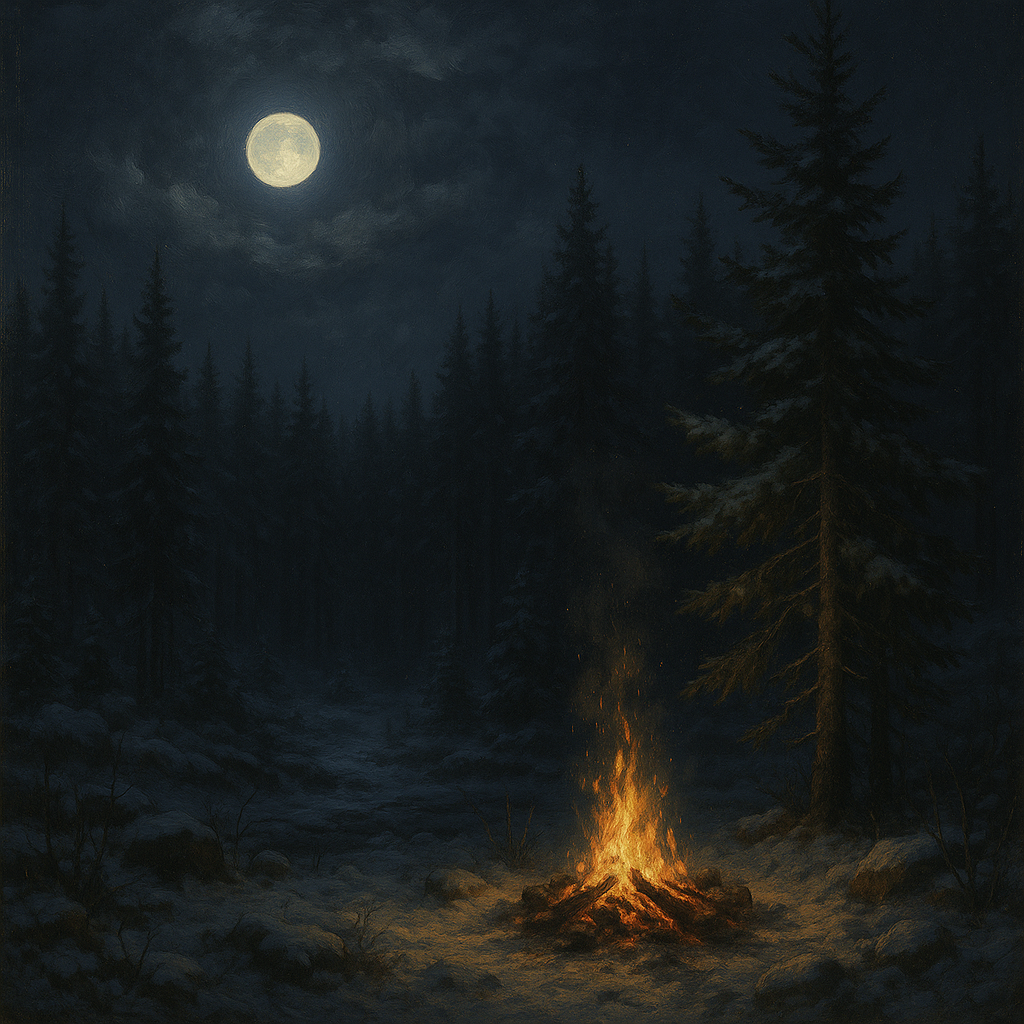
In the deepening stillness of early December, the world seems to hold its breath. The long nights grow heavier, the sun lingers lower upon the horizon, and silence becomes a presence in itself—a living, breathing spirit that fills the spaces between heartbeats. On this day, December 3, we turn our attention to The Silent Flame, the inner fire that burns quietly within, a mystery of divine stillness and preparation before the rebirth of light. It is not a roaring blaze or a jubilant candlelight; it is the subtle ember within the soul, the one that glows unseen yet sustains all life through the coldest nights.
Every path of spiritual wisdom recognizes this inner flame. It is the spark of divinity that dwells in every living being, the eternal presence that neither wanes nor withers. In pagan thought, the flame is the essence of spirit itself—the animating principle, the sacred fire that ignites creation and transformation. Yet, unlike the bright fires of midsummer or the jubilant blaze of solstice celebration, this early December flame asks for quiet. It teaches us the sacred art of stillness, of tending that inner light without forcing it to shine too soon. This is the fire that hums softly in the depths of being, awaiting the call of the returning sun.
In many ancient traditions, fire is more than a symbol—it is a living deity. To the Celts, Brigid was the keeper of the sacred flame, guardian of poets, healers, and smiths. To the Greeks, Hestia tended the eternal hearth, ensuring the continuity of home and spirit. The Vedic tradition honors Agni as the messenger between humans and gods, the sacred mouth through which offerings ascend. And in Norse myth, the first fires of creation rose from the meeting of ice and flame, giving birth to life itself. Fire, therefore, is divine communication, illumination, and transformation. But in winter’s dark embrace, it also becomes an intimate companion—a whispering flame in the silence of the soul.
To contemplate The Silent Flame is to turn inward. The world outside grows hushed beneath the weight of frost and shadow, and the human spirit mirrors that descent. There is a longing for warmth, not only in the hearth but in the heart. This is the season of introspection, when our inner fires burn low but steady, sustaining life through patience and reflection. The silence is not absence; it is gestation. The goddess sleeps in her deep womb, the god rests beneath the earth, and yet the spark endures. Within that quietude, something holy stirs—an awareness of stillness as sacred power.
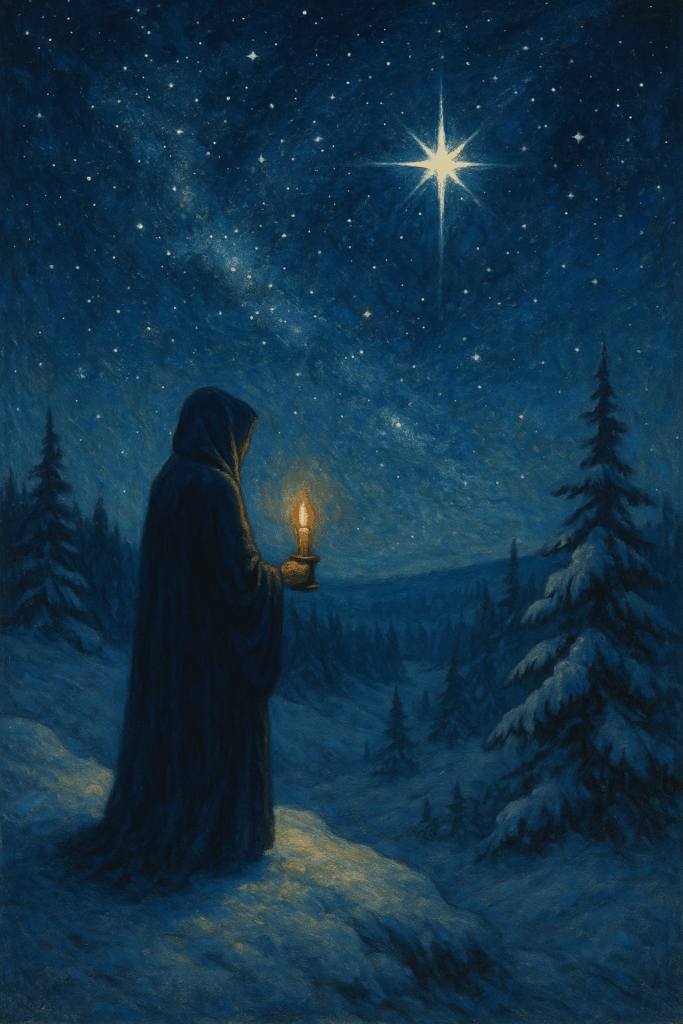
In pagan practice, this day may be observed through meditation, candle magic, or simple acts of presence. Choose a small candle—perhaps white, gold, or deep amber—and set it in a still space, free from distraction. As you light it, do not speak. Simply breathe and watch. Let the flicker draw your attention inward, to the flame that dwells behind your ribs, within the temple of your heart. It does not shout; it whispers. It is not consumed by passion; it rests in knowing. You may find that, as you gaze, your thoughts begin to slow, your breathing deepens, and an exquisite calm fills the space around you. This is the communion of silence and fire—the meeting of the eternal and the momentary.
In ritual terms, the Silent Flame represents the point of balance between endings and beginnings. The year’s light is nearly gone, and yet the promise of renewal is near. It is the still point of the turning world—the space between exhale and inhale, death and rebirth. For those who practice inner alchemy or energy work, this is a day to focus on the heart center, the anahata, where the flame of love and divine consciousness dwells. Visualize this inner fire glowing softly within your chest. It does not demand; it simply is. Allow it to illuminate the inner chambers of your being—the hidden fears, the quiet hopes, the unspoken prayers. In the silent flame, nothing is judged; all is simply seen.
Silence itself is a form of worship. In a culture saturated with noise and movement, silence can feel unfamiliar or even unsettling. Yet it is in silence that the soul speaks most clearly. When we strip away words and distractions, we meet the essence of our own divinity. The Silent Flame teaches us to rest in that awareness, to trust that life continues even when all seems still. Just as the seed sleeps beneath the snow, holding within it the blueprint of forests yet to come, our inner light rests in preparation for rebirth. To sit with that stillness is an act of faith—a declaration that we are part of a rhythm larger than ourselves.
You may wish to dedicate this day to inner reflection or journaling. Ask yourself: What within me is burning quietly, awaiting expression? What truths am I incubating in the silence of this season? What aspects of myself need warmth, and which require rest? Allow your answers to unfold like the slow spreading of light at dawn. You may find that silence itself provides the insight you seek—that the flame’s gentle glow reveals more than the brightest blaze.
In ancient pagan temples, the eternal flame was never allowed to go out. It symbolized continuity between the mortal and divine worlds. Similarly, the flame within each of us must be tended with care. In difficult times, when darkness seems endless, that inner fire reminds us that we are never truly lost. Its light may dim, but it does not die. Even when we cannot see it, it endures, waiting patiently for our recognition. The Silent Flame is therefore an invitation to remember—to remember that light does not always announce itself with brilliance, but sometimes dwells in the soft, steady glow of being.
For those drawn to ritual, a simple act can anchor this awareness. Sit before your lit candle and whisper:
“Flame within, light of my soul,
I honor your quiet and your power untold.
In stillness I watch, in silence I hear,
The whisper of spirit ever near.”
Then close your eyes and envision the flame expanding gently within your heart, filling your body with golden light. See that light extending outward, forming a halo that surrounds you with peace and warmth. This is your sacred fire—your connection to all that is divine.
As the night deepens, you may choose to extinguish the candle not by breath, but by gesture—covering it gently with a small lid or snuffer, symbolizing that the flame continues within. The ritual ends not with a flourish but with a sigh, a return to stillness. The world outside remains dark and quiet, but within you, the light endures—strong, silent, and eternal.
The lesson of the Silent Flame is subtle yet profound. It tells us that true power often moves in silence, that transformation is not always heralded by sound or spectacle. It teaches patience, faith, and the gentle courage to hold light through darkness. As the solstice nears, we carry this lesson in our hearts: before the dawn comes the pause, before the rebirth comes the rest, and in that stillness, the sacred fire waits.