December 23 – Song of the Oak King

The sun has been reborn, and its light stretches just a breath longer each day. The air still carries the chill of deep winter, yet something in it has changed — a faint stirring, a whisper of awakening. On December 23, we honor The Song of the Oak King, the spirit of renewed life, strength, and solar power who rises triumphant after the Solstice. This is the day to sing the sun’s return, to celebrate vitality, courage, and the unstoppable rhythm of growth that begins, even now, beneath frost and snow.
In the great mythic cycle of the year, the Oak King and Holly King are twin sovereigns — brothers, rivals, and reflections of one another. They embody the eternal dance of light and dark, waxing and waning, expansion and rest. The Holly King rules from midsummer to midwinter, his reign marked by introspection, harvest, and descent into shadow. But with the solstice, his time wanes, and the Oak King — youthful, golden, and strong — ascends to the throne. His reign will bring the strengthening of the sun, the quickening of the earth, and the stirring of all things toward life.
The Song of the Oak King is not merely about triumph; it is about balance. The Oak and Holly are not enemies, but complements — each necessary to the other’s existence. The Holly guards the inward fire, preserving wisdom through the long night, while the Oak brings that fire back into the open sky, turning potential into manifestation. Their exchange at the solstice is the universe’s heartbeat: a steady rhythm of rise and fall, rest and renewal.
The Mythic Song
On this day, imagine the Oak King’s awakening beneath the frost. Deep in the earth’s dreaming roots, he stirs — his hair woven with green, his body carved of wood and sunlight. From his chest emanates a single note, low and resonant, the first song of the returning light. That sound ripples through the soil, through the trunks of sleeping trees, through the frozen rivers, awakening life wherever it passes.
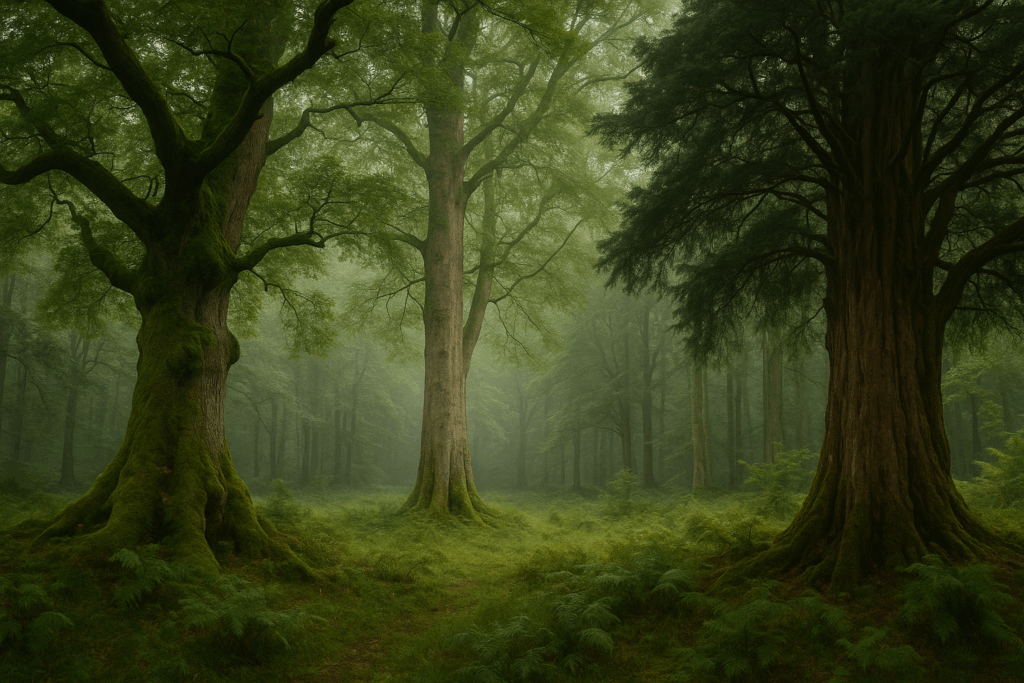
In old Celtic lore, oak was the tree of the sun — Duir, the door — standing as a threshold between worlds. Its wood was sacred to the gods of thunder and light, a symbol of endurance and divine strength. The Oak King himself is that doorway: through his song, the world passes from death to life, from the stillness of shadow into the movement of dawn.
You may hear his voice in the wind today — a low hum through bare branches, a creak in the old trees, the faint throb of earth’s pulse returning. This is the Oak King’s song, echoing through the land and through your spirit. It is the call to awaken.
Ritual of the Oak King’s Song
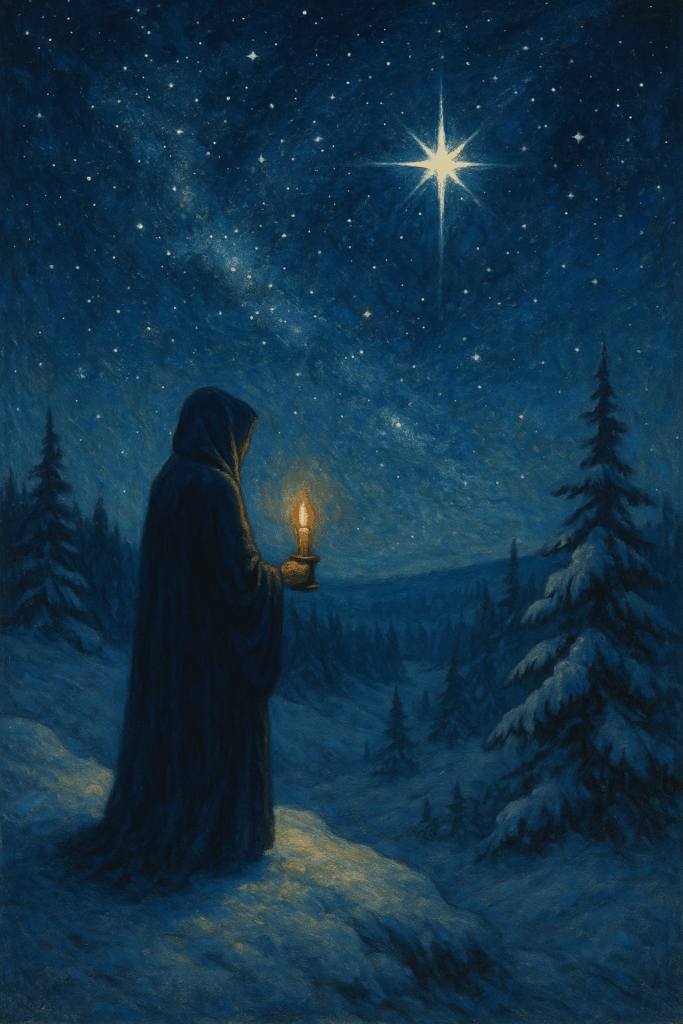
To honor this day, rise early and prepare a small space near a window or outdoors beneath a tree. Gather symbols of the Oak King — acorns, oak leaves (even dried ones), evergreen sprigs, or a piece of oak wood if you have it. Place them upon a green or gold cloth, and light a single candle in the center. This represents the newborn sun, the fire of life renewed.
Take a few deep breaths. As you inhale, imagine drawing energy upward from the earth through your feet — the roots of the world feeding your body. As you exhale, let that energy rise through your chest and into your throat. Feel the impulse to hum, sing, or speak. You are preparing to join in the Song of the Oak King — the hymn of reawakening.
Begin to hum softly, without words at first. Let the sound vibrate in your chest and fill the air around you. Feel it resonate with the candle flame. You are tuning yourself to the frequency of creation — the same vibration that stirs the seeds beneath the earth. When you feel ready, speak aloud:
“Hail to the Oak King, lord of light,
Risen from shadow, golden and bright.
Through frost and dark your roots endure,
Now rise, now sing, the world made pure.
In your strength, we find our own,
In your song, life’s seeds are sown.”
Let the sound carry you. If you wish, beat a soft rhythm on a drum or strike two sticks together in time with your breath. This rhythm represents the pulse of the turning year, the steady heart of the sun. Dance if you are moved to — even slow, small movements will do. This is not performance but participation in the cycle of renewal.
When the energy peaks, stand still and listen. The world around you hums in response — faint, subtle, yet unmistakable. You have joined the great chorus of life awakening.
The Oak King Within
The Oak King’s power is not only external; he lives within each of us. His song is the voice of courage that calls us to rise after hardship, to create, to act, to live boldly. He is the force that drives sap upward in the trees, the passion that rekindles purpose in the human heart.
After the ritual, sit quietly and reflect on what within you is ready to awaken. What dream or desire has lain dormant during the dark months, waiting for its moment to grow? Write these down, not as resolutions — which often come from willpower — but as invocations, invitations to your inner light to take form. Whisper:
“I awaken with the sun.
My roots are strong, my branches wide.
I grow toward the light.”
The Oak King teaches action through alignment, not force. Like the tree, we grow naturally toward what nourishes us. This is the essence of spiritual strength: the wisdom to expand without forgetting our roots.
Offerings to the Green Flame
In older traditions, offerings were made to the Oak King in gratitude for his return. You may wish to do this symbolically — a small libation of mead, cider, or water poured at the base of a tree, or a handful of grain scattered to the wind. As you make the offering, say:
“To the Oak King, I give thanks,
For the sun’s return, for life reborn.
May your fire bless the land and sky,
May your strength awaken all that sleeps.”
You can also light incense of oakmoss, cedar, or sandalwood, letting the smoke rise as a bridge between the human and the divine. In the curling tendrils of smoke, see the spiral of the sun’s ascent.
The Dual Crown
Though the Oak King now reigns, we honor the Holly King who steps aside — for without him, there would be no renewal. The Holly’s sacrifice allows the Oak’s growth, just as the waning of one cycle nourishes the next. You may choose to keep a sprig of holly near your altar beside an oak leaf, to remind you that balance is sacred. The Oak King’s song is joyful, but it is also humble, born of gratitude for the dark that gave it birth.
In this balance lies deep wisdom: the light that grows without respect for the shadow becomes arrogance, and the shadow that forgets the promise of light becomes despair. To walk the pagan path is to honor both — to live as the tree does, rooted in dark soil yet ever reaching toward the sky.
The Song as Prayer
As evening falls, relight your candle and hum the song once more. Let it be softer now, more meditative. The day’s triumph gives way to calm. The Oak King’s strength is not bluster but endurance — the steady light that lengthens each day. End your vigil with these words:
“The sun has sung, and I have heard.
The earth has turned, and I have turned.
Life renews through me and through all,
As the Oak King reigns in love.”
Then, extinguish the candle gently, leaving a curl of smoke to rise like breath to the heavens.
Reflection
The Song of the Oak King reminds us that power is sacred when it serves life, that growth is holy when it remains connected to its roots. The Oak King’s victory is not conquest but restoration — the balance of cycles, the returning of warmth to the world. Within his myth, we find the eternal message of the solstice: that the human spirit, too, can rise again from stillness, stronger and wiser than before.
When you step outside tonight, look up at the stars through the bare branches. Feel the deep hum of the earth beneath you. Somewhere, in the bones of the world, the Oak King’s song continues — a rhythm as old as creation, calling every living thing to grow, to awaken, to live in light once more.