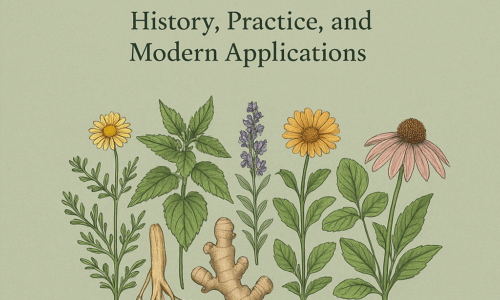
🌿 Foundations of Herbalism: History, Practice, and Modern Applications
A Global Journey Through the Roots, Remedies, and Renaissance of Plant Medicine
Step into the oldest healing tradition in the world.
Foundations of Herbalism is a massive, 260+ lesson immersive course that explores the story, science, and spirit of herbal medicine—from prehistoric foragers and ancient empires to modern clinical practice and ecological activism.
This is not a “quick list of home remedies.” This is the why, where, when, and how of humanity’s oldest ally: the plant.
With depth, rigor, and storytelling power, this course maps herbalism as medicine, food, philosophy, spiritual practice, ecological ethic, and cultural bridge across millennia.
You will not simply “brew a tea here”—you will discover why humans across the globe entrusted their survival, rituals, and health to the green world.
🧭 A Global, Chronological, and Practical Masterclass
This is not recycled blog advice or folklore snippets. This is a comprehensive, academic-yet-accessible course designed to teach the roots, philosophy, and living application of herbalism.
From Egyptian papyri and Ayurvedic texts to Indigenous ceremonies, medieval herbals, colonial exchanges, modern research, and future digital plant movements—you’ll learn it all.
Each lesson is a full exploration written in vivid prose, blending:
-
History, culture, and ethnobotany
-
Scientific plant chemistry and physiology
-
Practical skills in preparation and application
-
Philosophy, spirituality, and ethics of the plant-human relationship
🌿 What You’ll Experience in This Course
1. 260+ Complete Lessons Across 6 Structured Levels
Travel from the foundations of herbal knowledge through global traditions, materia medica, botany, medicine-making, safety, energetics, and into advanced clinical and ecological herbalism.
2. Global Scope, Deep Roots, Modern Relevance
Study herbs in Asia, Africa, the Americas, Europe, and Oceania—while grounding in sustainable, local practice.
3. Science Meets Tradition
Learn both phytochemistry and energetics, from alkaloids and flavonoids to the Doctrine of Signatures, constitutional types, and holistic worldviews.
4. Hands-On Herbalism
Infusions, decoctions, tinctures, oils, salves, poultices, capsules, syrups, vinegars, blends—every preparation skill taught in detail.
5. Ethics, Safety, and Sustainability
Understand dosage, contraindications, pharmaceutical interactions, wildcrafting ethics, and climate-conscious herbalism.
6. Materia Medica Library
Comprehensive profiles of dozens of essential herbs: botany, energetics, actions, uses, preparations, safety, and lore.
7. Integration with Modern Healing
Discover how herbalism complements nutrition, psychology, and biomedicine, while retaining its cultural and spiritual depth.
📚 Course Structure: The Six Levels
-
Level 1 — Foundations of Herbalism
Basic awareness, safety, and first practices. History, philosophy, terminology, energetics, beginner preparations, and introduction to common herbs. -
Level 2 — Global Traditions & Cultural Roots
Ayurveda, Chinese medicine, Indigenous practices, African traditions, and European folk herbalism. Comparative energetics and philosophy. -
Level 3 — Botany, Identification, and Materia Medica I
Plant biology, taxonomy, field identification, and in-depth herb profiles. Focus on local plants, weeds, and common garden allies. -
Level 4 — Medicine-Making & Materia Medica II
Hands-on formulations, advanced preparations (oxymels, elixirs, distillations), and expansion of materia medica into international herbs. -
Level 5 — Safety, Clinical Practice & Integration
Contraindications, pharmaceutical interactions, dosing strategies, case studies, and integration with modern biomedicine and nutrition. -
Level 6 — The Future of Herbalism
Sustainability, climate change, digital herbalism, activism, and professional development. Herbalism as ecological stewardship and cultural healing.
🌍 Who This Course Is For
-
Herbal enthusiasts who want a rigorous foundation
-
Practitioners seeking depth, context, and confidence
-
Students of ethnobotany, anthropology, and holistic health
-
Writers, educators, and creators who need cultural and scientific grounding
-
Anyone drawn to the green world and its history, philosophy, and modern use
🌿 More Than Medicine—A Living Relationship
“This course didn’t just teach me how to use herbs—it transformed how I see the world. I learned not only remedies, but relationships: to plants, to culture, to ancestors, and to the earth itself.”
🌱 This Is the Root of the Green Path
Before the capsule, there was the leaf.
Before the pharmacy, there was the field.
Before medicine became industry, it was relationship.
Foundations of Herbalism is the cornerstone course for anyone who seeks to understand plant medicine in its full depth—past, present, and future.
🔥 Discover the plants that healed humanity.
🔥 Learn their history, science, and spirit.
🔥 Begin your herbal journey today.
Curriculum
- 6 Sections
- 25 Lessons
- Lifetime
- Level 1 — Foundations of Herbalism (Lessons 1–40)Beginner Level This level introduces students to the roots of herbalism, focusing on history, philosophy, and safety. Learners will explore basic herbal actions, plant energetics, and fundamental medicine-making techniques such as teas, tinctures, and salves. By the end of this stage, students will be able to identify common herbs, prepare simple remedies, and understand the ethical foundations of sustainable practice.25
- 1.1Lesson 1: What is Herbalism? History & Philosophy
- 1.2Lesson 2: Introduction to Healing Plants Around the World
- 1.3Lesson 3: Safety Principles & Ethical Practice
- 1.4Lesson 4: Herbal Terminology & Key Concepts
- 1.5Lesson 5: Energetics — Hot/Cold, Damp/Dry, Tonic/Stimulating
- 1.6Lesson 6: Introduction to Herbal Actions (Overview)
- 1.7Lesson 7: Making Herbal Tea (Infusions & Decoctions)
- 1.8Lesson 8: Introduction to Tinctures (Alcohol-Based Extracts)
- 1.9Lesson 9: Herbal Vinegars & Oxymels
- 1.10Lesson 10: Herbal Oils & Salves
- 1.11Lesson 11: Wildcrafting Ethics & Sustainability
- 1.12Lesson 12: Plant Identification Basics (Botany 101)
- 1.13Lesson 13: Common Weeds as Medicine (Plantain, Dandelion, Chickweed)
- 1.14Lesson 14: Understanding Taste in Herbalism (Bitter, Sweet, Pungent, etc.)
- 1.15Lesson 15: Building a Simple Home Apothecary
- 1.16Lesson 16: The Role of Food as Medicine
- 1.17Lesson 17: Seasonal Herbs: Spring Tonics
- 1.18Lesson 18: Seasonal Herbs: Summer Cooling Plants
- 1.19Lesson 19: Seasonal Herbs: Autumn Roots
- 1.20Lesson 20: Seasonal Herbs: Winter Remedies
- 1.21Lesson 21: The Herbalist’s Toolkit (Jars, Scales, Mortar & Pestle, etc.)
- 1.22Lesson 22: Journaling and Observation of Plants
- 1.23Lesson 23: Making Herbal Syrups (Elderberry Example)
- 1.24Lesson 24: Herbal Powders & Capsules
- 1.25Lesson 25: Drying and Storing Herbs
- Level 2 — Intermediate Herbalist (Lessons 41–90)Building Knowledge & Skills At this stage, students deepen their understanding of human anatomy and physiology and how herbs support each body system. The curriculum introduces herbs for digestion, immunity, stress, sleep, and heart health, alongside essential skills like creating formulas and cultivating medicinal gardens. This level bridges theory with practical applications and prepares learners for clinical approaches.0
- Level 3 — Advanced Herbalist (Lessons 91–150)Clinical & Energetic Mastery This level integrates global herbal traditions — Western, Ayurvedic, Chinese, and Indigenous — while diving into specialized plant categories such as adaptogens, nervines, and alteratives. Students gain clinical skills, including case studies, intake processes, and formulation strategies. By the end of this stage, learners can confidently design tailored protocols for individuals and navigate herbal safety, research, and professional ethics.0
- Level 4 — Specialist Studies (Lessons 151–200)Materia Medica Deep Dive Students focus on advanced plant knowledge, exploring detailed profiles of roots, leaves, flowers, seeds, barks, fungi, and seaweeds. Each lesson covers botanical description, energetics, uses, preparations, and safety considerations. This level strengthens herbal fluency, enabling learners to recognize and work with medicinal plants on a professional level.0
- Level 5 — Master Practitioner (Lessons 201–230)Professional Practice & Leadership This stage emphasizes integration and mastery of herbal practice. Students refine advanced case study work, complex formulation, and long-term client care strategies. Lessons explore legal, ethical, and entrepreneurial aspects of professional herbalism, including building a clinic, creating products, and teaching others. Learners also explore conservation, activism, and community service as part of their role as practitioners.0
- Level 6 — Master Herbalist (Lessons 231–260)Culmination & Legacy The final stage transforms learners into master herbalists and community leaders. Students design a personal herbal philosophy, complete a capstone project, and engage in mentorship, teaching, and advocacy. This level emphasizes global herbal traditions, advanced research, and the creation of a lasting herbal legacy through writing, teaching, or community projects. Graduates leave fully prepared to serve as master herbalists, leaders, and stewards of plant wisdom.0
Instructor