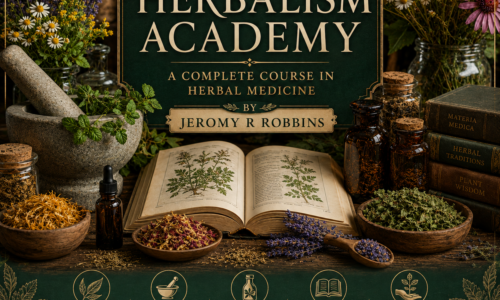
Welcome to Herbalism Academy
Herbalism is one of humanity’s oldest and most enduring traditions of learning from the natural world. Long before modern laboratories, hospitals, and pharmaceutical industries existed, people observed plants, recorded their experiences, and passed their knowledge from generation to generation. Across continents and cultures, medicinal plants became woven into the history of medicine, agriculture, trade, exploration, and daily life. The study of herbalism is therefore much more than learning about herbs—it is the study of botany, ecology, history, chemistry, traditional knowledge, and humanity’s relationship with the plant kingdom.
Herbalism Academy was created to provide a structured, comprehensive, and academically informed pathway through this vast field of knowledge. Whether you are completely new to herbalism or seeking to deepen an existing practice, this curriculum has been designed to guide you from the most fundamental concepts to advanced levels of botanical and herbal scholarship.
Unlike many herbal resources that focus only on recipes or quick-reference guides, this academy takes a broader educational approach. Students will learn not only how herbs have been used throughout history, but also how plants grow, how they are identified, how they interact with their environments, how their chemical constituents are studied, and how herbal traditions developed across different cultures and time periods. The curriculum integrates historical perspectives, botanical science, traditional knowledge, pharmacognosy, cultivation practices, conservation principles, and modern research, allowing students to build a well-rounded understanding of herbalism as a discipline.
The course is organised as a progressive learning journey. Early lessons introduce essential foundations such as herbal terminology, safety, plant anatomy, herbal preparations, and common medicinal plants. As students advance, they will explore increasingly complex subjects including materia medica development, phytochemistry, cultivation, formulation theory, traditional herbal systems, clinical concepts, pharmacognosy, research interpretation, historical herbals, and the evolution of modern herbal science. Each lesson builds upon previous material, creating a coherent educational framework that encourages long-term learning and critical thinking.
Throughout the academy, great care is taken to distinguish between historical uses, traditional practices, observational knowledge, and modern scientific evidence. Herbalism is a field that draws from many sources of information, and understanding the strengths and limitations of each perspective is an important part of becoming an informed student. Readers are encouraged to approach the material with curiosity, intellectual honesty, and respect for both traditional wisdom and scientific inquiry.
This academy is not intended to replace professional medical advice, diagnosis, or treatment. Instead, it serves as an educational resource dedicated to the study of medicinal plants, herbal traditions, botanical science, and the rich body of knowledge that has developed around them over thousands of years.
The study of herbalism is ultimately a lifelong journey. Every plant has a story, every tradition offers a perspective, and every lesson opens the door to deeper questions about nature, health, culture, and the interconnected world in which we live. Whether your goal is personal enrichment, practical knowledge, academic study, or professional development, you are invited to begin that journey here and explore the remarkable world of medicinal plants one lesson at a time.
Curriculum
- 10 Sections
- 40 Lessons
- 1 Week
- Module 1: Introduction to Herbalism (Posts 1–10)This module introduces the foundations of herbalism and explores the long relationship between humans and medicinal plants. Students will learn what herbalism is, how herbal traditions developed throughout history, and why medicinal plants continue to play an important role in cultures around the world. The lessons establish essential terminology, introduce key concepts, and provide the knowledge needed to begin studying herbalism with confidence and curiosity.10
- 1.1What Is Herbalism?
- 1.2A Brief History of Herbal Medicine
- 1.3Why People Use Herbs Today
- 1.4Herbalism vs Modern Medicine
- 1.5Understanding Herbal Terminology
- 1.6What Makes a Plant Medicinal?
- 1.7The Importance of Herbal Safety
- 1.8Common Myths About Herbalism
- 1.9Building a Beginner Herbal Mindset
- 1.10Your First Steps as an Herbalist
- Module 2: Safety Fundamentals (Posts 11–20)Safe and responsible practice is one of the most important aspects of herbal education. This module examines the principles of herbal safety, including dosage considerations, contraindications, herb-drug interactions, allergic reactions, and special populations such as children and pregnant individuals. Students will learn how to evaluate risks, recognize limitations, and develop a thoughtful and informed approach to the use and study of medicinal plants.10
- 2.1Herbal Safety Rules Every Beginner Should Know
- 2.2Understanding Dosage
- 2.3When Not to Use Herbs
- 2.4Herb and Medication Interactions
- 2.5Allergic Reactions to Herbs
- 2.6Herbs During Pregnancy and Breastfeeding
- 2.7Herbs and Children
- 2.8Identifying Toxic Plants
- 2.9Understanding Contraindications
- 2.10Creating a Safe Home Herbal Practice
- Module 3: Understanding Plants (Posts 21–30)A strong understanding of plant biology is essential for every herbalist. This module explores plant anatomy, life cycles, growth patterns, plant families, and ecological relationships. Students will gain insight into how plants develop, how they are classified, and why botanical knowledge is critical for accurate identification, cultivation, and the study of medicinal species. The lessons provide the scientific foundation upon which all further herbal studies are built.10
- 3.1Basic Plant Anatomy
- 3.2Roots, Stems, Leaves, Flowers, and Seeds
- 3.3Plant Life Cycles
- 3.4Annuals, Biennials, and Perennials
- 3.5Understanding Plant Families
- 3.6Why Plant Families Matter in Herbalism
- 3.7Native vs Introduced Medicinal Plants
- 3.8Medicinal Trees and Shrubs
- 3.9Wild Plants and Medicinal Weeds
- 3.10Learning to Observe Plants
- Module 4: Herbal Actions (Posts 31–40)Medicinal plants are often grouped according to the effects they traditionally produce within the body. This module introduces the concept of herbal actions and examines categories such as adaptogens, nervines, tonics, demulcents, astringents, bitters, expectorants, and carminatives. Students will learn how herbalists use these classifications to understand plant properties, compare medicinal herbs, and begin developing a practical framework for studying materia medica and herbal formulations.10
- Module 5: Herbal Preparations (Posts 41–50)Understanding how medicinal plants are prepared is a fundamental skill in herbalism. This module introduces the various methods used to transform raw plant materials into usable herbal preparations, including teas, infusions, decoctions, tinctures, vinegars, oils, and salves. Students will explore the principles behind each preparation method, learn how different solvents extract different plant constituents, and gain an appreciation for the practical and historical importance of herbal preparation techniques. By the end of this module, students will understand how preparation methods influence the final properties of an herbal product.0
- Module 6: Building a Home Apothecary (Posts 51–60)A well-organised apothecary forms the foundation of practical herbal study. This module guides students through the process of creating and maintaining a home herbal apothecary, covering essential equipment, herb selection, storage methods, labelling practices, shelf-life considerations, and organisational systems. Students will learn how to preserve herb quality, manage supplies effectively, and develop an efficient workspace that supports both learning and responsible herbal practice. The module emphasizes preparation, organisation, and long-term stewardship of herbal materials.0
- Module 7: Beginner Herb Profiles (Posts 61–80)This module introduces students to some of the most widely recognised and historically significant medicinal plants used in Western herbal traditions. Through detailed herb profiles, students will explore plant identification, botanical characteristics, traditional uses, historical significance, preparation methods, and safety considerations. The goal is not simply to memorise herbs, but to develop the observational and analytical skills needed to study medicinal plants as living organisms with unique histories, properties, and roles within herbal practice.0
- Module 8: Herbs for Everyday Wellness (Posts 81–90)Medicinal plants have long been used to support general wellbeing and comfort in everyday life. This module explores traditional herbal approaches to common areas of wellness, including relaxation, sleep, digestion, seasonal support, skin care, and general stress management. Students will examine how herbalists have historically selected and combined herbs for these purposes while also learning the importance of distinguishing traditional use from modern scientific evidence. The lessons encourage thoughtful study rather than simplistic assumptions about herbal effectiveness.0
- Module 9: Growing Medicinal Herbs (Posts 91–95)Cultivating medicinal plants provides valuable insight into their growth, ecology, and life cycles. This module introduces the principles of herb gardening, including site selection, soil preparation, propagation, harvesting, drying, and preservation. Students will learn how environmental conditions influence plant development and medicinal quality while gaining practical knowledge that supports a deeper connection to the plants they study. Whether growing herbs in a garden, greenhouse, or containers, students will develop a foundational understanding of medicinal plant cultivation.0
- Module 10: Moving Beyond Beginner Level (Posts 96–100)The final module of the beginner curriculum serves as a bridge to more advanced herbal studies. Students will be introduced to the concepts of herbal formulation, herb combinations, study methods, record keeping, and lifelong learning within herbalism. The lessons encourage critical thinking, observation, and continued exploration while helping students integrate the knowledge gained throughout the beginner programme. By the end of this module, students will have established a solid educational foundation and be prepared to progress into intermediate-level herbal studies with confidence and purpose.0
Instructor