
☀️ June 27 – The Rose and the Flame — Divine Union of Love, Beauty, and Devotion

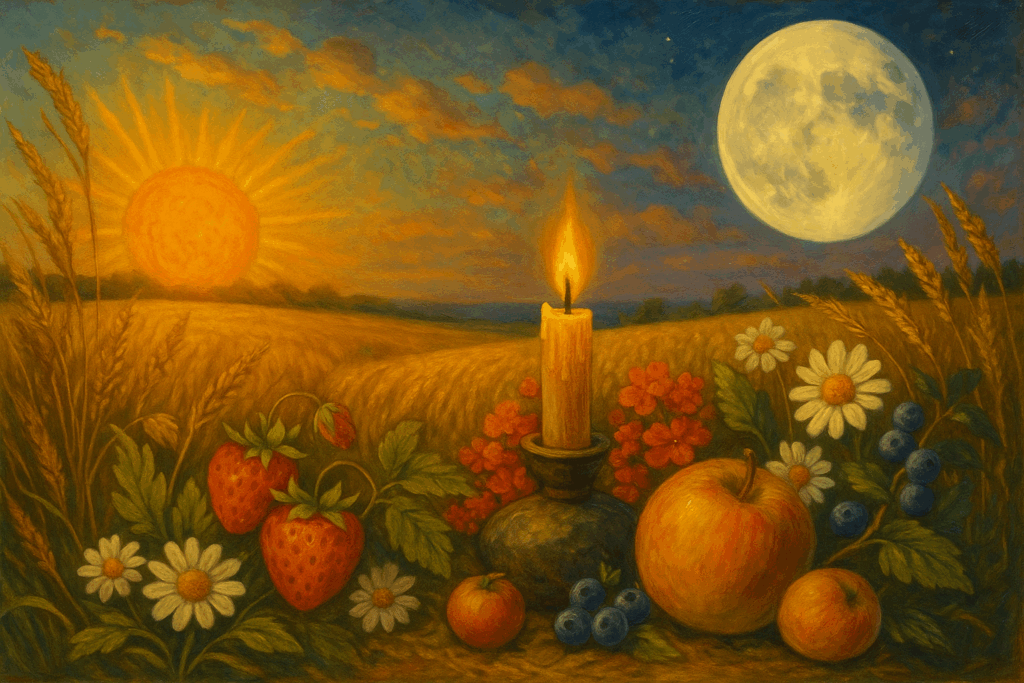
The twenty-seventh day of June unfolds like a sigh of gold and crimson. The earth, still radiant from the solstice fires, now carries a quieter splendor — one of sweetness, tenderness, and sacred intimacy. The air is perfumed with roses, the eternal emblem of love’s unfolding, and the sunlight, though softer, burns with devotion rather than pride. This is The Rose and the Flame, a day devoted to the divine union of love and will, beauty and strength, heart and spirit. It is a celebration of the inner marriage — the joining of passion and purity within the soul — and a remembrance that every act of creation, every spark of inspiration, is born from love’s fire.
In the great tapestry of pagan symbolism, the rose and the flame are twin mysteries. The rose blooms from the soil, embodying the sacred feminine — beauty, compassion, receptivity, and the cycles of growth and decay. The flame rises from spark to sky, embodying the sacred masculine — clarity, transformation, purpose, and illumination. Each alone is potent, but together they form the alchemy of life itself: the divine dance between giving and receiving, between the heart’s softness and the spirit’s strength. This union is not about gender, but about energy — the sacred balance of all polarities that create wholeness.
On this day, the sun still shines strong, but the days have begun to shorten. The fiery intensity of midsummer now mingles with the fragrance of the earth in bloom. This is the moment to honor the marriage of fire and flower, the harmony between passion and peace. Love, in its truest form, is not a fleeting emotion but a force — the same creative current that turns seed to blossom, thought to action, and dream to reality. The rose teaches us to open without fear, the flame teaches us to burn without destruction.
Begin your observance at dawn or in the soft light of morning. Prepare your altar or sacred space with symbols of both love and fire. Place a red or pink candle at the center — the flame of devotion — and surround it with roses or rose petals. If you do not have roses, any flower of beauty and scent will do. Add a small bowl of water to represent emotional depth and a piece of gold or copper for vitality.
Before lighting your candle, take a deep breath and hold a rose (or a petal) in your hand. Feel its softness, its texture, its living energy. Whisper:
“Rose of the dawn, heart of the earth,
Teach me to open in beauty and worth.
Flame of the sun, fire divine,
Teach me to burn with love aligned.”
Then light your candle and gaze into its flame. Watch how it flickers, dances, and glows — alive yet contained. In that motion lies a lesson: passion needs devotion to remain sacred, and beauty needs strength to endure. As you breathe, imagine the flame within your heart rising to meet the fragrance of the rose. See them merge — fire twining with petals, heat and softness, will and tenderness — until they become one radiant light, pulsing at your center.
This is the essence of The Rose and the Flame: the marriage of devotion and desire, of heart and soul. Sit quietly in this union, breathing steadily. You may feel warmth in your chest, or a sense of peace that glows from within. Whisper softly: “I am whole. I am love. I am the flame that flowers.”
If you are moved to work a spell or blessing on this day, perform the Union of the Rose and Flame Ritual, a rite for harmony and divine connection — whether within yourself, with a partner, or with the world.
You will need:
- One red candle (for passion)
- One white candle (for purity)
- A red rose (for love)
- A bowl of water
- A piece of clear quartz or rose quartz
Place the red and white candles side by side on your altar, with the rose between them and the bowl of water before them. Light the white candle first and say: “I call upon light — the spirit that purifies and blesses.” Then light the red candle and say: “I call upon fire — the heart that loves and creates.”
Gently pluck a single petal from the rose and float it upon the water. As it drifts, speak:
“Love and will, peace and flame,
By these powers, I call your name.
In harmony dwell, in beauty remain,
By rose and fire, I am whole again.”
Hold the quartz in your hands and visualize energy from both flames streaming into it — red from the left, white from the right — blending into a soft pink glow. This stone now becomes a talisman of sacred balance. Keep it near your heart, wear it as a charm, or place it upon your altar to remind you of love’s unifying power.
Afterward, take a moment for contemplation. What does love mean in your life right now — not romantic love alone, but love as a sacred force? Love that fuels your art, your compassion, your connection to the earth? The flame of love does not only burn between people; it burns within every act of reverence, every offering of beauty to the world. The rose opens even when no one is watching; the flame shines even when unseen. This is devotion — love without condition, giving without expectation.
If you share this day with another — a partner, a friend, a circle — exchange blessings. Anoint each other’s hands or hearts with rosewater or oil, saying: “May the flame of love within you never fade. May it guide your path and bless your days.” You may also weave garlands of flowers or light a shared candle as a symbol of unity. The ritual is not about possession, but about reflection — seeing the divine spark in another and honoring it as your own.
At sunset, when the air turns golden and fragrant, take your rose or its petals and offer them to the earth or running water. As they drift away, say:
“By love’s flame I am renewed.
By beauty’s grace I am whole.
May my life be an offering,
A rose in the garden of the soul.”
Watch the petals move — how they float, sink, or swirl — each motion a message from the spirit of love itself.
As night gathers, the air may grow cool, but your heart will feel warm. Sit by candlelight and gaze once more at the flame. The fire that once blazed in celebration has now become intimate, personal, tender. You may sense that it no longer seeks to reach the heavens, but to illuminate what is already here. This is love as devotion — not seeking to grasp, but to understand.
The Rose and the Flame reminds us that true power lies not in force, but in compassion; that passion without gentleness is fleeting, and gentleness without fire is fragile. The two together form a perfect wholeness — the divine marriage of life itself. In your heart, may the rose bloom eternal and the flame burn steady, each nourishing the other in a circle of beauty that never ends.
Before you sleep, whisper one final prayer:
“Flame of my heart, bloom of my soul,
Through love’s devotion, I am whole.
By light and fragrance, joy and pain,
I honor the rose, I tend the flame.”
And in that moment, you are both — the flower and the fire, the giver and the gift, the heart and the light.
Responses