🔥 May 11 – The Faery Road OpensHonoring liminal paths and offerings to the hidden folk

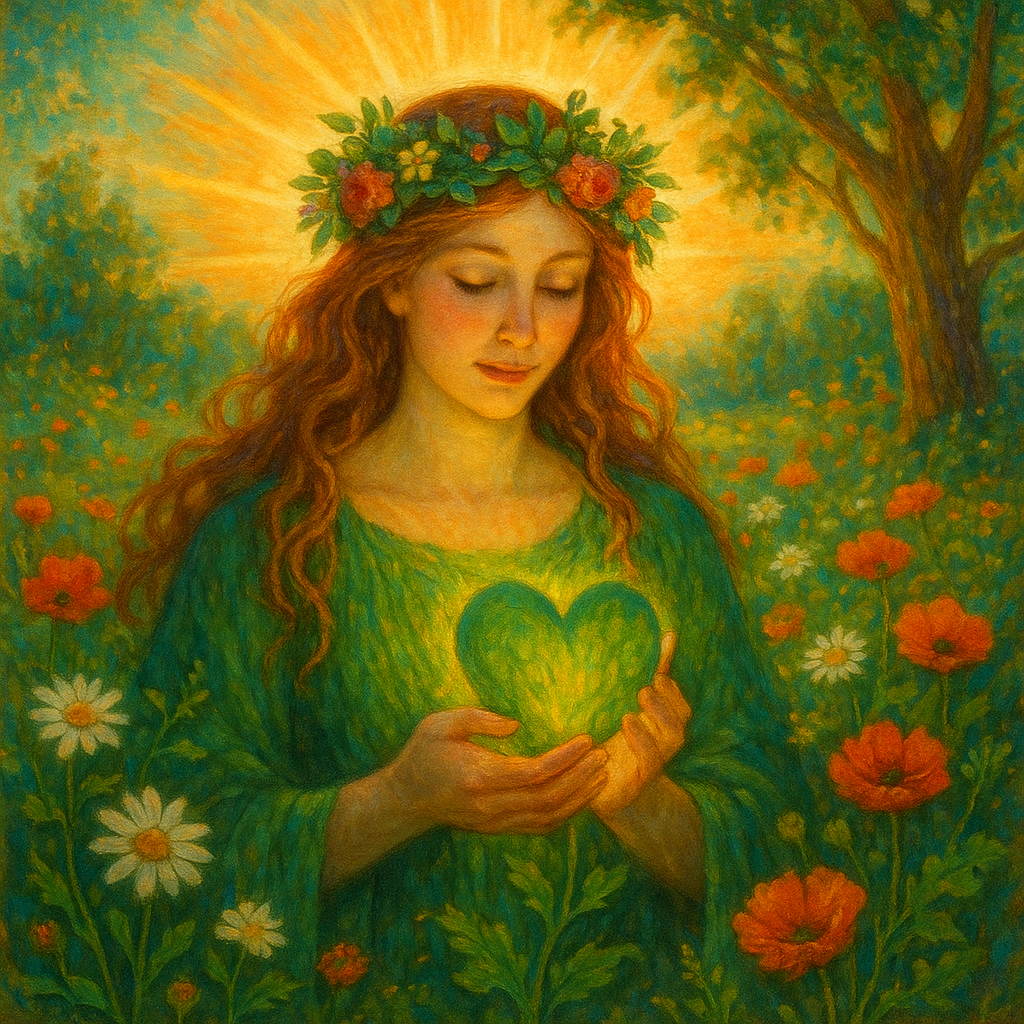
By May 11, the veil that separates the human world from the realms unseen grows thin once more. The energies awakened at Beltane continue to shimmer and shift, not only in the visible splendor of flowers and sunlight but also in the subtle, mystical places where two worlds touch. This day is sacred to thresholds — to the mists between what is and what could be — and it is known as The Faery Road Opens, a time when the Hidden Folk, the Fae, and the spirits of the land draw close to humankind, whispering secrets through rustling leaves and moonlit breezes.
To walk the Faery Road is to step consciously between worlds. It is not a path of fantasy but of reverence, an acknowledgment that the world is alive in ways our eyes alone cannot perceive. The Fae are not merely the delicate winged figures of children’s tales; they are ancient powers — guardians of nature’s balance, keepers of sacred wildness, and reflections of the Earth’s deeper soul. They dwell in hollow hills, in the roots of old trees, in the shimmer of dew upon the grass at dawn. And on this day, when the air hums with May’s enchantment, the doors to their realm stand open to those who approach with respect and awareness.
The word faery itself once meant of the fate, hinting at their ancient role as weavers of destiny and harmony. The fae are neither wholly benevolent nor malicious; they are reflections of nature itself — beautiful, unpredictable, and profoundly just. To honor them is to acknowledge that magic, like nature, cannot be possessed or controlled. It must be approached with humility, gratitude, and care. The Faery Road is a metaphor as much as a mystery — the path of communion between human consciousness and the living intelligence of the world.
Entering the Liminal
The day of May 11 calls us to slow down, to become aware of liminal spaces — twilight, dawn, the meeting of forest and field, the border between water and land, or even the stillness between breaths. These are the gateways through which the fae move most freely. To encounter them, we must learn to perceive with the heart, not the mind.
Begin your day by going outside at sunrise or sunset, when the light softens and the world feels suspended between states. Find a quiet place where you can sit close to nature — a grove, a meadow, a riverbank, or even a small garden patch. Close your eyes and breathe deeply. With each exhale, let your thoughts settle like dust after a long journey. With each inhale, invite the scents and sounds of the Earth into your awareness — the hum of bees, the whisper of wind, the smell of grass and soil. Soon, you will begin to feel the presence that lies behind these sensations — a subtle joy, an awareness looking back at you. That is the beginning of the Faery Road.
Do not call the fae lightly. They are not pets or playthings, but ancient allies who respond only to sincerity. When you sense their presence, greet them not with demands but with respect. A simple bow of the head or a soft-spoken greeting such as “Good neighbors, I honor you” is enough. Many old traditions speak of referring to them as “the Good Folk,” “the Kindly Ones,” or “the Fair Neighbors,” never by direct names — a sign of respect and recognition that words hold power.
Offerings to the Hidden Folk
The most important act of this day is the giving of offerings. The fae thrive on exchange — not because they require material gifts, but because offerings are acts of acknowledgment, threads of connection between worlds. Traditional offerings include milk, honey, cream, butter, bread, or sweet cakes. These are tokens of nourishment and gratitude, reminders that the abundance we enjoy comes through the harmony between visible and invisible realms.
Place your offering at a natural crossroads, beneath a tree, beside running water, or on a stone that feels significant. Never place offerings on paths used by humans; the fae prefer places untouched. Speak a few words of thanks:
“To the Hidden Folk who guard the wild and weave the green,
I offer sweetness in friendship and respect.
May there be harmony between your realm and mine.”
Leave the offering undisturbed and walk away without looking back. This is not superstition but symbolism — a gesture of trust, of giving without expectation of return.
Walking Between Worlds
To honor the opening of the Faery Road is also to recognize the liminal nature within yourself. We, too, are creatures of thresholds — part mortal, part divine, part Earth, part spirit. The fae reflect that truth to us. They are our teachers in subtlety, reminding us that reality is woven of both matter and magic. When we forget this, the world grows dull and heavy. But when we walk the Faery Road — when we see life as a living enchantment — our perception shifts, and everything becomes radiant once more.
Spend time today listening rather than speaking. The fae communicate in symbols and synchronicities: the sudden appearance of a certain bird, a flicker of color at the edge of vision, a tune that seems to come from nowhere. Trust these as their language. Their wisdom is not linear or literal — it comes in feelings, intuitions, and the poetry of coincidence.
You may also craft a Faery Charm to honor their presence. Gather small natural items — a feather, a smooth stone, a flower, a bit of moss — and bind them together with green or silver thread. As you weave, focus on your intention to walk in harmony with the unseen. Whisper a blessing such as:
“By leaf and breeze, by stone and star,
May friendship bridge the realms afar.”
Hang this charm near a window or in your garden, where light and air can touch it. The fae will recognize it as a sign of goodwill and may bless your home with inspiration and vitality.
The Lure and the Lesson
There is also caution woven into this day’s magic. The Faery Road is not a place to linger unprepared. To become too enchanted by the otherworld can lead to losing one’s grounding in this one. The fae are known for their beauty and their trickery alike — they test those who seek them, revealing whether one’s intentions are pure. The key is balance: to honor the mystery without trying to possess it, to delight in wonder without abandoning reason.
This is the deeper meaning of the Faery Road — it mirrors the spiritual path itself. To live spiritually is to walk between the seen and unseen, to balance transcendence with embodiment. The fae, with their laughter and riddles, remind us that the sacred is playful, not solemn; mysterious, not distant. They are the guardians of imagination, creativity, and joy. When we approach them with gratitude, they return those gifts in kind.
Evening Blessing
As twilight descends, light a candle and place it by a window. This flame serves as a lantern at the crossroads — a gesture of friendship to the fae who wander between realms. You might say:
“May my home be a place of peace,
Where light and laughter never cease.
Good neighbors, come in mirth, not strife,
Bless this hearth, this heart, this life.”
Then sit quietly and watch the candle’s flame. Notice how it flickers and dances — never still, always alive, a reminder that even in stillness there is movement, even in silence there is song. That is the spirit of the fae — elusive, luminous, eternal.
As the night deepens, step outside one last time. The stars glimmer like dew upon the dark fields, and somewhere in the distance, the soft laughter of the Hidden Folk may be carried on the wind. Smile, and whisper your thanks once more. You have walked the Faery Road tonight — the bridge between worlds, the path of wonder and reverence.
The doorway may close as dawn returns, but its magic lingers in your perception. Every flower, every stone, every breath of wind becomes alive with meaning. The Faery Road remains open within the heart that believes in beauty, in mystery, and in the sacred kinship of all beings.