🌦️ April 27 – The Meadow’s Breath

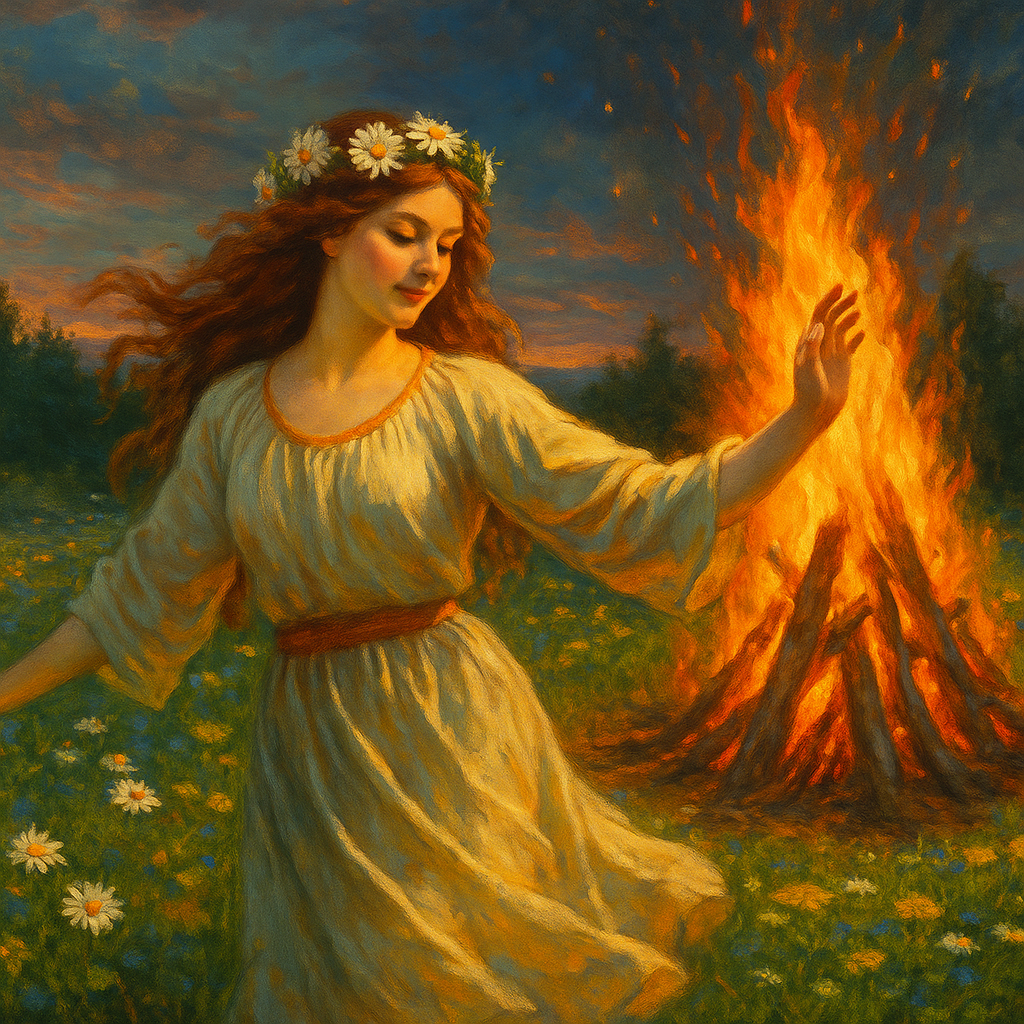
Learning to Commune with Land and Life Through Stillness
There are places in the world where silence is not empty but alive — where wind and grass speak softly, and the air itself seems to breathe. The meadow is such a place. Between forest and field, between wildness and cultivation, it holds a gentle power — the kind that whispers rather than commands. On April 27, we celebrate The Meadow’s Breath, a meditation on stillness, communion, and the quiet conversation between human and land.
To enter a meadow is to step into the body of the Earth as it dreams. Here the pulse of life is slower, rhythmic, steady. Bees hum, crickets sing, and each blade of grass sways with its own intelligence. The meadow is the Earth inhaling — expansive, receptive, abundant. Its breath is the breath of peace. To attune ourselves to it is to remember that the world does not need our constant doing; sometimes it asks only that we listen.
The Spirit of the Meadow
In pagan and druidic tradition, the meadow is sacred ground — not wild like the forest, nor tamed like the plowed field, but something between. It is a place of balance, where the energy of growth meets the serenity of openness. Many ancient rituals took place in meadows because their energy was both fertile and clear, receptive to prayer yet grounded in calm.
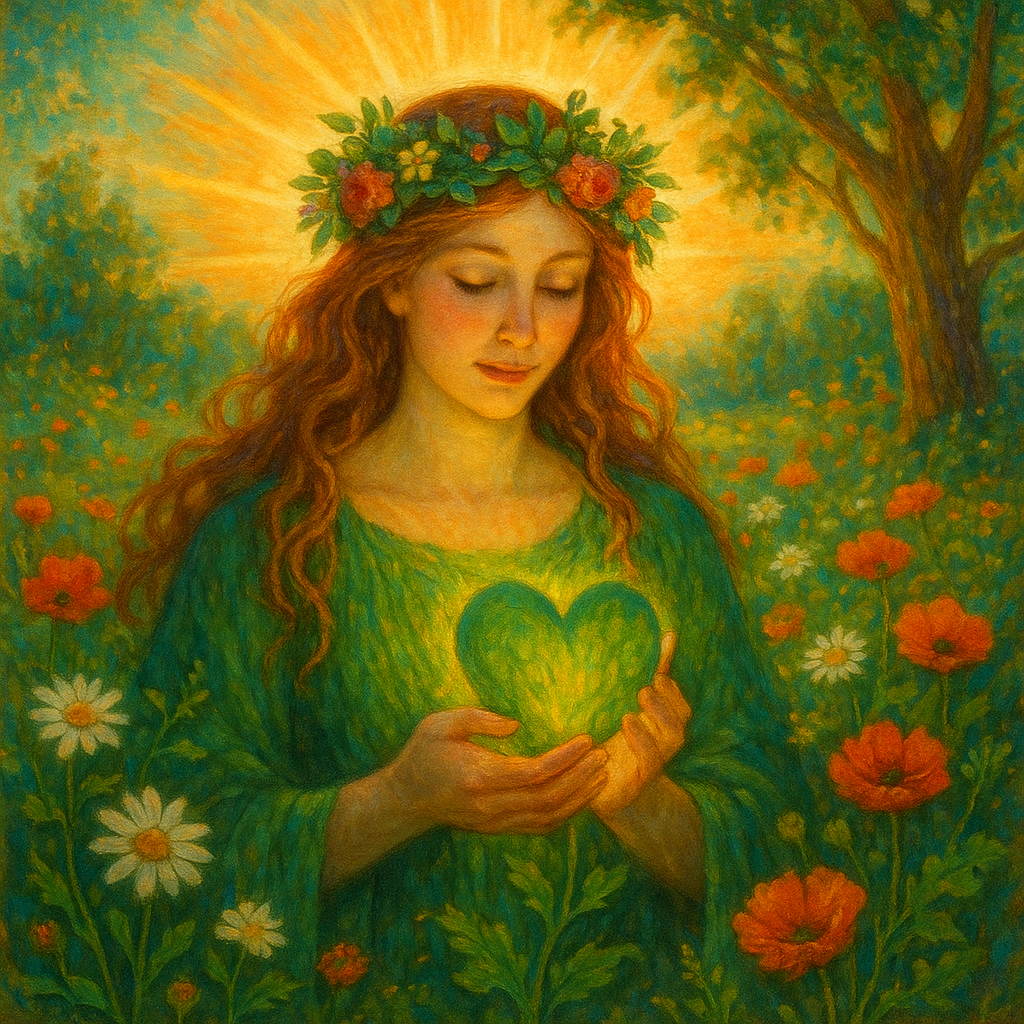
Spiritually, the meadow represents the Heart of the Earth — wide, compassionate, accepting. It invites all who enter to rest, to release tension, and to feel the pulse of the land without interference. When we walk through meadows, we walk through the breath of Gaia herself. Every soft sway of the grass is her exhale; every rising scent of clover or mint is her voice carried on the wind.
To commune with the meadow is to learn the art of stillness — not the stillness of absence, but of awareness. Stillness that hears. Stillness that connects.
The Practice of Listening
In a world of constant motion, stillness is a radical act. To commune with the meadow, begin not by seeking signs or messages, but by allowing them to come naturally. Go to a green place if you can — a field, a park, or even a patch of overgrown grass. Remove your shoes if the ground allows. Stand quietly and feel your weight sink into the soil.
Close your eyes and take slow, deep breaths. With each inhale, imagine drawing in the scent of earth, pollen, and sunlight. With each exhale, release all thought and striving. Soon, the boundary between your breath and the meadow’s begins to blur. You are breathing together. You are part of its rhythm.
Stay as long as you can in this communion. You may feel subtle sensations — a tingling in your hands, a warmth in your chest, a sense of being observed yet welcomed. These are not illusions but awareness returning. The land knows when it is being acknowledged.
The Language of the Land
The Earth speaks, but rarely in words. Her language is movement and intuition, a blending of inner feeling with outer sign. In the meadow, communication happens through harmony. When your mind quiets, impressions arise — perhaps an image, a memory, a sudden understanding. That is her voice.
The meadow may teach patience, contentment, or balance. It may show you how to breathe again when life feels heavy. It may reveal the beauty of simply being alive, without constant striving. The lesson changes with each visit because both you and the land are different each time.
Some druids and hedge witches refer to this practice as “listening to the green pulse” — the awareness of life’s presence beyond human perception. Through such communion, we realize that spirituality does not exist apart from ecology; the divine is the hum of existence itself.
The Breath of Life
The concept of “the Meadow’s Breath” also carries a deeper metaphysical meaning. The Earth, in ancient cosmology, breathes in cycles: inhaling life through spring’s renewal, exhaling rest through autumn’s decline. Each season is part of this breathing. April’s meadows represent the fullness of her inhale — expansion, vitality, awakening.
To align with this rhythm, breathe consciously when you are outdoors. As you inhale, imagine drawing in the meadow’s calm, its vitality, its slow joy. As you exhale, release whatever keeps you from harmony — worry, noise, distraction. Over time, this practice cultivates inner peace that extends far beyond the moment.
This breathing meditation is an act of magic in itself. It balances the elements within: air through breath, earth through contact, fire through awareness, water through flow. The result is equilibrium — a return to your natural state of harmony with life.
The Gift of Stillness
Stillness is often misunderstood as emptiness, yet in truth it is fullness — the state in which all things coexist in peace. The meadow teaches that we do not need to chase connection; it unfolds when we stop running.
Sit among the grasses and notice how life continues effortlessly: bees move from bloom to bloom, clouds drift, seeds scatter. No force, no hurry, only the elegant unfolding of what is. When we synchronize with that rhythm, anxiety fades. We become part of something vast and benevolent.
The Meadow’s Breath reminds us that peace is not escape but participation — the kind of awareness that feels the unity of all things and rests within it.
The Ritual of Communion
If you wish to make the Meadow’s Breath into a formal ritual, bring a few simple items: a small bowl of water, a candle (or solar light if outdoors), and a handful of flower petals. Sit at the meadow’s edge or in any green space.
Light the candle and place it before you. Touch the water and say:
“Water and flame, balance and flow,
Teach me the peace the meadows know.”
Then scatter the petals gently on the earth or into the air. Watch how they fall, how they land where the wind decides. Whisper:
“Meadow of life, breath of the land,
Receive my heart, receive my hand.
I listen, I wait, I am still —
Let your calm move through my will.”
Sit quietly until your breath and heartbeat match the rhythm of the place. When you feel complete, extinguish the flame and leave in silence. The ritual’s purpose is not to summon power, but to remember relationship.
The Hidden Spirits
In old folk belief, meadows were dwelling places for gentle spirits — fae of air and flower, beings of joy and subtlety. They appear not in spectacle but in sensation: a sudden fragrance, a shimmer of light, a feeling of laughter nearby. If you wish to honor them, leave a small offering — milk, honey, or simply a song. The fae delight in gratitude and grace.
More importantly, remember that the spirits of the meadow are not separate from the land itself. They are expressions of its vitality, guardians of balance. To walk respectfully, to avoid harm, to speak softly — these are the true offerings they desire.
Returning to the Breath
When you leave the meadow, carry its rhythm with you. The stillness you felt there does not belong to that place alone; it is your own essence reflected back. Breathe consciously throughout your day — in meetings, in errands, in conversation — and recall the serenity of the land breathing through you. The boundary between meadow and self is illusion; you are the Earth in motion, thinking and feeling through human form.
The Meadow’s Breath teaches the most ancient of truths: that communion with the divine begins with listening. In silence, the world reveals that it has been speaking all along.