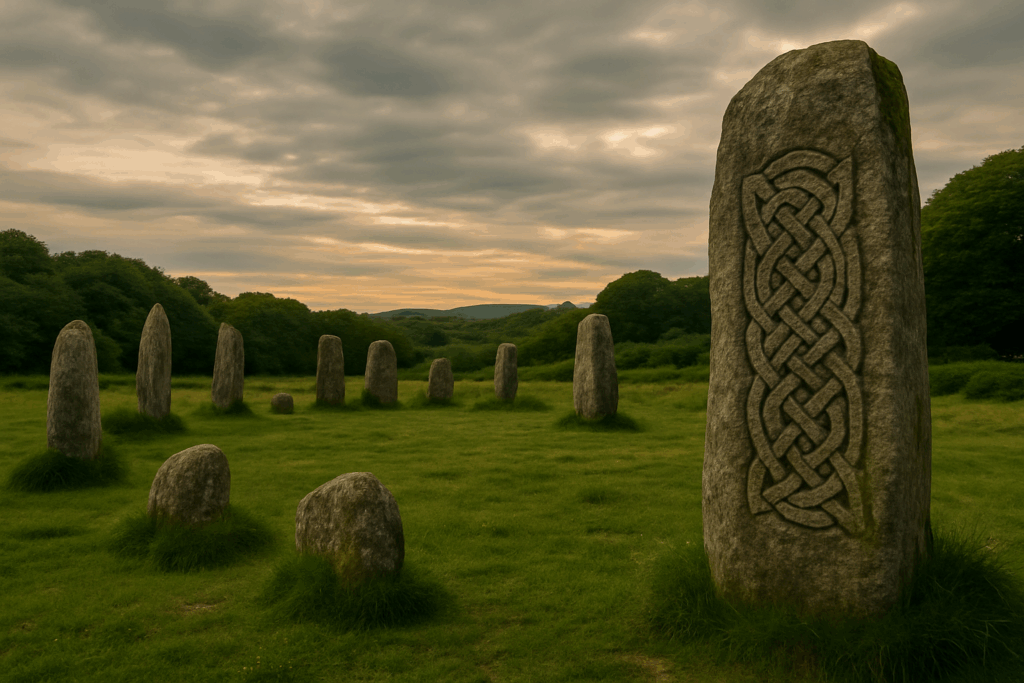
🌸 Mar 17 – The Green Man’s BreathInvoking the life force of the land and its spirits

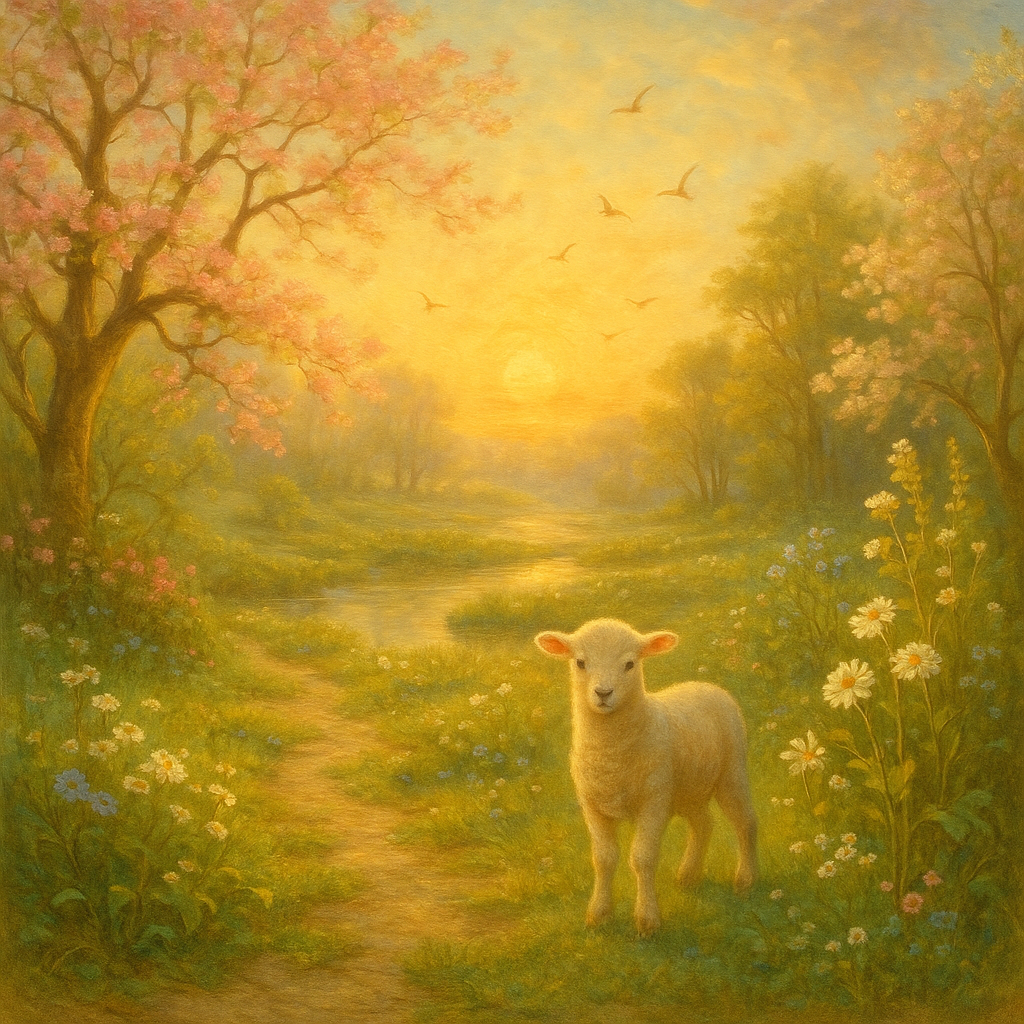
By the seventeenth of March, the Earth exhales. You can feel it — the soft sigh of warmth through the fields, the scent of green rising from the soil, the pulse of something ancient stirring beneath every root and leaf. The time of balance is near, and with it comes the reawakening of the Green Man — that wild, timeless spirit of the land whose face peers from the foliage of myth and memory. His breath is the wind in the branches, his laughter the rustle of new leaves. Today, we honor The Green Man’s Breath: the living force of renewal that animates the world each spring.
The Green Man is one of the most enduring and beloved figures in pagan spirituality. He is the embodiment of the Earth’s vitality — the masculine or animating aspect of nature’s soul, though beyond gender he is simply Life. He appears in countless forms: carved into medieval churches, painted in Celtic art, whispered in forest legends from Britain to India. His visage — a face made of leaves and vines, sometimes crowned with antlers or framed in oak — reminds us that divinity is not distant, but woven through bark and soil, breath and blood. He is the green heart that beats in all living things.
At this point in the season, his presence grows strong. The sap rises in the trees as his energy courses through them. Buds swell, grasses push upward, and the wild creatures stir in harmony with his rhythm. His breath is the spark of life returning to the land — a renewal of fertility, creativity, and primal joy. To invoke the Green Man is to reconnect with that same vitality within ourselves: the wild, free, instinctive pulse that too often lies dormant in the modern world.
The Green Man’s Breath is not a metaphor; it is an experience. To feel it is to walk outside and sense the world breathing around you — to feel your lungs fill with air that is not merely oxygen, but spirit. He teaches that life itself is a sacred exchange of breath: what the trees exhale, we inhale; what we exhale, they receive. This eternal reciprocity is the oldest prayer on Earth.
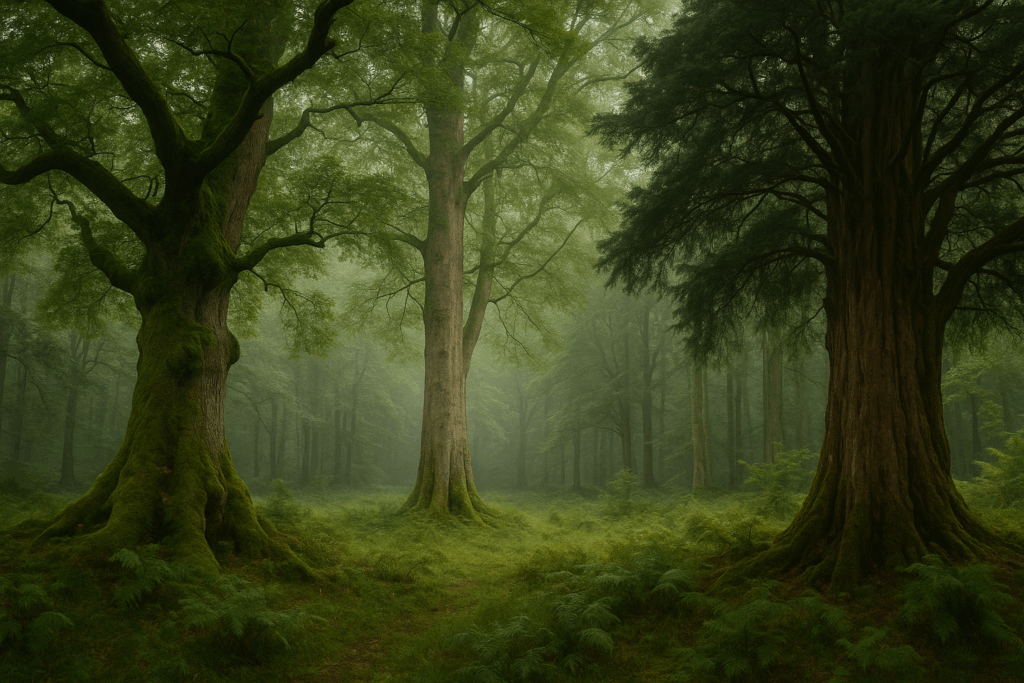
Begin your observance today by stepping outdoors, if you can, into a place where greenery grows — a park, a grove, even a patch of weeds pushing through stone. Close your eyes and take a long, deep breath. As you inhale, imagine drawing the life force of the Earth into your body — the scent of leaves, the hum of roots, the shimmer of sunlight through green. As you exhale, offer your own breath back as a blessing, saying softly:
“Breath of life, breath of Earth,
Flow through me, renew my birth.”
Repeat this cycle three times, each breath a communion between you and the living land. Feel the energy move through you — not as a force to be summoned, but as something already present, something remembered.
If you wish to create a simple ritual for the Green Man, gather a few natural items: leaves, twigs, flowers, or even herbs from your kitchen. Arrange them in a circle upon your altar or upon the ground, forming the outline of a face — eyes of seed or stone, a mouth of petals, hair of vine or branch. This is your symbolic Green Man — a representation of the life spirit that dwells in all growing things. Place a green candle or tea light in the center of the circle, and when you light it, whisper:
“Green Father, Spirit of the Land,
Breathe through me your sacred hand.
From root to crown, from seed to sky,
Awaken life that never dies.”
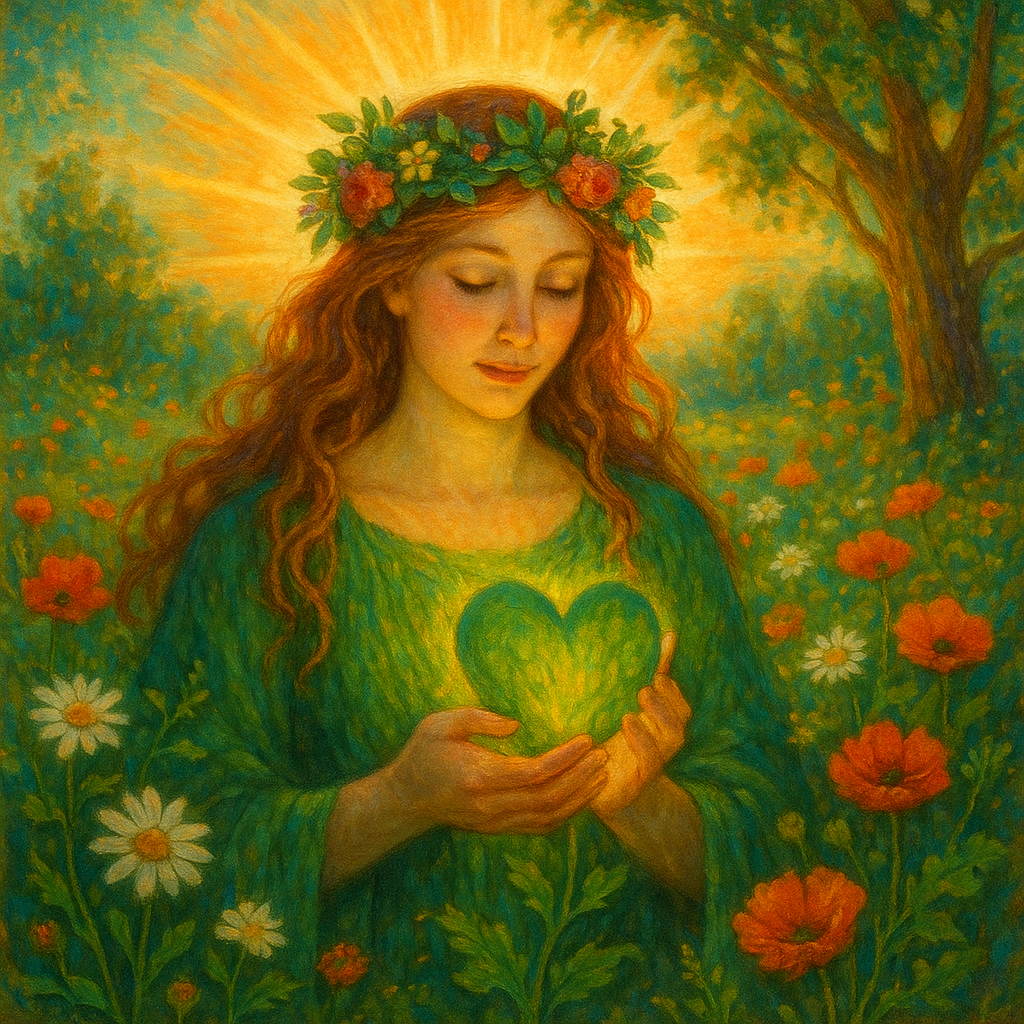
Sit quietly and watch the flame. As it flickers, imagine it as the spark of the Green Man’s heart — the fiery essence of life itself. Feel that fire merge with your breath, your blood, your pulse. The energy may rise through you as warmth, tingling, or deep calm. This is his gift — the reminder that vitality is not something you must earn, but something that already lives within you, waiting to be recognized.
The Green Man’s energy is playful yet fierce, sensual yet wise. He is both protector and wild spirit — the guardian of forests, the laughter in the wind, the whisper that calls us to remember our kinship with nature. To honor him, engage with the living world. Plant something. Touch the bark of a tree. Walk barefoot upon the earth. Let your body remember its belonging. The Green Man asks us not to worship nature from afar, but to participate in it — to feel, move, sweat, breathe, and rejoice as part of its cycles.
His lesson is also one of stewardship. To invoke his breath is to take responsibility for the world that sustains us. Every act of care — watering a plant, conserving resources, tending the land — is an offering. The Green Man thrives not through grand rituals alone but through everyday acts of reverence. When we live gently upon the Earth, we keep his spirit alive.
In magical practice, the Green Man’s energy is potent for fertility, creativity, and growth. If you are nurturing a new project or idea, dedicate it to him today. Write your intention upon a leaf or slip of paper, and hold it to your heart as you breathe deeply, saying:
“As life unfolds in bud and tree,
May this dream grow strong through thee.”
Then bury the leaf in soil or place it beneath a potted plant, trusting the energy of life to nurture your vision as surely as it nurtures the seeds of the season.
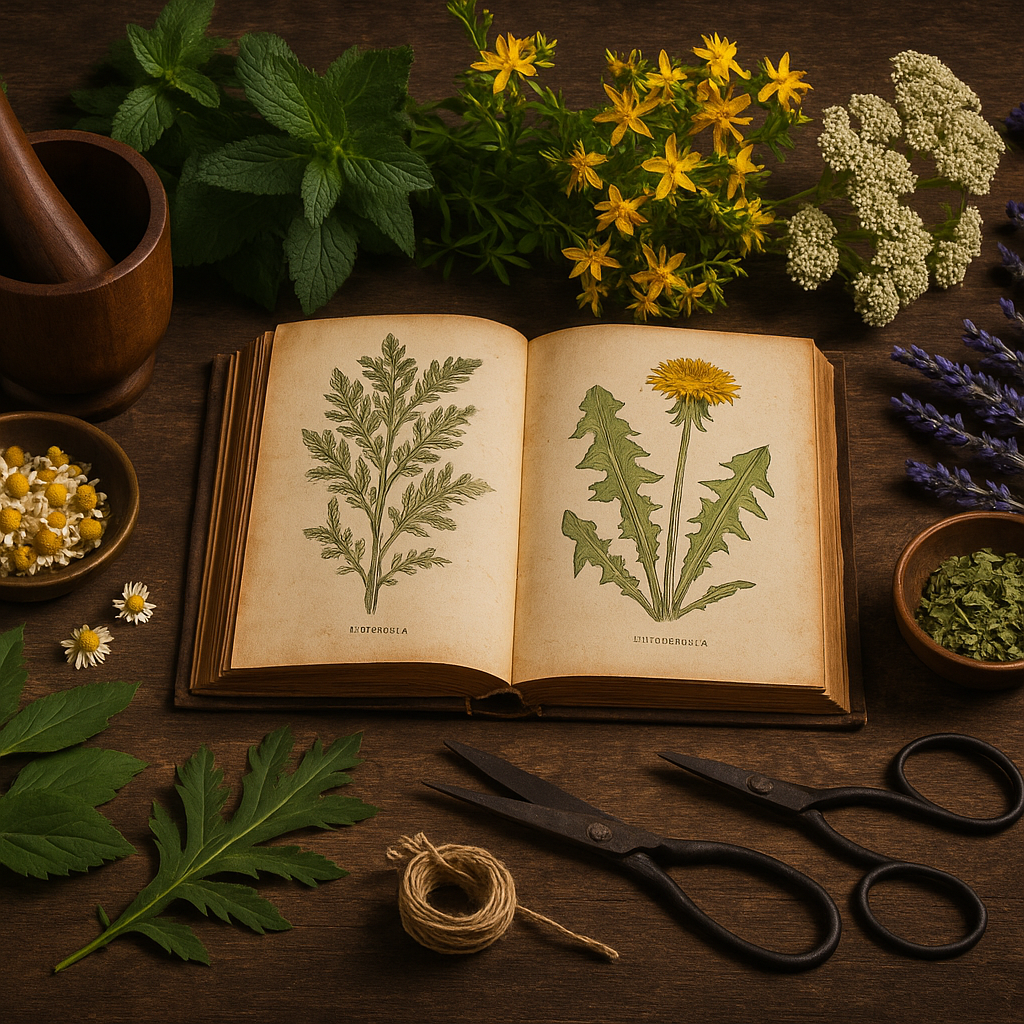
If you wish to deepen your connection, you can also make a Green Breath Elixir — a simple herbal tea made from mint, nettle, or lemon balm. These herbs embody his vitality. As you steep them, stir clockwise and whisper your gratitude for the gifts of the Earth. Drink slowly, feeling the freshness of the herbs awaken your senses, their life merging with your own. Every sip is a communion, a sacred inhale of the Green Man’s breath.
At twilight, return to your altar or outdoor space. The wind at this hour often carries a softer, more mysterious quality — the sigh of the Green Man settling into the dark. Whisper your thanks to him:
“Guardian of leaf and root,
Heart of the wild wood,
I thank you for your breath,
Your endless renewal,
Your reminder that I, too, am alive.”
Blow gently upon your candle, extinguishing it with a breath — the same breath you first received from him. The circle is complete.
The Green Man’s Breath is more than a ritual; it is a relationship. His energy moves through every living being. When we breathe consciously, we remember that we are not apart from nature but expressions of it. When we walk with reverence, we honor the life that pulses beneath every stone and star. When we care for the world, we nourish the divine spirit that breathes through all creation.
As the equinox approaches, his presence will grow stronger. You may feel it in the winds, in the sudden greening of the trees, in the quickening of your own heartbeat. Let that awareness guide you toward gratitude. The Green Man reminds us that to live is to participate in miracle — to inhale the universe and exhale devotion.
Breathe deeply, then. Feel the pulse of the land in your lungs. Know that the same life moving through the roots and rivers moves through you. You are the forest walking. You are the Earth breathing. And somewhere, in the whisper of leaves, the Green Man smiles.