🌿 Jan 23 – The Silent Watchers: Honoring Land Spirits During the Frozen Months

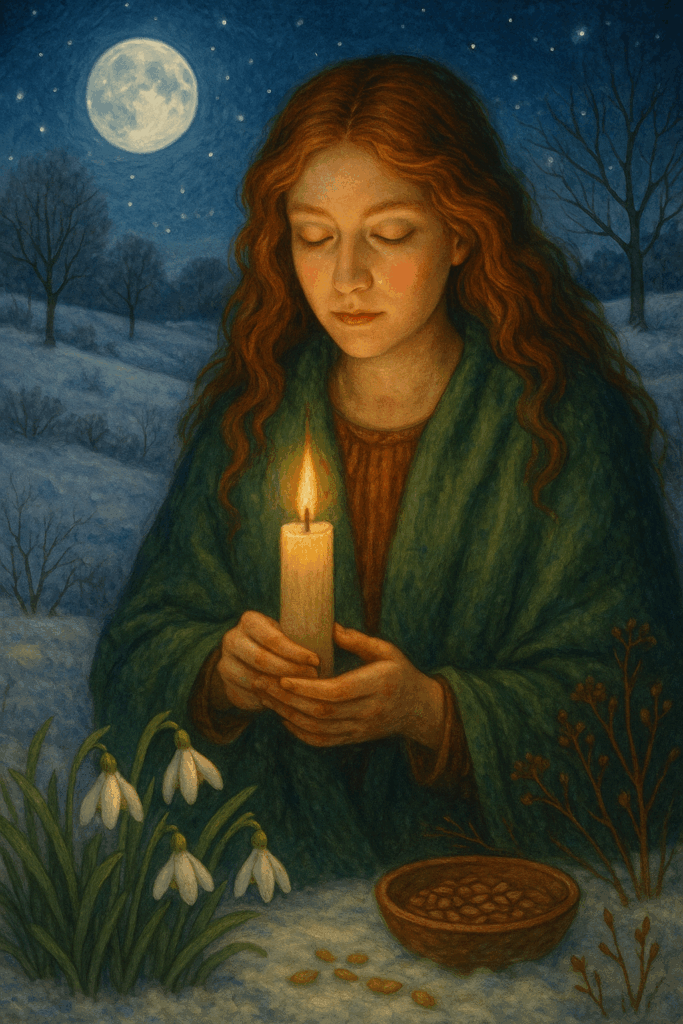
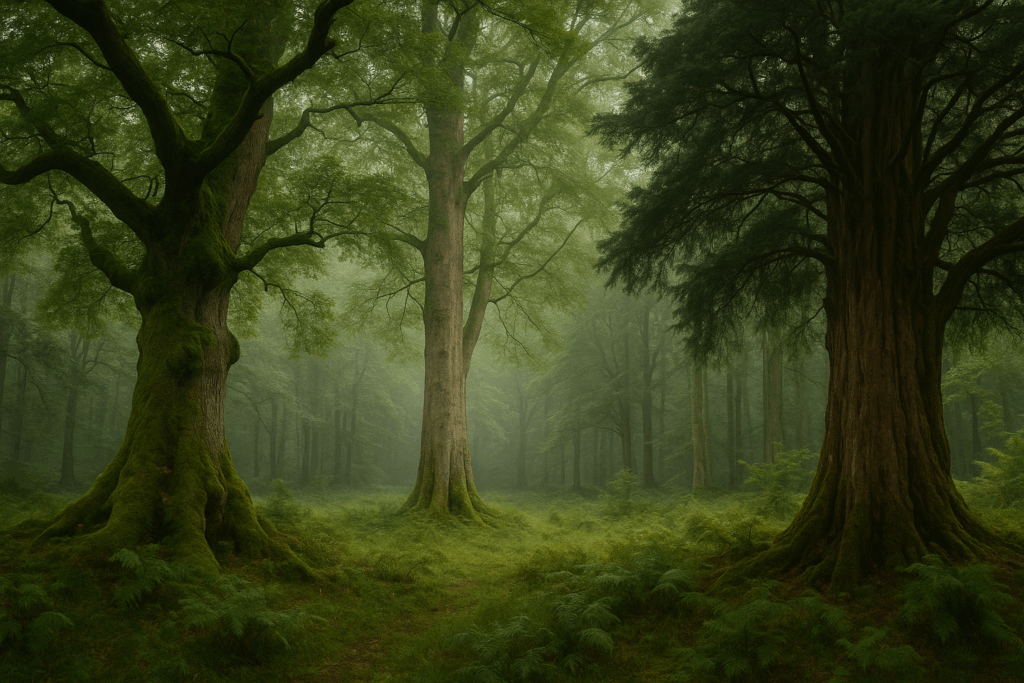
In the deep of winter, when fields lie still and rivers move slow beneath their glassy veils, the land seems deserted — yet this is illusion. Though hidden from sight, the spirits of place remain. They are the Silent Watchers — guardians of hill and hollow, tree and stone, stream and sky. They keep the old balance while the Earth sleeps, holding memory and vitality in trust until the spring returns.
For pagans, witches, and animists alike, these land spirits — often called landvættir, genius loci, or simply the old ones of the land — are vital allies. They are not abstract deities but living presences bound to place, carrying the essence of each landscape. Every grove, mountain, and meadow has its own consciousness, its own spirit-song. Some are gentle and nurturing, others wild and wary, shaped by centuries of human care or neglect.
In summer, when the Earth is vibrant, it is easy to feel their energy — in the hum of bees, the whisper of grass, the rush of rivers. But winter asks us to listen differently. The Silent Watchers do not shout; they breathe slowly through the stillness, inviting us into quiet communion. When the surface of life withdraws, they call us to attune to the deep pulse beneath the frost — the heartbeat of the living land.
The Nature of the Silent Watchers
To understand these beings, one must first learn to listen with reverence. The land spirits are neither wholly benevolent nor malevolent; they are sovereign and ancient. They respond not to control but to respect. The ancestors of old knew this truth well — offerings of milk, bread, or ale were left at sacred trees, crossroads, and stones, not out of superstition but gratitude. Harmony with the land meant survival.
In winter, that relationship deepens. The world has slowed, human noise lessens, and the veil between realms thins. The Silent Watchers draw near to those who remember them. They are guardians of cycles — ensuring rest, preserving memory, maintaining the subtle web that binds all things.
Honoring the Land Spirits in Winter
To honor the Silent Watchers, one need not wander far. Step outside, even if only for a moment, and feel the ground beneath your feet. Beneath that frozen crust lies the same living Earth that will bloom again. Whisper softly:
“Spirits of this land, I honor you.
Though you sleep, I remember.
May my footsteps be gentle, my heart mindful.”
If the weather allows, you may create a Winter Offering — simple, natural, and sincere. Bread, oats, milk, or honey are traditional gifts, left upon a stone, at the base of a tree, or beside running water. If wildlife frequents your area, offerings of seeds or fruit may also serve both the animals and the spirits who care for them.
As you leave your offering, pause and listen. The land will often answer not in words but in sensation — a sudden stillness, a change in air, a feeling of presence. These are subtle acknowledgments, the language of the Silent Watchers.
The Snow Altar
If venturing outdoors is not possible, you can still connect through symbolic ritual. Gather a small bowl of snow (or a crystal, stone, or bit of earth if snow is unavailable) and place it upon your altar. Around it, arrange symbols of the elements — a candle for fire, a feather or incense for air, a bowl of water, and a pinch of salt or soil. This becomes your Winter Land Altar, representing the frozen yet living world.
Light the candle and say:
“Ancient spirits of hill and stone,
Of root and river, field and bone,
I honor your silence, your still watch.
May my spirit keep harmony with yours.”
Sit in quiet meditation before the altar. Imagine the snow or stone glowing faintly with inner life — the pulse of the sleeping Earth. With each breath, align your heartbeat with that rhythm. Feel gratitude rise for the unseen forces that sustain life even when all seems barren.
Communion Through Breath and Stillness
The simplest and most profound way to connect with land spirits is through stillness. Step outside into the cold air. Breathe deeply and listen — not just with ears but with the whole body. Feel the land’s slow exhale, the hush between sounds. That silence is their language.
In your breath, imagine a golden thread connecting you to the ground. With each inhale, draw in the energy of the land — patient, steady, ancient. With each exhale, offer your awareness in return — a gesture of respect, a promise of care. This act of shared breath is a living prayer, a reminder that you are part of the same cycle the Silent Watchers preserve.
Dreaming with the Spirits of Place
In the frozen months, communication with the land spirits often shifts to the dream realm. The physical world sleeps, but the subtle world awakens. Before sleep, hold a small stone, pine cone, or piece of bark from your local land and whisper:
“Spirits who dwell where I dwell,
Meet me in dream and guide my sight.”
Keep the token beneath your pillow or beside your bed. Upon waking, record any images or messages that arise. Often, these dreams contain guidance not only for personal growth but for how to live in harmony with the place you call home.
Guardianship and Reciprocity
Honoring the Silent Watchers is not a one-night act, but a relationship. The land asks for reciprocity — care in exchange for blessing. Even simple gestures carry power: picking up litter, conserving resources, tending plants, or feeding birds. Each act says, I see you. I remember. These offerings of action are as sacred as any ritual.
You may also make a small Earth Blessing Charm to wear or keep near your door — a reminder of your bond. Combine a tiny stone, a sprig of evergreen, and a piece of thread. As you tie them together, say:
“Land that holds me, land that feeds me,
In stillness and storm, I walk beside thee.”
Keep it with you through the remainder of winter, then bury or burn it at Imbolc to release your gratitude.
The Stillness of Guardianship
The Silent Watchers remind us that even when the land seems lifeless, it is only gathering strength. They hold space for renewal, teaching us to do the same. In our own lives, there are seasons when nothing seems to move — when creativity, love, or purpose feels dormant. These are our winters, our inner frosts. Yet beneath them, unseen, our roots are deepening.
To honor the land spirits is to honor that same endurance within ourselves — the quiet watchfulness that allows life to flourish again in time.
So tonight, before you rest, open a window slightly or step outside once more. Look into the dark and say:
“Guardians of the land, keepers of memory,
I walk with you through winter’s dream.
Your silence is holy, your stillness strong.
When spring returns, I will remember this peace.”
Listen — the air may shift, a faint wind may stir, or snow may fall more softly. These are their blessings — not grand, but deeply felt.
In the Wheel of the Year, this day sits near the threshold of awakening, yet winter’s depth still holds. The Silent Watchers remind us that rest is not abandonment — it is guardianship. The land sleeps in their care, and so may we — peacefully, trustingly, until it is time to rise again.