December 18 – Runes in the Snow

The morning of December 18 dawns white and still. The world lies hushed beneath its veil of snow, and the breath of the North seems to pause in reverence. Each flake that drifts from the sky is a sigil of frozen light — delicate, unique, and transient. On this sacred day, we turn to the art of divination, to listen to the language written in winter’s silence. Today we celebrate Runes in the Snow, a day of prophecy, intuition, and communion with the unseen forces that shape the solstice ahead.
In the ancient north, when the days grew short and the wind carried the sound of spirits moving across the ice, seers and wise folk sought guidance for the coming turning of the year. They gazed not into mirrors or flames, but into the snow — reading its patterns, feeling its texture, and listening to the whisper of runes cast upon it. The snow itself was considered a sacred veil, a mirror between worlds. Beneath its white surface slept the earth, dreaming of spring, while above it the heavens shone like scattered runestones of light. To read the snow was to interpret the dialogue between earth and sky.
The Runes, sacred symbols of sound and spirit, originated in the mythic act of sacrifice by the god Odin. Hanging for nine nights upon the World Tree, he beheld the runes in the void — signs of power and wisdom hidden in the depths of being. These symbols were not mere letters; they were forces of creation, the primal patterns through which destiny itself is woven. Each rune carries both name and nature, meaning and mystery — a key to the great tapestry of existence. When we cast runes, we do not command the future but converse with it, aligning ourselves with the rhythm of fate.
On this day, the snow becomes our altar and oracle. Whether you live among falling flakes or must imagine them in meditation, the act remains the same: to read the runes in their most ancient form — upon the face of the living earth.
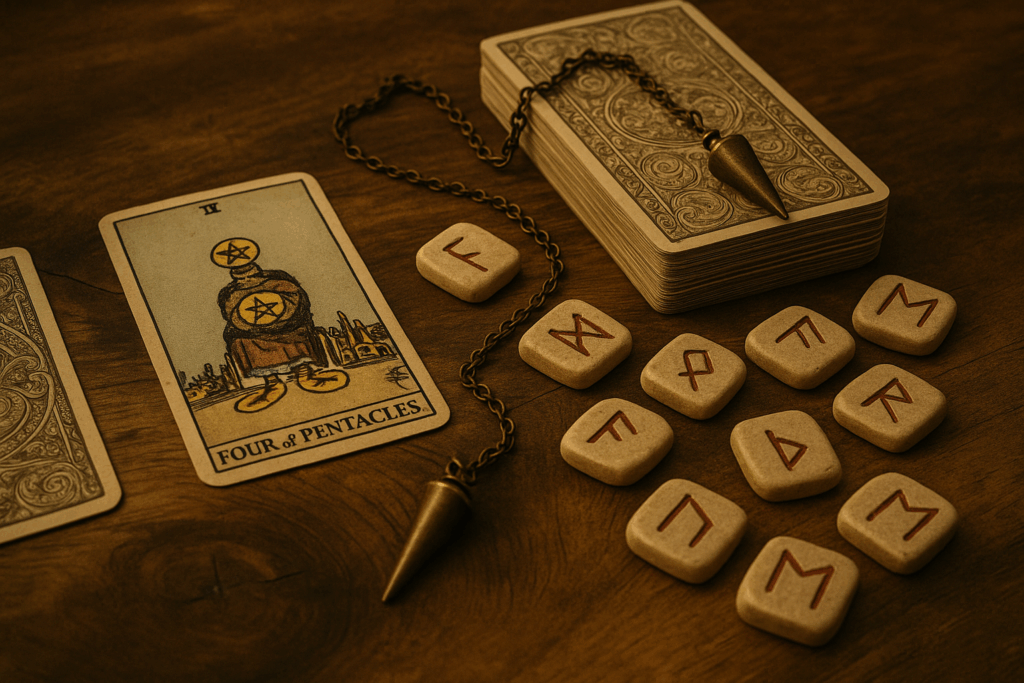
To begin, gather your rune set, or if you do not own one, you may craft a simple version from small stones, wooden discs, or even slips of paper marked with the rune symbols. Traditionally, twenty-four make up the Elder Futhark, though you may use as many or as few as you feel called to. Cleanse them first — by holding them in incense smoke, sprinkling with snow or cold water, or leaving them beneath the moonlight overnight. When ready, go to a place of quiet and purity — a garden, forest edge, or even a simple window where you can see the snow.
Breathe deeply and center yourself. The world around you may seem still, yet if you listen closely, you will feel the pulse of life beneath the frost. Whisper a short invocation to the powers of air and wisdom:
“Winds of the north, spirits of knowing,
Whisper through the white veil.
Show me what sleeps beneath the snow,
And what awakens with the sun’s return.”
Then, take your runes in hand. Close your eyes and feel their weight. The symbols are old, alive with meaning — each one a seed of cosmic truth. Ask your question clearly and from the heart. It may be about the coming year, your spiritual path, a decision awaiting your courage, or the lessons this winter holds. When ready, cast the runes gently onto the snow or, if indoors, upon a white cloth sprinkled with salt to symbolize frost.
Observe where and how they fall. Do some cluster together? Do any lie face down, hidden, or far apart? The placement itself carries meaning — just as the winds and drifts shape the snow, fate shapes the pattern before you. Choose three runes, or however many draw your attention, and interpret them intuitively. Allow their meanings to speak not as words on a page but as living symbols that unfold within you.
If you are versed in rune lore, you may read them according to their traditional names and associations:
- Fehu for wealth and vitality, the flow of life’s fire.
- Ansuz for divine inspiration, speech, and breath.
- Raidho for journey and rhythm, the turning of the wheel.
- Isa, the ice rune, for stillness and necessary pause.
- Jera, for harvest and cycles, the return of light.
Yet even if you do not know the runes by name, you can feel their essence. Trace their lines gently in the snow. What do they remind you of — a path, a mountain, a flame? The snow holds memory; it listens. When your intuition stirs, trust it. Prophecy is not about prediction; it is about revelation — seeing what is already within you reflected in the world without.
After you have read the runes, thank the spirits of the north and the runes themselves for their counsel. Brush the symbols away, returning them to the snow, and say:
“As these runes fade, so too may illusion.
Only truth endures, as the sun shall endure.”
This act seals the reading and honors the transient nature of insight — that wisdom, like snow, melts into the soil of the soul, nourishing new growth unseen.
The Runes in the Snow tradition can also be practiced as a meditative form of self-divination. If you are unable to cast physical runes, visualize yourself standing in a snowy field beneath the night sky. With your finger, draw a single rune upon the ground. Watch as it glows faintly, like starlight in frost. Feel its vibration, its sound, its movement through your body. Each rune is a sound before it is a symbol — a vibration of creation. You may chant its name softly, letting the sound carry through your breath until it resonates in your bones. This practice attunes you to the deep harmony of the cosmos, where all is interconnected.
On this day, many also choose to make their own rune sets — a ritual act of dedication to the wisdom of the ancients. Select natural materials: wood from a fallen branch, river stones, or bone if ethically sourced. Carve or paint each rune slowly, speaking its name aloud as you do. As the blade or brush meets the surface, you awaken the spirit of the symbol. When finished, wrap them in a piece of cloth and hold them near a flame or candle, saying:
“Runes of old, signs of fate,
Awaken now, illuminate.
In wisdom’s name I consecrate,
May your truth resonate.”
Such a set, born of your own hand and breath, will hold deep personal resonance and may be used in divination, spellcraft, or meditation throughout the turning year.
The Runes in the Snow also speak to the essence of winter divination itself: stillness as a gateway to revelation. In the hush of winter, when distractions fade and the senses sharpen, the subtle voices of the unseen become audible. The snow teaches us patience — to wait, to observe, to let meaning emerge rather than forcing it. Each pattern in frost, each breath of wind, each rune drawn or imagined is a whisper of the universe reminding us that truth is not always loud. Sometimes it arrives as softly as snowfall.
On a deeper level, this day honors Odin’s gift of self-knowledge through sacrifice. Just as he hung upon the tree to gain the runes, we, too, must surrender to silence and solitude to gain wisdom. The snow-covered earth mirrors the stillness of that vigil — the blank page upon which revelation writes itself. The lesson is that clarity comes not from seeking, but from allowing; not from filling, but from emptying.
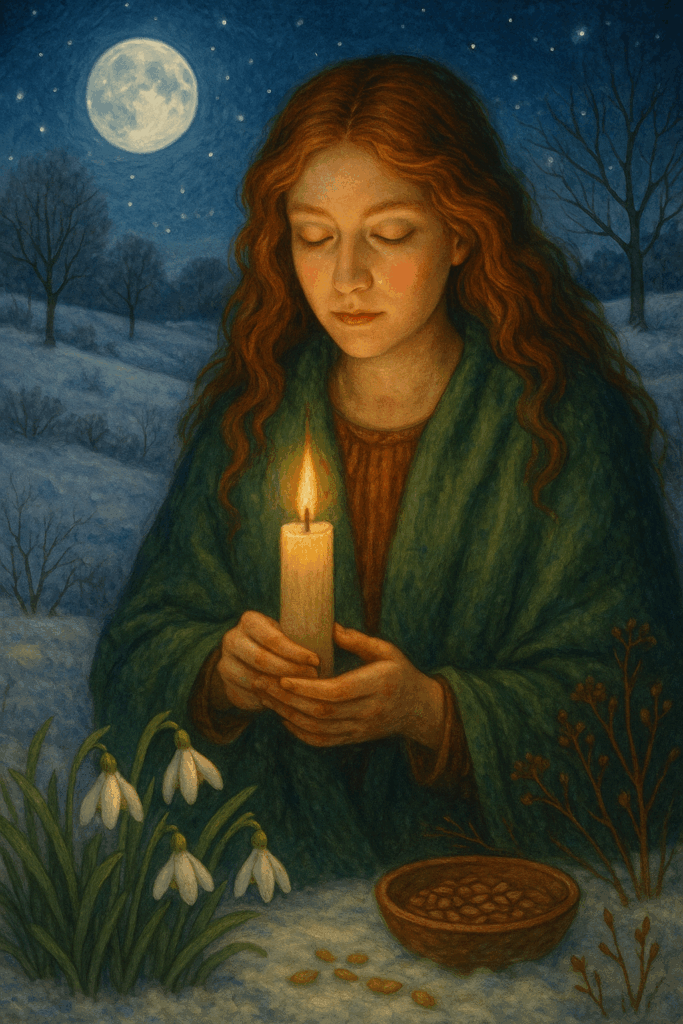
When you conclude your reading, light a small candle or lantern and place it near the window or outdoors. This act symbolizes illumination emerging from the depths of stillness — your personal sun rising over the frozen world. You may say:
“Through frost and rune, through silence deep,
I have listened, and wisdom I keep.
May this light shine clear and true,
As the turning year begins anew.”
The candle’s flame flickers against the night, reflecting upon the snow — like a rune of fire upon the field of ice. This image embodies the heart of the solstice mystery: light and darkness not as enemies, but as partners in eternal conversation.
Spiritually, Runes in the Snow teaches the art of reading the world as scripture. The earth is full of language for those who know how to listen — patterns in clouds, ripples in water, the fall of leaves, the flight of birds. The snow, in its simplicity, offers perhaps the purest page for this dialogue. Each mark upon it is temporary, reminding us that prophecy, like all wisdom, is fleeting — meant to guide, not to bind. The runes, too, are not tools of control but of communion; they do not dictate fate but reveal the harmony within it.
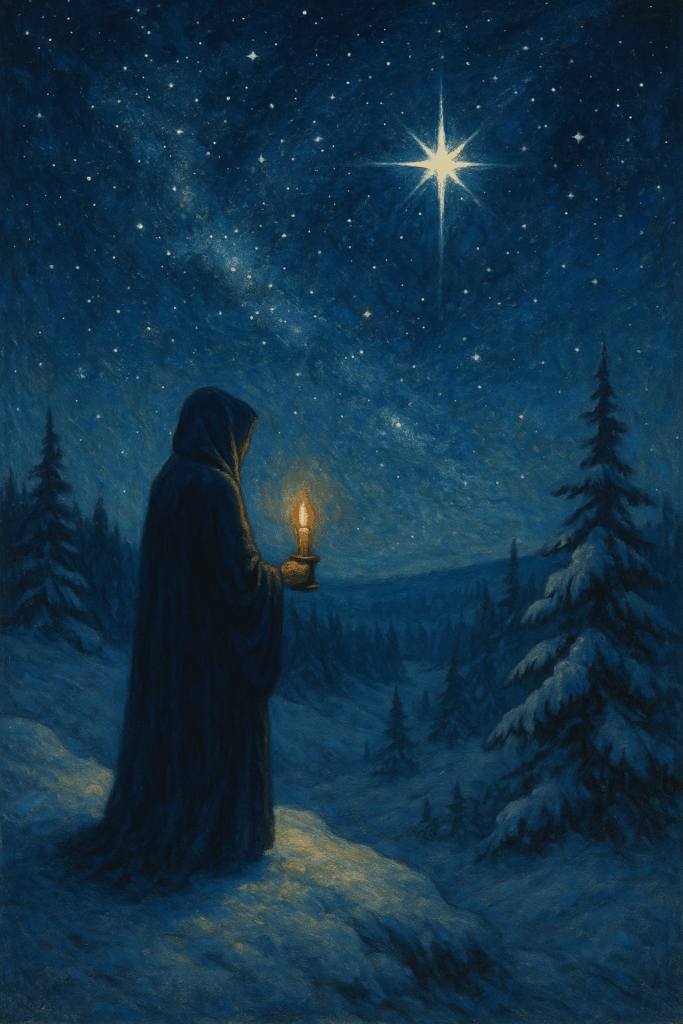
As night falls on December 18, and your candle burns low, take a final look outside. The snow glows faintly beneath the moon, an unbroken sheet of white. Somewhere beneath it, seeds sleep. Somewhere above it, stars burn. Between those worlds, you stand — the reader, the seeker, the living rune through which spirit speaks.
May the signs you read tonight guide you truly through the turning year, and may your heart remain as clear and still as the snow that bears your wisdom.