December 7 – Snowfall Spellcraft

The first true snowfall of the season descends like a blessing from the unseen world — a slow dance of purity, silence, and transformation. Every flake carries a pattern unique unto itself, crystalline prayers falling from the sky. To step into the snow is to step into enchantment, for here the world is reborn in white. On December 7, we honor the Snowfall Spellcraft, a sacred day for harnessing the magic of snow and silence for purification, renewal, and spiritual stillness. The snow is not merely frozen water; it is the alchemy of air and moisture, a celestial union that cleanses the land and our spirits alike.
To the pagan mind, snow is not an absence of life but its gentle renewal. When the earth sleeps beneath the frozen veil, its energies are drawn inward, protected from the harshness of exposure. So too are we called inward at this time — to purify, to rest, and to ready the soil of our souls for what is yet to come. Snow is the great equalizer: it covers palace and field, stone and leaf, with the same luminous hand. It humbles all things and makes them new. In its quiet, we find the purest form of magic — that which requires no words, no tools, only awareness.
The lore of snow in spiritual traditions is vast and shimmering. Among the northern pagans, snow was seen as the breath of divine winter spirits — the frost maidens and mountain mothers who painted the world in purity. In Celtic belief, the Cailleach — the ancient crone of winter — wove her cloak of white across the land to prepare it for sleep, her touch bringing the frost that preserved life beneath. For the Norse, snow carried the echoes of Ymir’s bones and ice — the remnants of the world’s first creation. Even in far older animistic traditions, snow was seen as a spirit in itself, soft yet implacable, a voice of the elements that commands stillness and reverence.
Snow’s magic lies in its paradox. It is born of movement — the swirling air, the rolling clouds — yet brings utter stillness when it falls. It is cold, yet purifies through its touch. It conceals, yet reveals by simplifying the landscape. The Snowfall Spellcraft teaches us to recognize the alchemy of contrasts within ourselves: silence that speaks, surrender that strengthens, emptiness that renews. The snow becomes both mirror and medicine. It asks us to be clear, to soften, to remember the beauty of simplicity.
To work magic with snow is to commune with the elements in their most subtle form. If you are fortunate enough to witness snowfall today, step outside in reverence. Let the flakes fall upon your skin and melt — each one a tiny baptism. Close your eyes and breathe the frozen air. This is a moment of initiation, a communion between you and the sky. Whisper softly to the falling snow: “Bless me with your stillness. Wash away what no longer serves.” Feel the purity of the cold drawing stagnant energies from your aura, transmuting them into clarity.
If the snow has already touched the earth, you may collect a small amount in a bowl or jar. This snow water is a potent ingredient in purification magic. As it melts, it becomes a sacred tool — liquid light born of silence. You can use it to cleanse your altar, anoint candles, or sprinkle at your doorway to invite peace into your home. Its energy is gentle yet powerful, for it carries the essence of transformation — solid to liquid, sky to earth, spirit to matter. Always treat it as you would a living presence, for the snow is an embodiment of the Goddess in her purest aspect: serene, impartial, cleansing, and infinite.
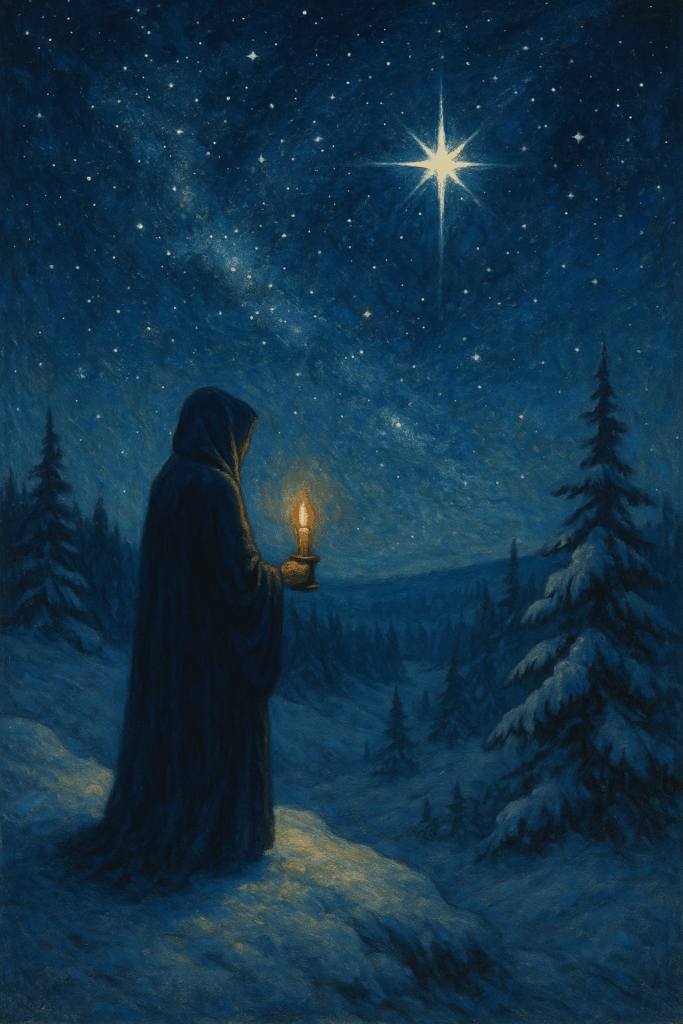
A ritual for Snowfall Spellcraft might begin with darkness and a single candle. Sit before your altar or window, watching the quiet world outside. In your hands, hold a bowl of snow or a small vial of melted snow water. Gaze into it as though gazing into a mirror. The still surface reflects not only your face but the inner landscape of your being. Speak aloud the things you wish to release — the old sorrows, the fears, the burdens that cling like shadow. Then, with a steady hand, pour the snow water upon the earth or into a sink, saying:
“As snow falls and melts, so too shall these fade.
By the purity of winter, I am renewed.”
In doing this, you enact the sacred cycle of release — freezing, melting, cleansing, flowing. What was once heavy becomes light, what was stagnant begins to move again. This is the essence of snowfall magic: the transformation of stillness into grace.
The silence of snow is itself a teacher. It muffles the world’s noise, drawing our awareness inward. In that quiet, you may hear the whisper of your own spirit more clearly than at any other time. To meditate during snowfall is to experience a rare form of communion — with nature, with spirit, with the divine hush that precedes creation. The Buddhists call this “the sound of no sound,” the silence that underlies all existence. In pagan practice, it is the womb of the Goddess, the cosmic pause before rebirth. To sit in that stillness, even for a few moments, is to align yourself with the deep rhythm of the Earth.
If snow is absent where you live, you can still engage with its essence. Use ice cubes as symbolic snow, letting them melt in a bowl as you meditate on release. Or simply open your window at night and breathe in the winter air, feeling the cool clarity of the season entering your lungs. The Snowfall Spellcraft is not dependent on weather but on awareness. It is the ritual of stillness, of seeing beauty in what is stripped bare.
In older folk traditions, snow was also used for divination. People would gaze into freshly fallen drifts to see omens in their shapes and sparkles, or scatter herbs upon the snow to interpret how they landed — messages from the land spirits. You may try this yourself: go outside, scatter a pinch of salt, ash, or herbs upon the snow, and observe how the wind or melt patterns form. Does it gather in circles, suggesting protection? Does it drift northward, a sign of wisdom or guidance from ancestors? The snow becomes a canvas for the unseen to speak.
Snow’s purity, however, is not sterile. It is fertile in its quiet way. Beneath its white covering, seeds sleep, waters gather, and roots strengthen. This is a reminder that the inner work of stillness and purification is never wasted effort — it is preparation for life’s return. The Snowfall Spellcraft teaches that rest and cleansing are sacred parts of the cycle, not pauses but essential transformations. Just as the land renews beneath the snow, so do we regenerate in times of stillness and solitude.
As you conclude your ritual, offer gratitude to the snow and the spirits of winter. Whisper your thanks into the cold air, letting your breath mingle with the season’s own. If possible, place a small white candle in your window that evening — a beacon of purity and peace. Its flame glows like a single snowflake of fire, a symbol of warmth held within the vastness of silence. You may say:
“Through stillness, I am cleansed.
Through silence, I am strong.
Through snow, I am made whole.”
The Snowfall Spellcraft is one of the most tender and profound forms of winter magic. It teaches us to release without resistance, to embrace stillness without fear, and to see beauty in simplicity. The snow’s hush is the voice of the divine mother cradling the world, the soft breath between endings and beginnings. When we open ourselves to its teaching, we rediscover the purity that has always lived within — the untouched essence that endures through every season.
On this day, may the snow — real or imagined — bless your spirit. May it cleanse what has grown weary, quiet the noise within, and reveal the clarity beneath. And when it melts, may its waters carry your prayers to the roots of the earth, where new life waits, ready to awaken with the returning sun.