
December 4 – The Spirit of the North Wind

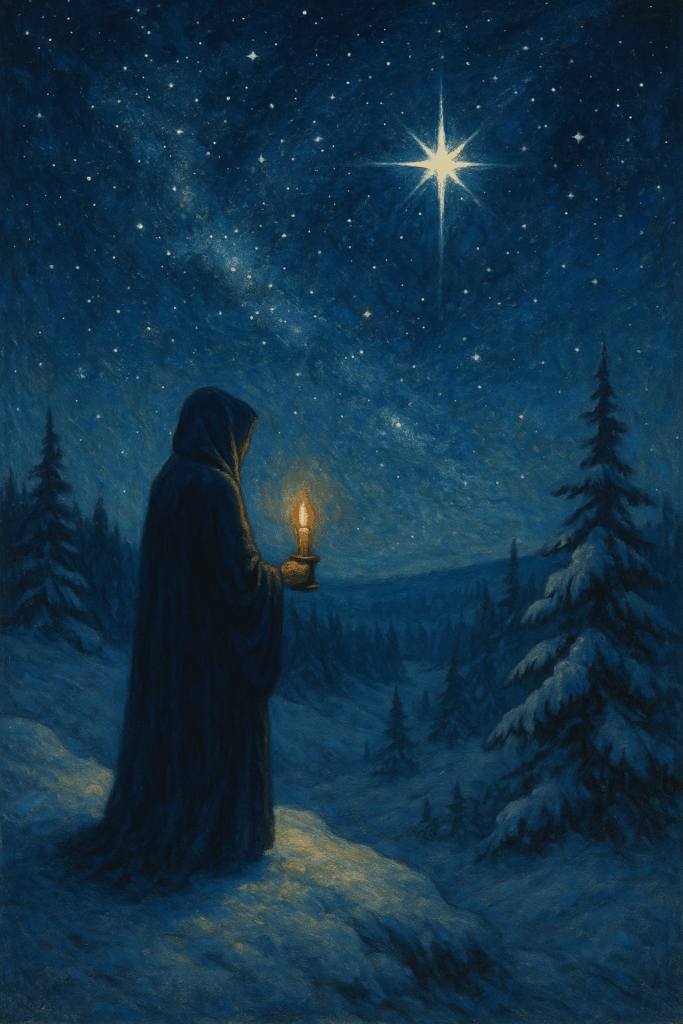
The air grows sharper now. Winter’s breath begins to move through the trees, and the cold carries a voice older than any human song. It is the whisper of the North Wind, that vast and invisible spirit that sweeps through the world to cleanse, to teach, to remind us of our place within the great cycles of nature. December 4 is a day to honor this spirit—to feel the wildness and wisdom of the cold, to pay respect to the Boreal deities who command the northern skies, and to learn what it means to move with, rather than against, the chill that defines the heart of winter.
To pagans across many lands and ages, the North has always been the seat of mystery and endurance. It is the realm of the ancestors, the direction of wisdom, and the domain of the earth’s deep powers. From the North comes both storm and stillness, the power to destroy and the patience to preserve. The wind that flows from that direction carries the voice of the old gods—those who rule the mountains, the glaciers, and the frozen seas. The North Wind is not a gentle spirit, but it is a necessary one. It is the breath of cleansing, the force that clears the world of decay so that life may renew.
In Norse myth, the North Wind is embodied by Hræsvelgr, the giant who takes the form of an eagle and sits at the edge of the world, beating his wings to create the winds that sweep across Midgard. His name means “corpse-swallower,” and though it sounds fearsome, his work is sacred. The wind he creates carries away the remnants of what must pass, allowing rebirth to take root. In Greek lore, the North Wind is Boreas, the strong and tempestuous god with hair like icicles and a beard of snow, who brings winter storms yet also vitality and vigor. The Celts, too, felt the northern gales as the breath of the Cailleach, the Winter Hag, who shapes the mountains with her staff and commands the frost. Across all cultures, the North Wind is the teacher of strength through surrender.
To honor the Spirit of the North Wind is to stand in awe of its power and humility alike. It teaches that there is beauty in austerity, wisdom in hardship, and freedom in letting go. The cold wind strips away what is not essential—it removes the leaves from the trees, the heat from the soil, and the clutter from the mind. It reveals the bare bones of truth. When the North Wind blows, we are invited to release our attachments, to allow the breath of winter to carry away our illusions. What remains afterward is authenticity—the clear air of the soul.
Rituals for this day may be performed outdoors if weather permits, or indoors facing north. Begin by acknowledging the direction of the North: solid, silent, eternal. Place a small bowl of salt or a stone upon your altar to represent the grounding strength of the Earth, and beside it a feather or a bell to symbolize the wind that moves unseen. Light a candle of deep blue or silver, colors of winter’s sky, and take a slow, deliberate breath. Feel the air entering your lungs, cold and alive, carrying the essence of the North. With each exhale, release tension, fear, and stagnation. With each inhale, draw in clarity, resilience, and insight.
As you breathe, imagine the North Wind circling you—cold, fierce, but not cruel. It moves through your aura, through your home, through the landscape of your life, sweeping away what no longer serves. Let it speak to you in whispers or sensations: a sudden chill, a stirring of intuition, the sound of wind outside your door. You may feel resistance—after all, the North Wind challenges complacency. But within that challenge is freedom. The wind teaches us not to cling, but to flow; not to demand warmth, but to kindle strength.
In some traditions, this day is also devoted to invoking the Boreal deities—the divine forces who embody the spirit of the North. You may call upon Boreas, Hræsvelgr, or the Cailleach herself, depending on your path. Speak words of reverence:
“O spirits of the North, breath of the cold wind and keeper of wisdom,
Cleanse me of illusion, harden me in truth.
I stand before you as the mountain stands before the storm—
unmoving, listening, enduring.”
After your invocation, take a moment of silence. Listen for the subtle hum of the air. Even indoors, you may sense its movement, the low vibration that fills all space. The North Wind does not always speak in language—it often speaks through presence. Its gift is perspective. Like the eagle that rides its currents, the North Wind lifts the mind above the noise of the world, granting vision and distance. It allows us to see life’s patterns clearly, stripped of distraction.
The lesson of the North Wind is not gentleness but endurance. It teaches that comfort is temporary and that growth often requires discomfort. Just as trees strengthen their roots by standing firm against storms, so too do we develop inner stability by facing what life sends our way. The North Wind reminds us that survival is sacred, that there is power in perseverance. To face the cold is to affirm life, to declare that one’s spirit cannot be frozen or broken.
For those drawn to spellwork, this day is potent for banishing and purification. The wind is a carrier—it moves energy swiftly and completely. Write what you wish to release upon a small slip of paper, and if conditions are safe, step outside. Hold the paper in your hand, call upon the Spirit of the North Wind, and let it go. Watch it scatter and disappear into the air, trusting that the Boreal powers will transform it into clarity. Alternatively, you may ring a bell or blow through a hollow reed, symbolically sending your voice into the wind as a message of surrender and renewal.
In meditation, visualize yourself standing upon a vast snowy plain, the wind flowing through you rather than against you. It howls around you, yet you are calm, part of its rhythm. You are neither resisting nor fleeing; you are listening. The wind moves through your hair, through your lungs, through the very chambers of your heart. You become the wind—limitless, clear, alive. When you open your eyes, you will feel lighter, as though something within you has been swept clean.
The North Wind is sacred because it reveals what endures. When the warmth fades and the world lies bare, what remains? Truth, essence, and spirit. The Boreal gods remind us that not all harshness is cruel—some is holy. The Cailleach, though feared, is also mother to the land; Boreas, though fierce, is the bringer of clarity. To stand in their presence is to learn humility and strength, to understand that life’s cold seasons refine the soul.
As the day closes, give thanks to the wind for its guidance. Offer a whisper, a breath, a small puff of air from your lips, and say simply: “I honor the wind that shapes the world.” In that moment, you align yourself with one of the oldest powers of creation—the breath that moves between worlds, between life and death, between silence and song.
The Spirit of the North Wind is not to be feared but revered. It clears the air of falsehood and awakens the courage to face truth. It calls us to let go of what is brittle and to stand strong in what is real. In honoring it, we honor the voice of winter itself—the cold, fierce teacher who strips us bare so that we may be reborn clean, wise, and free.