December 2 – Frost on the Altar

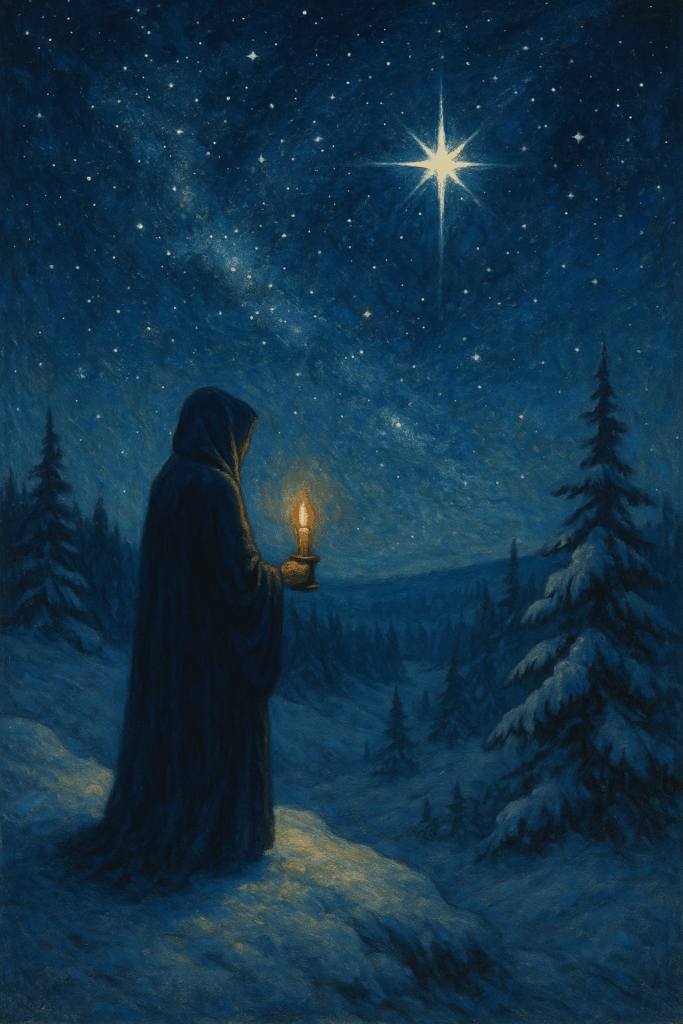
There is a rare beauty in the first frost, that delicate shimmer that transforms every blade of grass, every stone, and every branch into a crystal relic of winter’s blessing. To step outside on a frost-laden morning is to enter a sacred space that the earth herself has consecrated. The air is clear and biting, the light soft yet sharp, and in that crystalline silence one can almost hear the whisper of air spirits drifting between the trees. December 2 invites us to honor this enchantment—to create sacred winter spaces and to connect with the unseen guardians of the season: the sylphs, the breath of the world, the spirits of air who weave frost into art.
The altar is central to pagan devotion—a mirror of the universe condensed into form. On this day, the frost becomes the altar itself. Every surface the ice touches is transformed into a symbol of divine stillness and clarity. It is as if the Goddess breathes across the land, leaving behind her veil of silver, bidding us to slow, to listen, to recognize the holiness that resides in pause and purity. To create a sacred winter altar is not to escape the cold, but to work in harmony with it—to invite the breath of winter indoors and into the soul.
Begin this day by observing the frost as an act of reverence. Step outside, if you can, in the early light before the sun melts the fragile crystals. Notice how frost outlines the world with a kind of luminous precision. The air feels alive—each breath a communion with the invisible. This is the element of air in its purest form: cold, still, and transformative. The air element in pagan cosmology governs intellect, communication, inspiration, and spirit. It carries thought like the wind carries seed; it whispers messages from the unseen realms; it is the breath of the gods and the whisper of ancestors. To connect with air spirits is to align oneself with inspiration and awareness—the clarity before action, the pause before creation.
Within many ancient and modern pagan traditions, air spirits are known as sylphs, elemental beings who dwell in the sky and wind. They are said to embody freedom and perception, to lift the human mind toward intuition. In winter, their presence is sharper, more crystalline, for they travel with frost and breath. When frost patterns form on windows—those swirling shapes like wings or sigils—it is said that sylphs have traced their passage there, leaving blessings of insight and truth. These are the writings of the unseen, inscribed by nature’s hand.
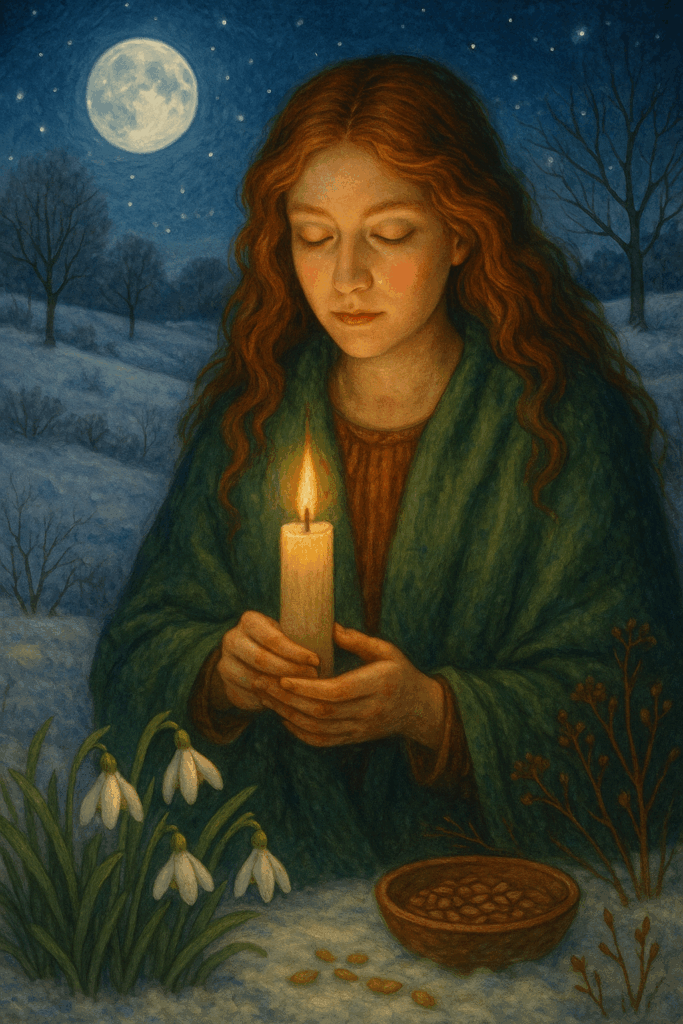
To honor them, one might construct a “Frost Altar.” Choose a quiet place—by a window, on a porch, or even outdoors if you can bear the chill. Lay down a cloth in white, silver, or pale blue, colors that resonate with the purity of air and winter’s serenity. Place upon it items that symbolize clarity and connection: a feather, a piece of clear quartz or selenite, a small bowl of snow or ice, and perhaps a mirror to reflect the morning light. Breathe softly upon the altar, acknowledging the spirit of the air and offering your gratitude for its presence. Whisper: “I honor the frost that blesses the earth, and the breath that blesses my soul.”
This act transforms an ordinary space into a living temple. The frost and air become partners in your magic. If you wish to work ritual or spellcraft, this day is ideal for purification and communication. Air carries away stagnation—it clears the pathways of thought and speech. Write down words, habits, or fears you wish to release, and then step outside. Breathe deeply, hold the paper in your hands, and whisper your intentions into the cold air. You may tear or burn the paper afterward, letting the smoke rise or the wind scatter the pieces, knowing that the sylphs will bear your message into the great beyond. This ritual, simple and ancient in spirit, honors the power of air as both purifier and messenger.
The frost, too, teaches the art of stillness. Its beauty exists only when the world is quiet—when wind and warmth are absent, when motion ceases. It reminds us that silence is not emptiness, but presence. In spiritual practice, this lesson becomes profound: there is a kind of purity that emerges only when we stop striving, when we allow the world to crystallize around us and simply be. Frost is the Earth’s meditation—the moment between breaths when everything glows with unseen life. To bring this energy into one’s altar and one’s spirit is to welcome renewal through stillness.
The ancients often saw frost as the handiwork of deities or spirits. In Norse mythology, the primal frost of Niflheim gave birth to creation itself, as ice met fire in the void and the first beings emerged. In Celtic lore, frost was the touch of the Cailleach, the winter crone who shapes the land with her staff, her breath freezing lakes and whispering snow into being. She is not cruel but wise—her frost a form of preservation and purification, ensuring that the land rests and restores before the green returns. When you see frost upon your altar, remember that it is a kiss from the Cailleach, a blessing from the divine elder who guards the threshold of rebirth.
To deepen your connection to air spirits and frost magic, consider offering breath prayers—short invocations synchronized with inhalation and exhalation. For example:
- Inhale: “I breathe in clarity and light.”
- Exhale: “I release confusion and fear.”
As you repeat this rhythmically, envision each breath as visible frost in the air, your essence merging with the winter’s breath. Over time, this practice opens the heart to subtle messages—the whisper of guidance, the gentle nudge of intuition, the sudden flash of understanding that feels like wind across your soul. These are the gifts of the air spirits.
Frost also awakens gratitude. It reminds us that beauty persists in the harshest conditions, that the earth still adorns herself in jewels even when life retreats beneath the soil. To bring frost into the home, you might collect a few small ice crystals or frost patterns by gently photographing them or capturing them in words through poetry or journaling. These reflections are acts of devotion, ways of participating in nature’s artistry. They remind us that every small moment of awareness is a form of prayer.
At day’s end, when the frost melts and water trickles once more, take a moment to thank the element of air. Extinguish any candles on your altar with a soft breath, symbolizing that the circle of spirit continues in motion. The altar can remain through the season, refreshed with snow, feathers, or incense smoke as the days progress. Over time, it will become a living shrine to the cold wind and the lessons it brings.
The “Frost on the Altar” teaches us that sacred space is not always warm, comfortable, or filled with abundance. Sometimes it is stark and glimmering, a place of breath and emptiness that holds truth in its chill. It asks us to find holiness in simplicity, to listen to the language of air and silence. As we move deeper into December’s descent, we carry this frost-born clarity with us—the awareness that the spirit of air, though invisible, shapes all that is seen. In that understanding, our prayers take wing, our minds become mirrors of sky, and our souls rest in the tranquil beauty of the frozen dawn.