🕯️ February 6 – The Snowdrop’s Song: Finding Beauty in Fragility and First Growth

As February deepens, the world remains wrapped in winter’s stillness, yet a quiet miracle begins to unfold beneath the frost. On February 6th, the day known as The Snowdrop’s Song, we honor the first delicate blooms that pierce the frozen soil — symbols of courage, hope, and the tender persistence of life. The snowdrop, with its white bell-shaped flower bowing gracefully toward the ground, is the Earth’s first whispered hymn of spring. Its appearance marks not the end of winter, but the promise that the light is returning and that beauty can thrive even amid the cold.
In the language of nature, the snowdrop is the embodiment of purity and resilience. It dares to bloom when the world still sleeps, unfolding its fragile petals through ice and wind, a living testament to quiet strength. For centuries, this humble flower has been associated with Brigid’s season of renewal. It is said that the snowdrop was her messenger — the first herald of her blessing upon the land. When Brigid walks the fields at Imbolc, her footprints melt the snow, and from the softened ground the snowdrops rise, their white blossoms shining like candles against the still-grey earth.
This image holds deep spiritual truth. The snowdrop teaches that growth often begins in hardship, that true renewal arises not in comfort but in courage. It does not wait for warmth; it creates its own small climate of possibility, trusting the invisible pull of life to lift it toward the sun. Its fragility is its power — for in its very vulnerability lies the strength to emerge, to endure, and to beautify the barren.
To honor The Snowdrop’s Song is to listen to this lesson within ourselves. We, too, carry within us a seed of life that waits to unfold, even in cold seasons of doubt or stillness. Each of us has endured winters of the soul — times when inspiration seems distant, when the heart feels buried beneath layers of frost. And yet, like the snowdrop, something within us still stirs. There is a part of the spirit that remembers warmth, that knows the rhythm of light’s return, and that dares to bloom again despite the chill.
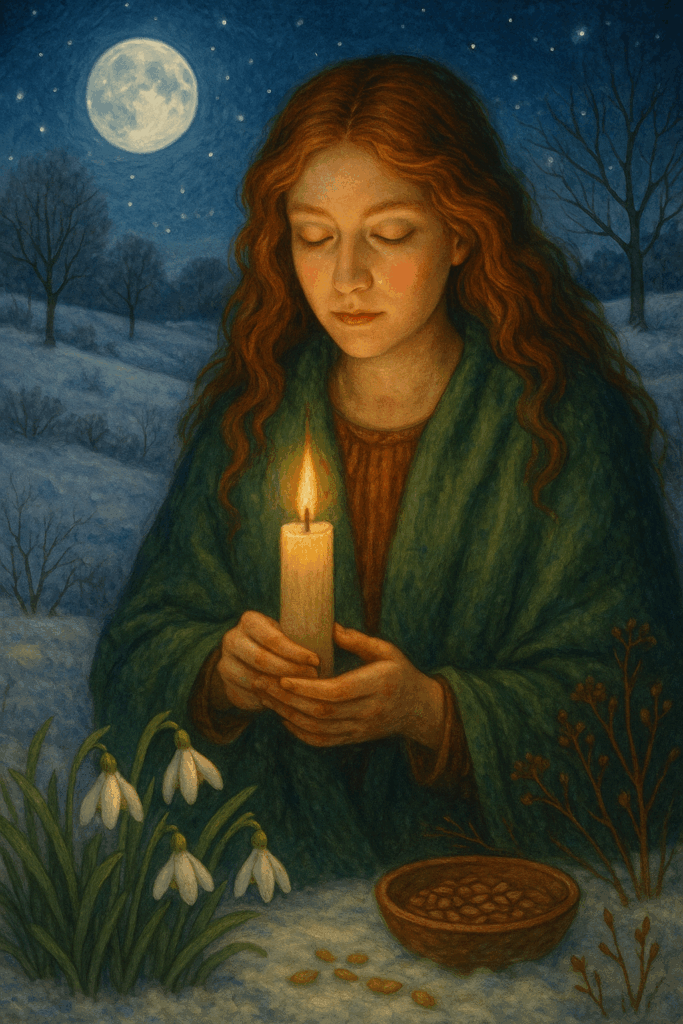
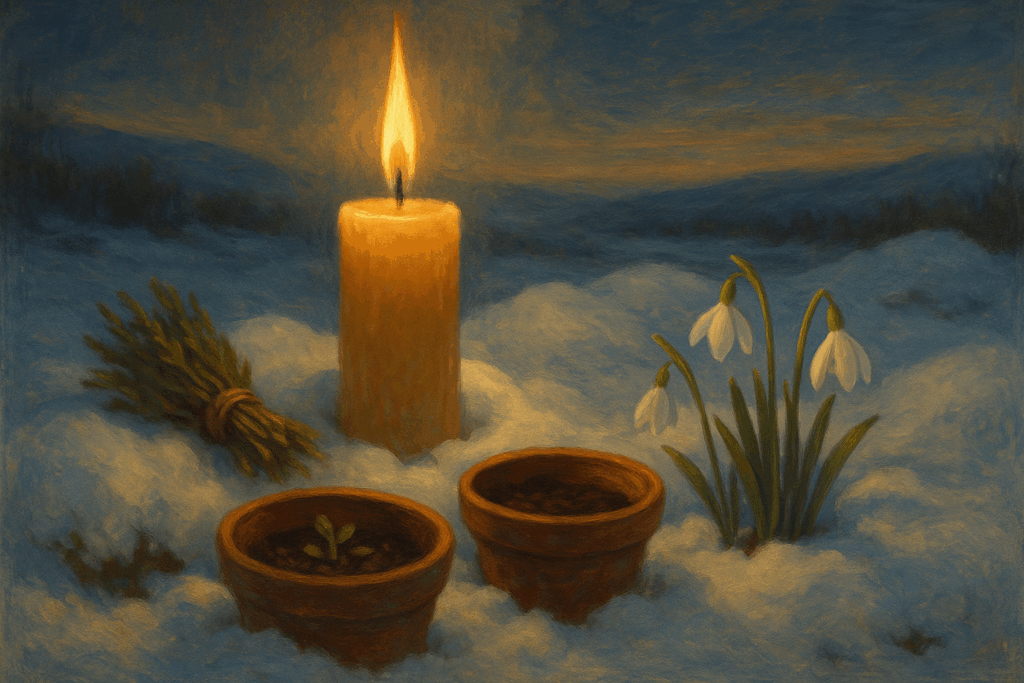
On this day, one might begin with a simple ritual of awakening and gratitude. Step outside, if possible, and breathe deeply of the crisp morning air. If snow still covers the earth, imagine the tender shoots beneath it, pressing upward through darkness toward the unseen sun. If you have access to snowdrops or other early flowers, place a few upon your altar or table. If not, a white candle or even a sketch of the flower will serve as symbol enough. Light the candle and say quietly:
“Beneath the snow, life awakens.
Within stillness, beauty stirs.
I welcome the first song of growth,
And I bloom, though the world is still cold.”
Let the flame burn softly, as the snowdrop burns white in the frozen fields — not loud or blazing, but gentle and enduring. The candle and the flower mirror one another, each representing purity of spirit and steadfastness in the face of adversity.
The snowdrop’s song is not one of grandeur; it is a whisper, a vibration so subtle that only the attentive can hear it. To listen for it requires stillness — the ability to sit in silence and notice life’s smallest movements. Perhaps you feel it as a flicker of inspiration, a thought long dormant returning to your mind, or simply the faint joy of light stretching longer into the evening. It may come as an urge to clean, to write, to create, or to reconnect with someone you love. These are all snowdrops of the soul — early signs of life returning after an inner winter.
The beauty of the snowdrop also reminds us to honor fragility as part of sacred strength. Modern life often celebrates endurance, productivity, and achievement, but the natural world teaches a gentler truth: that vulnerability is essential to growth. The snowdrop does not armor itself against the cold; it meets the frost with trust. It bends in the wind but does not break. Its petals bow toward the ground in humility, yet they never lose their light.
In spiritual practice, this can be a profound meditation — the act of softening into renewal rather than forcing it. Sit quietly and imagine your own inner snowdrop, buried deep but beginning to move. Ask yourself: What am I ready to allow to grow, however small or uncertain it may seem? Do not seek immediate answers. Let the question rest in the soil of your heart. The wisdom of the snowdrop is patient — it unfolds only when the moment is right.
Throughout Celtic lands, snowdrops were seen as symbols of hope and divine purity. Some folklore speaks of them as the “maiden’s flowers,” sacred to Brigid herself. To bring snowdrops into the home at Imbolc was to invite her blessing and protection. They were placed on windowsills to welcome the goddess of light, their whiteness reflecting her radiant purity and the newness of the season. Even their fragrance, faint and clean, was said to carry her healing breath.
If you wish to weave this symbolism into your own space, create a Snowdrop Blessing Charm: gather a white ribbon (for light), a sprig of evergreen or dried herbs (for endurance), and a small crystal or stone (for grounding). Tie them together with intention, saying:
“As snow gives way to soil, and soil to bloom,
May I find beauty in beginnings,
And strength in what is soft.”
Hang this charm near your altar, window, or garden — wherever you wish to invite gentle renewal.
The song of the snowdrop is also a reminder of the balance between perseverance and rest. Though it blooms early, it does not rush the coming of spring; it merely announces that the Earth is preparing. Likewise, in our own lives, we must respect timing — knowing when to move forward and when to nurture ourselves quietly in the dark. Growth that is forced can wither; growth that is allowed unfolds naturally. The snowdrop’s wisdom lies in trusting the invisible rhythms of creation.
This flower’s quiet beauty holds one more mystery: it is both fragile and eternal. Every year, no matter how harsh the winter, it returns. Its cycle of death and rebirth mirrors our own — the soul’s journey through dormancy and awakening, through stillness and song. Each time it rises from the earth, it reminds us that nothing is truly lost; every ending contains the seed of new life.
As night descends on February 6th, take a final moment to reflect on what you have seen and felt today. Perhaps light your candle once more and whisper a word of gratitude for the small things — the first birdsong, the glint of sunlight on frost, the warmth of your own breath. These are the snowdrops of your world — fleeting yet eternal, fragile yet unbreakable.
In honoring the snowdrop, you honor the sacredness of beginnings — the courage it takes to unfold when conditions are not yet perfect, and the quiet song that rises from the heart when the world is still asleep. The snowdrop’s song is your own: the melody of becoming, the music of renewal whispered softly between earth and sky.
So, when next you see a patch of snowdrops nodding gently in the cold wind, pause to listen. Hear in them the voice of Brigid, the maiden of light, singing through every living thing: “Grow, even here. Shine, even now. Life always returns.”