🕯️ February 22 – The Candle and the Cauldron: Dual Forces of Creation — Inspiration and Transformation

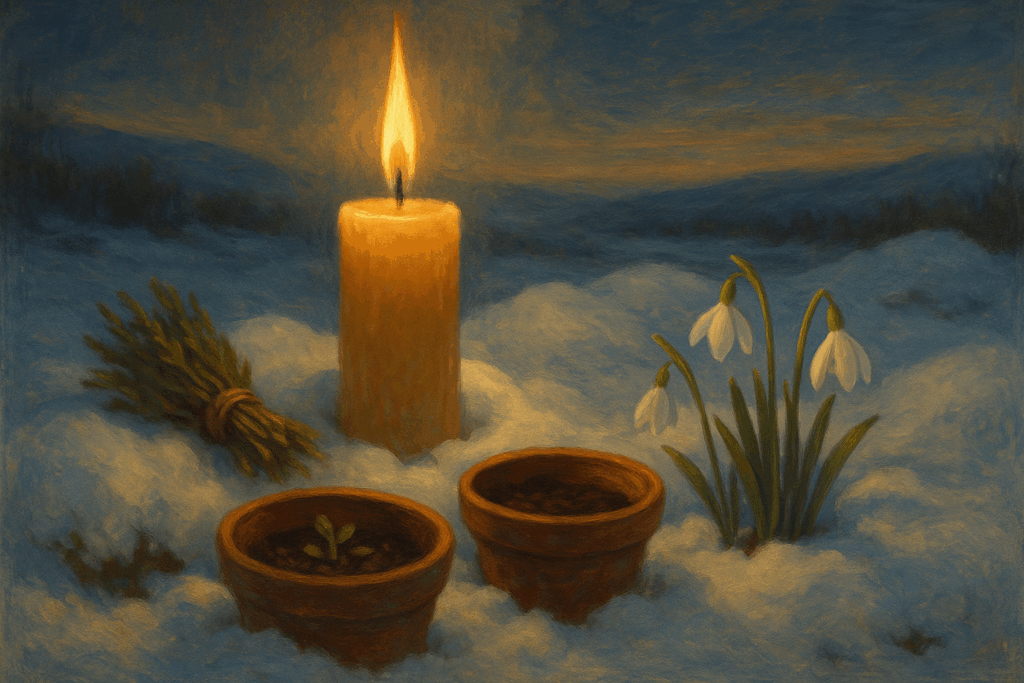
By February 22nd, the rhythm of Imbolc deepens into a contemplation of balance — of fire and water, of thought and form, of inspiration and transformation. This day, known as The Candle and the Cauldron, honors two of Brigid’s most ancient symbols and the sacred interplay between them. The candle, upright and bright, represents the spark of divine inspiration — the flash of illumination that ignites vision, creativity, and purpose. The cauldron, dark and round, represents the deep womb of transformation — the vessel in which ideas and energies are tempered, nurtured, and reborn. Together, they form the twin forces of creation itself: light and depth, spark and sustenance, breath and body.
In Celtic myth and magic, both the candle and the cauldron were considered sacred tools of Brigid. As keeper of the eternal flame, she embodies the candle’s clarity — that slender tower of light that dispels shadow and awakens the mind. As goddess of healing, poetry, and the forge, she also presides over the cauldron — the vessel of alchemy, of regeneration, of the mysterious processes through which raw elements become gold. To honor her through these two symbols is to recognize the eternal rhythm of creation: illumination followed by transformation, inspiration followed by integration.
The candle is the moment of divine spark — the instant when an idea, emotion, or vision touches the soul like sunlight breaking through clouds. It is clarity, the “aha” of spirit, the breath that says yes. The cauldron, by contrast, is the work that follows — the deep, often unseen process through which that spark takes shape in reality. The candle gives us vision; the cauldron gives it form. One without the other remains incomplete. Too much fire burns out; too much water stagnates. The Candle and the Cauldron remind us that to live creatively and spiritually is to balance inspiration with grounded transformation.
To enter into this balance, begin your observance by lighting a candle and placing a bowl or cauldron of water beside it. Sit quietly and gaze upon them both — the flame dancing above, the water glimmering below. Notice how they seem opposite yet harmonized, how light reflects upon surface, how heat and coolness coexist. Whisper softly: “Candle of vision, Cauldron of becoming, unite within me as the forces of creation.”
Take a few moments to contemplate what each symbol means in your own life. The candle may represent your dreams, insights, and goals — the things that inspire and call you forward. The cauldron may represent your heart, your daily work, or your body itself — the place where those dreams are cultivated and made real. Ask yourself: Do I give equal honor to both? Do I allow time for inspiration, and time for integration?
In our modern world, it is easy to live in imbalance between these forces. Many chase constant inspiration — always seeking new ideas, new passions, new beginnings — without giving themselves the stillness and discipline to bring those sparks into form. Others dwell too long in the cauldron, caught in analysis or waiting, afraid to rise into action. Brigid’s teaching through the candle and the cauldron is that both are holy and both are needed. Inspiration without transformation is a flash in the dark; transformation without inspiration becomes labor without light.
You might engage with these forces through a simple ritual of creation. Light your candle and take a piece of paper. On one side, write a vision, desire, or dream that ignites your inner fire. On the other side, write one tangible step — however small — that will bring it closer to life. Then fold the paper once and hold it briefly over the candle’s warmth, saying: “I bless this vision with the fire of inspiration.” Next, dip your fingertips into the cauldron’s water and trace a small spiral upon the paper, saying: “I bless this work with the water of transformation.” Place the folded paper beneath the candle and let it rest there as a quiet promise — an act of balance between dreaming and doing.
The candle and the cauldron also reflect the dual aspects of the divine feminine itself. The candle is the aspect that illuminates — the Muse, the visionary, the guiding flame of consciousness. The cauldron is the aspect that gestates — the womb of the Earth, the deep container of mystery and rebirth. Together they represent the full spectrum of creation: the spark that descends from spirit and the vessel that rises from matter to meet it. Within every act of creativity — whether artistic, emotional, or spiritual — these two forces dance. The inspiration descends like fire from above; the transformation rises like steam from below; and between them is born something new.
This rhythm can be seen in nature as well. The sun’s fire warms the soil, awakening seeds hidden in darkness. The earth’s cauldron of fertility receives that warmth and transforms it into growth. Fire alone cannot make a flower bloom, and soil alone cannot bring color without light. It is their marriage that sustains all life. The same truth lives within us: our inspiration must meet our patience, our ideas must meet our willingness to grow them through time and care.
As you move through this day, observe where you see these two forces at play. When you write, speak, or create, notice how inspiration arrives — sudden and bright — and how the work of shaping it follows. When you rest or reflect, feel the cauldron energy of transformation quietly brewing beneath your awareness. Honor both as sacred. If you feel stagnant, tend your candle — rekindle inspiration through beauty, art, or prayer. If you feel scattered or overextended, tend your cauldron — ground yourself, simplify, and allow space for ideas to mature.
At the heart of this practice lies a profound spiritual truth: creation is not a linear process but a circular one. The candle feeds the cauldron, and the cauldron in turn nourishes the next candle. Every insight, once lived and embodied, becomes fuel for further illumination. Every transformation creates new light. This is the eternal cycle of Brigid’s power — the endless exchange of fire and water, heaven and earth, inspiration and manifestation.
As night falls, return to your symbols. Watch the candle’s light reflected upon the water’s surface. You may see two flames — the real and its reflection — dancing together. That image is the mystery itself: the visible and the invisible, the active and the receptive, forever entwined. Whisper: “Flame of vision, flow of becoming, may your balance live within me. May I dream with fire and act with grace.”
When you extinguish the candle, the smoke will rise like a spirit of completion. Leave the cauldron of water overnight to absorb moonlight if possible, then use it in the morning to bless your hands or workspace, carrying the harmony of the two forces into the new day.
The lesson of The Candle and the Cauldron is that true creation requires both brilliance and patience. Inspiration gives us the dream; transformation gives it breath and bone. To walk this path consciously is to live as Brigid’s apprentice — tending her flame and stirring her cauldron, allowing ourselves to be both creators and creations in the divine process of becoming. In the end, the candle and the cauldron are not separate at all. One lights the world; the other holds it. And between them burns the eternal fire of life itself.