
🕯️ February 13 – Spirit of Hearth and Hand: The Sacredness of Work, Craft, and Creation

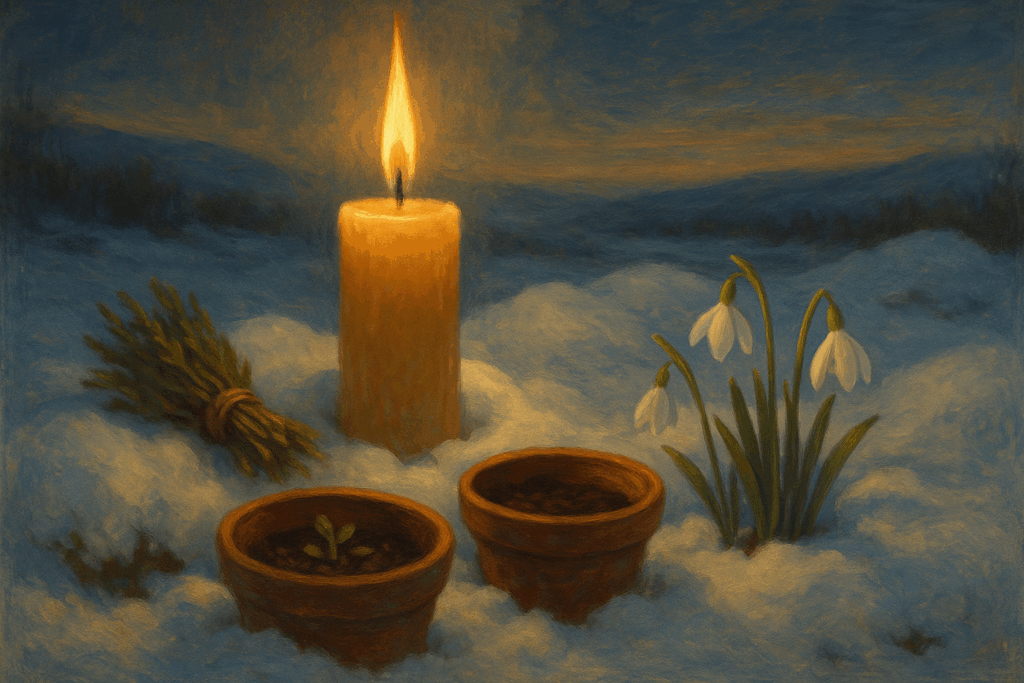
By February 13th, the light of Imbolc burns with a gentle steadiness. The flames kindled in the first days of the month — candles for Brigid, fires for purification, sparks of inspiration — have settled into a warmer, quieter glow. The intensity of awakening gives way now to devotion through doing, the simple holiness of labor performed with love. This day, known as Spirit of Hearth and Hand, honors the sacredness of work, the spiritual dignity of craftsmanship, and the quiet grace found in daily creation.
The hearth and the hand are Brigid’s twin domains. As goddess of the hearth, she presides over warmth, home, sustenance, and belonging. As goddess of the hand — of craft, forge, and art — she governs the shaping of raw material into meaning. Together, they embody the rhythm of sacred practicality: the knowledge that spirituality is not only found in meditation or prayer, but in the act of making, in the tending of what sustains life.
On this day, we are reminded that every task done with care is a ritual; every tool held with reverence becomes an instrument of blessing. Whether we cook, clean, write, mend, carve, or cultivate, our work — physical, creative, or emotional — becomes an offering to the divine flame when performed in mindfulness.
The Hearth as Temple
In the ancient Celtic household, the hearth was not simply a source of heat; it was the spiritual heart of the home — the meeting place of family, the keeper of continuity, the altar of daily life. The fire that burned there represented both physical sustenance and divine presence. It was never allowed to go out entirely, for to do so was to let the spirit of the home grow cold.
Even in modern times, when most hearths are electric or symbolic, the essence of this sacred fire remains. The kitchen table, the stove, the shared meal — these are today’s hearths. They are the spaces where nourishment is created, where care is exchanged, where gratitude is born anew each day.
To honor the Spirit of the Hearth, take a few moments today to clean and bless the place where you prepare or share food. Light a candle nearby and whisper a prayer of appreciation for the sustenance your home provides. You might say:
“Bless this hearth and all its works.
May warmth dwell here, and peace endure.
May every meal be seasoned with kindness,
And every word spoken here be gentle.”
This simple act reclaims the everyday as sacred. The hearth becomes a living temple, its flame a visible reminder that divinity lives not in distant heavens but in the warmth we create and share.
The Hand as Instrument of Spirit
If the hearth represents the soul’s resting place, the hand is its expression. The hand builds, shapes, and offers. It is the bridge between thought and world, intention and manifestation. Through our hands, the inner flame of inspiration becomes tangible — the poem written, the loaf baked, the tool forged, the garment sewn.
To honor Brigid of the Hand is to bless your work as an extension of the divine. Whatever your craft — professional or personal — take time today to connect with it consciously. Before beginning, pause and hold your hands together for a moment. Feel the pulse of life within them. Whisper:
“By the fire in my heart and the skill in my hands,
May this work be a prayer.
May it bring goodness to the world
And deepen my connection to all creation.”
As you work, move with mindfulness. Notice textures, sounds, and rhythms. Whether typing, painting, kneading, or repairing, let your actions become meditative. Each gesture can carry intention; each repetition can build energy. In this way, your labor becomes liturgy — not worship of a distant god, but celebration of the sacred flow that moves through you.
Brigid’s spirit dwells in this merging of body and soul, of intention and act. She reminds us that creativity is not confined to artists alone; every person who builds, tends, or nurtures participates in divine creation.
Craft as Prayer
Work, when approached with love, becomes prayer in motion. The ancient craftspeople of Ireland — weavers, smiths, healers, poets — all invoked Brigid before beginning their work. To weave was to echo the goddess’s weaving of fate; to smith was to mirror her mastery of transformation; to heal was to channel her compassion. Each act of craft was sacred because it required presence, skill, and faith — the same qualities that sustain spiritual practice.
In your own life, choose one task today and dedicate it to Brigid as prayer. It need not be grand. Fold laundry with gratitude for warmth and clothing. Sweep the floor with awareness of clearing old energy. Wash dishes while envisioning the cleansing of your thoughts. As you perform the act, breathe slowly, repeating a short blessing such as:
“With each motion, I create harmony.
With each effort, I offer love.”
When done in this spirit, work becomes an act of alignment. The hand no longer labors apart from the heart; it moves as one with purpose.
The Balance of Effort and Ease
Brigid’s flame teaches balance — the harmony between doing and resting, between creation and reflection. The hearth’s fire burns brightest when it is tended but not overfed; too much fuel smothers, too little cools. So too in our lives, balance sustains creativity and joy.
The Spirit of Hearth and Hand calls us to examine our relationship with work. Do we labor in alignment with our values, or out of habit and obligation? Do we make time for rest, or have we forgotten that restoration is part of creation?
To bring these energies into equilibrium, light two candles today — one to represent effort, the other rest. As they burn side by side, reflect on how each nourishes the other. Whisper a promise to honor both in your days ahead.
The Blessing of Tools
In many old households, the tools of daily work — knives, looms, pots, hammers — were periodically blessed. It was understood that objects absorb energy and intention. A tool used with love grows more attuned to the hand that wields it; a tool neglected loses vitality.
To continue this tradition, gather one or two items you use frequently in your work or craft. Hold them in your hands, and visualize light flowing from your heart into them. Speak words of blessing:
“Servant of my labor, partner in my art,
May you carry clarity and grace.
Together, may we create with purpose,
And leave beauty where we pass.”
This ritual sanctifies the relationship between human and material world, reminding us that all creation is a collaboration — between hand and tool, body and spirit, maker and matter.
Work as Devotion
Ultimately, the Spirit of Hearth and Hand is a meditation on devotion through action. Spiritual practice does not end when the candle is extinguished or the meditation concludes. It continues in how we move through our days, how we speak to others, how we approach our labor.
Each time we act with mindfulness, we build an altar in motion. Each time we work with integrity, we honor the divine craftsman within. The sacred is not distant; it hums through every ordinary moment, waiting to be recognized.
As the evening of February 13th draws in, let your work come to rest. Sit before your hearth or a simple candle flame. Look at your hands — instruments of effort, symbols of connection. Whisper a blessing for yourself and for all who labor in the world:
“May every hand that works find purpose.
May every heart that gives find rest.
May every hearth be a place of peace,
And every task a prayer of love.”
Then, allow the silence to settle — not as emptiness, but as fulfillment. The fire glows softly, the home breathes quietly, and within you a deeper warmth takes root. You have honored the divine through the most human of acts: by working with care, by creating with devotion, by living as a maker in a world continually being made anew.
The Spirit of Hearth and Hand reminds us that every spark we strike, every stitch we weave, every meal we prepare contributes to the great tapestry of life. In the end, it is not grand gestures that sustain the sacred, but these small, steady acts of mindful creation — the heart’s fire made visible through the hands.