🕯️ February 10 – Flame of Inspiration: Invocation of Brigid as Muse, Healer, and Maker

As February unfolds, the world begins to shimmer with subtle brightness — the kind that hints at spring but still carries winter’s hush. By February 10th, the fires of Imbolc burn not merely for warmth or renewal, but for inspiration — that inner fire that guides creation, art, healing, and purpose. This day, known as Flame of Inspiration, is devoted to invoking Brigid as the muse, healer, and maker — she who ignites the divine spark within the human spirit and reminds us that creation itself is a sacred act.
Brigid’s presence as goddess of inspiration and craft is among her most enduring aspects. The Celts knew her as Brígid or Bríde, whose name comes from a root meaning “exalted one.” She is the goddess of poets, smiths, and healers — those who transform raw material, whether word, metal, or flesh, into something of meaning and beauty. To call upon Brigid as muse is to invite her flame into the mind and heart — a light that does not merely illuminate but transforms. She is the inner forge where thought becomes art, pain becomes wisdom, and intention becomes form.
The Triple Flame of Brigid
Brigid’s inspiration is often understood as a triple flame, reflecting the threefold nature of her gifts:
- The Flame of the Poet, which kindles the imagination and gives voice to truth.
- The Flame of the Smith, which shapes the material world through craft and effort.
- The Flame of the Healer, which mends what is broken and restores balance through compassion.
These flames are not separate but intertwined — facets of one sacred fire that expresses itself uniquely through each person. Whether you write, teach, garden, cook, heal, or create in any form, Brigid’s flame can be awakened within you. To honor her is to recognize that creativity itself is divine, and that every act of making — however humble — is a continuation of the sacred creation that birthed the cosmos.
The Invocation of the Muse
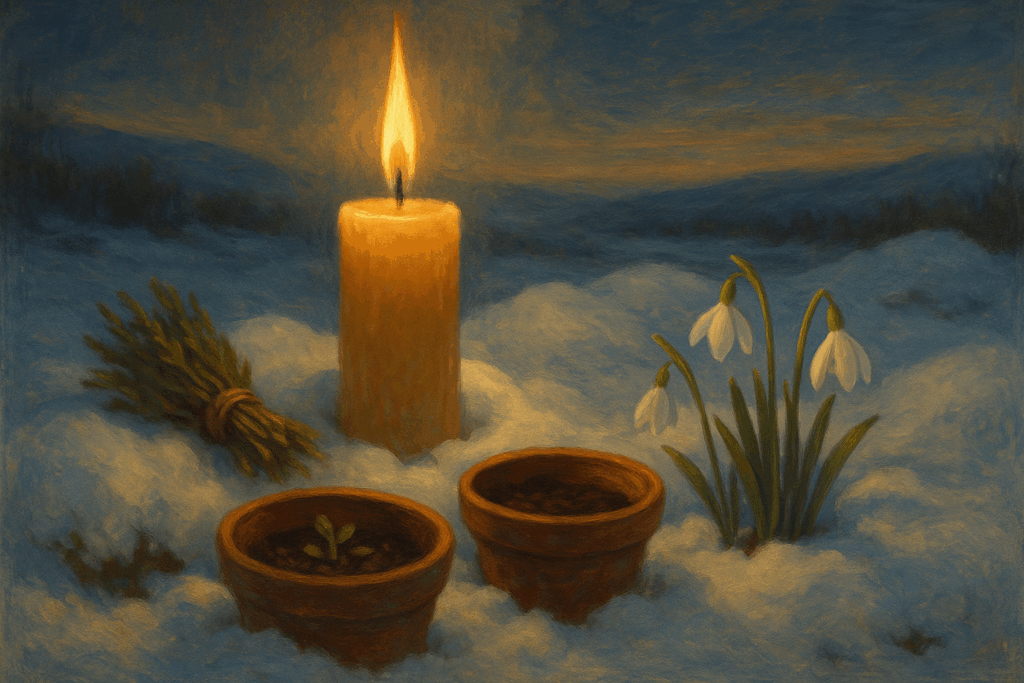
To begin the Flame of Inspiration rite, create a quiet space — a place where light, air, and warmth can mingle freely. Place a single candle on your altar or table, preferably one in white or soft gold, and surround it with symbols of creativity: a pen, a brush, a piece of fabric, a musical instrument, a tool — whatever represents the craft or calling through which you express yourself. Add a small bowl of water or a few drops of essential oil, symbolizing Brigid’s healing aspect, and a stone or piece of iron for her forge.
Take a few deep breaths and center your thoughts. As you light the candle, speak these words or something like them:
“Brigid of the Flame,
Lady of Inspiration,
Healer of hearts and Maker of worlds,
Kindle the fire within me.
Let your light guide my hand and voice,
That I may create in beauty,
Heal through compassion,
And speak with truth.”
Gaze into the flame and imagine it as a living presence — not just light, but intelligence and warmth. Feel it awakening in your chest, behind your eyes, at your fingertips. This is the fire of divine creativity, the same energy that shapes stars and stirs seeds to life. It does not belong to you, yet it flows through you when invited.
As you sit before the flame, listen inwardly for Brigid’s whisper. Her inspiration rarely shouts; it arrives like the first snowdrop breaking through frost — soft, certain, and full of promise. Perhaps a phrase, an image, or an idea arises in your mind. Perhaps you simply feel peace. Whatever comes, receive it with gratitude.
The Healing Fire
Brigid’s inspiration is not limited to art — it is also the energy that heals. To create is to restore, to bring coherence where there was fragmentation. In this sense, the flame of inspiration is the flame of wholeness. When we engage in creative acts, we rejoin ourselves to the flow of life; we transform stagnation into movement, grief into grace.
On this day, you might invoke Brigid’s healing aspect through a small act of care — lighting a candle for someone in need, preparing nourishing food, or tending your body with mindfulness. Each gesture becomes a spark of her presence. If you or someone close to you requires healing, hold your hands near the candle’s warmth and envision the light flowing gently into that place of pain, bringing restoration without force. Say:
“Bright Brigid, healer of the flame,
Let this light mend what is weary,
Let this warmth awaken what is still.”
Allow the light to fill the space around you, remembering that healing, like creativity, is a process of gentle unfolding. The same flame that forges steel can also soothe — Brigid teaches that strength and tenderness are born of the same source.
The Maker’s Art
As goddess of the forge, Brigid reminds us that creation is not effortless; it is an act of engagement with the material world. The smith’s craft mirrors the spiritual process of transformation — heat, pressure, and patience working together to refine what is raw into what is radiant. To work at the forge, whether literal or symbolic, is to participate in sacred labor.
Consider what you are forging in your own life. What ideas or dreams are still molten within you, waiting for shape? What requires your discipline and devotion to bring into form? On this day, commit yourself to that process. Whether it is a poem, a project, or a path, dedicate your work to Brigid’s flame. As you labor, imagine her standing beside you, guiding your hands, steadying your resolve.
If you are an artist, create something today — even if only a line, a sketch, a few notes of melody. If you are not, perform any task — cooking, cleaning, writing a letter — as if it were a prayer. Brigid’s magic is not reserved for grand creations; it thrives in every act done with love and intention. The kitchen can be as holy as the temple, the hammer as sacred as the pen.
The Eternal Flame
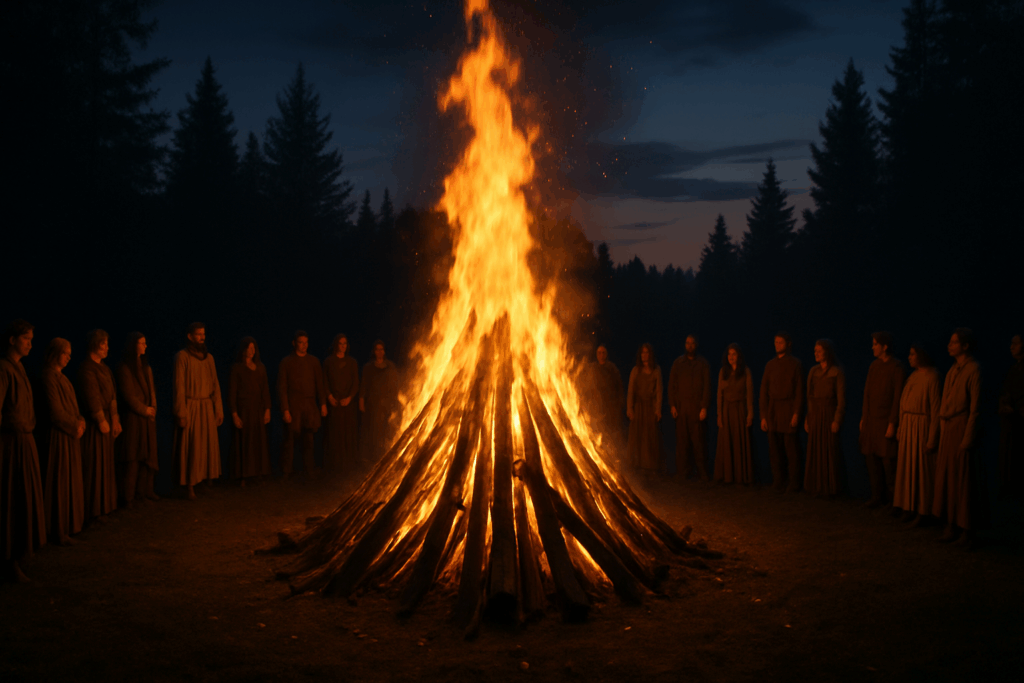
Throughout history, Brigid’s sacred flame has been tended continuously at her shrine in Kildare, Ireland — first by pagan priestesses, later by Christian nuns. For centuries, it burned without interruption, symbolizing the eternal light of wisdom and compassion. Even when extinguished by oppression, it was rekindled by those who remembered her. Today, the flame burns again — a living testament to endurance and inspiration.
To honor this lineage, you may wish to keep a small flame burning for a portion of the day or evening. Each time you pass it, pause for a moment of reflection or gratitude. Think of all the flames burning across time and space — every artist, healer, teacher, and maker who has carried the spark forward. By tending this flame, you join that lineage; your own light becomes part of a vast continuum of creation.
Living in Inspiration
Brigid’s flame does not demand perfection — it asks participation. To live in inspiration is to live awake, noticing beauty in the ordinary and potential in the unformed. It means trusting your creative impulses as sacred communication, not as vanity or chance. It means forgiving yourself when the fire dims, knowing that even the strongest flame needs rest and renewal.
The Flame of Inspiration teaches that divine energy flows through all who are willing to serve as its vessel. The poem you write, the meal you craft, the kindness you offer — all are sparks of the same sacred fire. Brigid is not a distant goddess but a presence woven into the rhythm of your breath, the warmth of your heart, the motion of your hands as you bring something new into being.
As the day closes, sit once more before your candle. Whisper a final invocation:
“Brigid, bright one, flame eternal,
Guide my thoughts, my craft, my care.
May I be your vessel,
A bearer of light and healing in this world.”
Extinguish the candle gently, letting a wisp of smoke curl upward like a sigh of fulfillment. The flame may vanish from sight, but its warmth remains — in your mind, your heart, your ongoing work.
This is the essence of February 10th — Flame of Inspiration: to awaken the sacred creative force within and recognize it as divine. Through you, Brigid’s fire continues — illuminating darkness, healing division, shaping the raw material of life into beauty. For the goddess of the forge and flame is not confined to altar or myth; she lives wherever inspiration burns, wherever love and creation meet.