🔥 May 17 – The Forest CrownCrafting wreaths for ritual, strength, and celebration

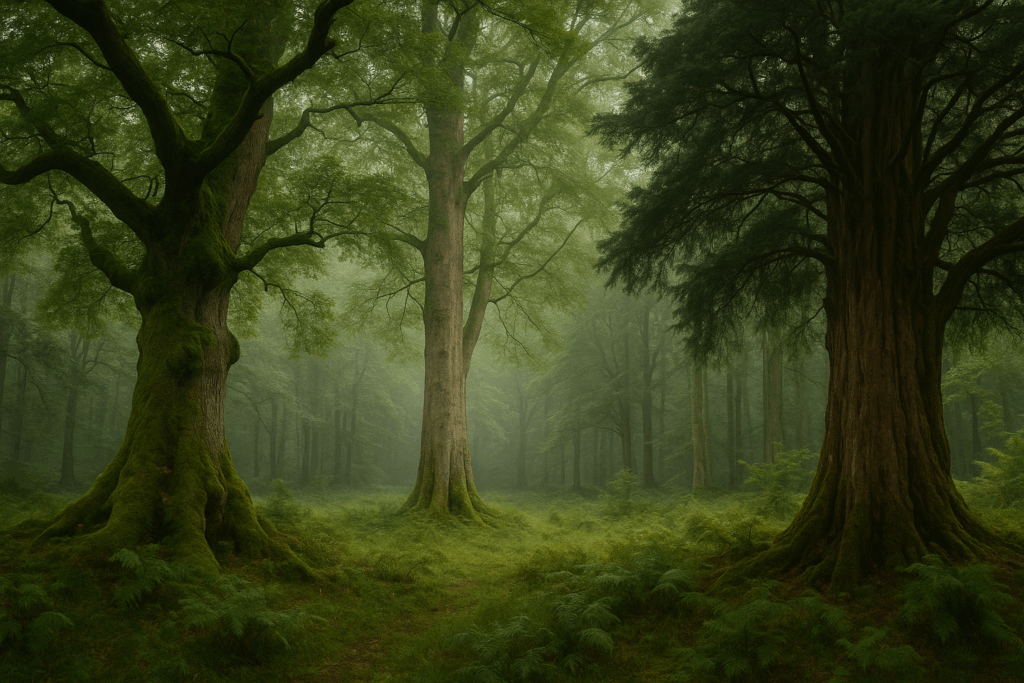
By May 17, the forest is in its green glory — lush, alive, and humming with hidden life. The light filtering through the canopy feels older now, richer, as though the Earth herself has exhaled fully into summer. The air carries the scent of moss, leaf, and blossom; the wind rustles like quiet applause through the branches. This is the time of The Forest Crown, when we honor our kinship with the wild by weaving wreaths — not only from flowers and leaves, but from intention, strength, and gratitude.
To craft a wreath is to perform an ancient act of reverence. The circle, without beginning or end, has always symbolized unity, eternity, and the sacred cycle of life. When that circle is woven from living things — vines, flowers, herbs, and twigs — it becomes a bridge between human and nature, spirit and matter. In old European tradition, wreaths were worn at Beltane to honor fertility and joy, hung over doors to invite prosperity, or placed upon altars to celebrate the Earth’s abundance. On May 17, this practice becomes a ritual of embodiment — a way of crowning ourselves with the power of the forest, aligning our energy with the living pulse of the land.
The Crown of Connection
The forest has long been a symbol of transformation. To enter it is to step away from the ordered world into a realm of intuition, mystery, and magic. Trees are the guardians of ancient wisdom, their roots touching the underworld while their crowns reach the heavens. When we craft a wreath from the forest’s bounty, we weave that wisdom around ourselves. We become both participant and priest — a living expression of nature’s divinity.
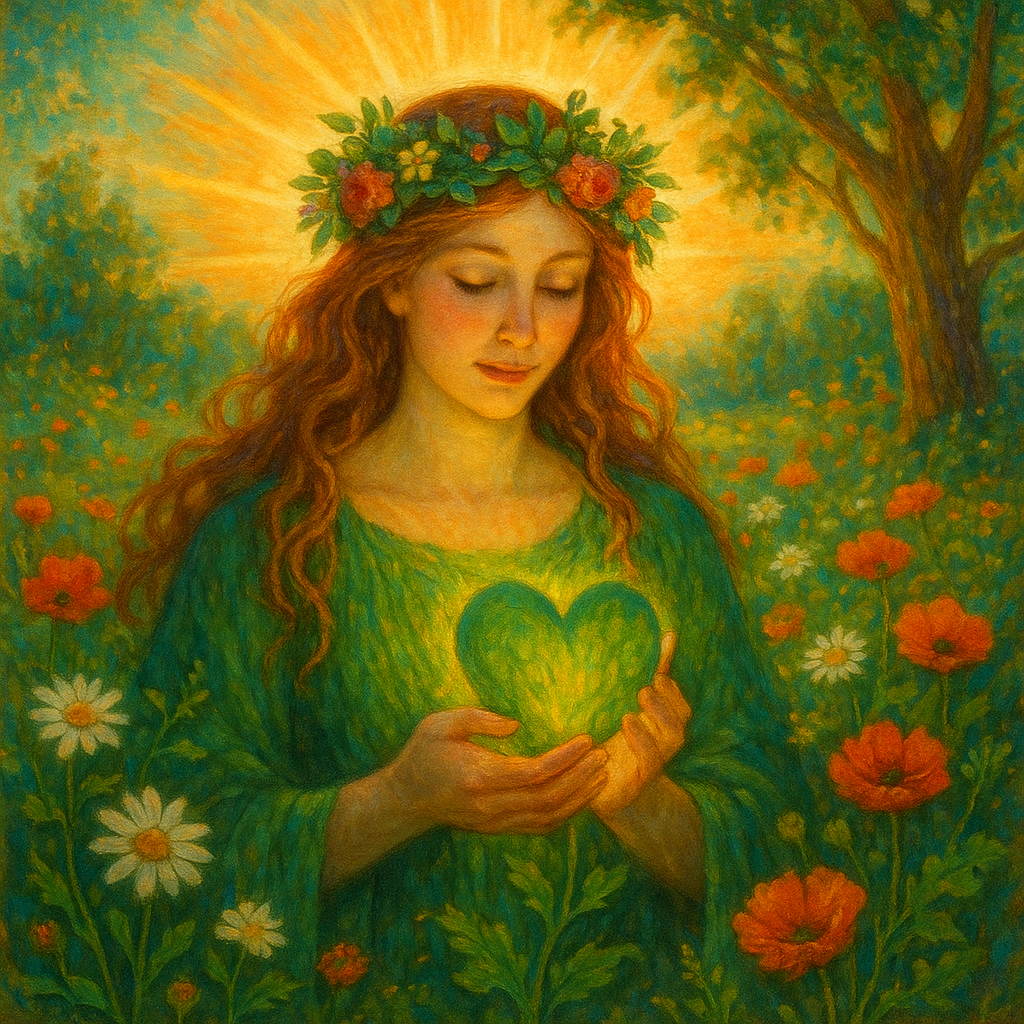
The Forest Crown is not merely decoration; it is an invocation. Each leaf, each flower carries its own energy and meaning, and together they form a circle of power. Worn upon the brow, it becomes a conduit — the mind united with the spirit of the green world. To wear such a crown is to remember that you are both creature and creator, part of the great web of life and the consciousness that perceives it.
Gathering the Green
Before making your wreath, step outside with reverence. Whether you walk in a forest, a garden, or along a city path, approach your gathering as a sacred act. Whisper gratitude to the land. Ask permission before taking anything. Take only what is freely given — fallen branches, wind-tossed flowers, or small cuttings that will not harm the plant.
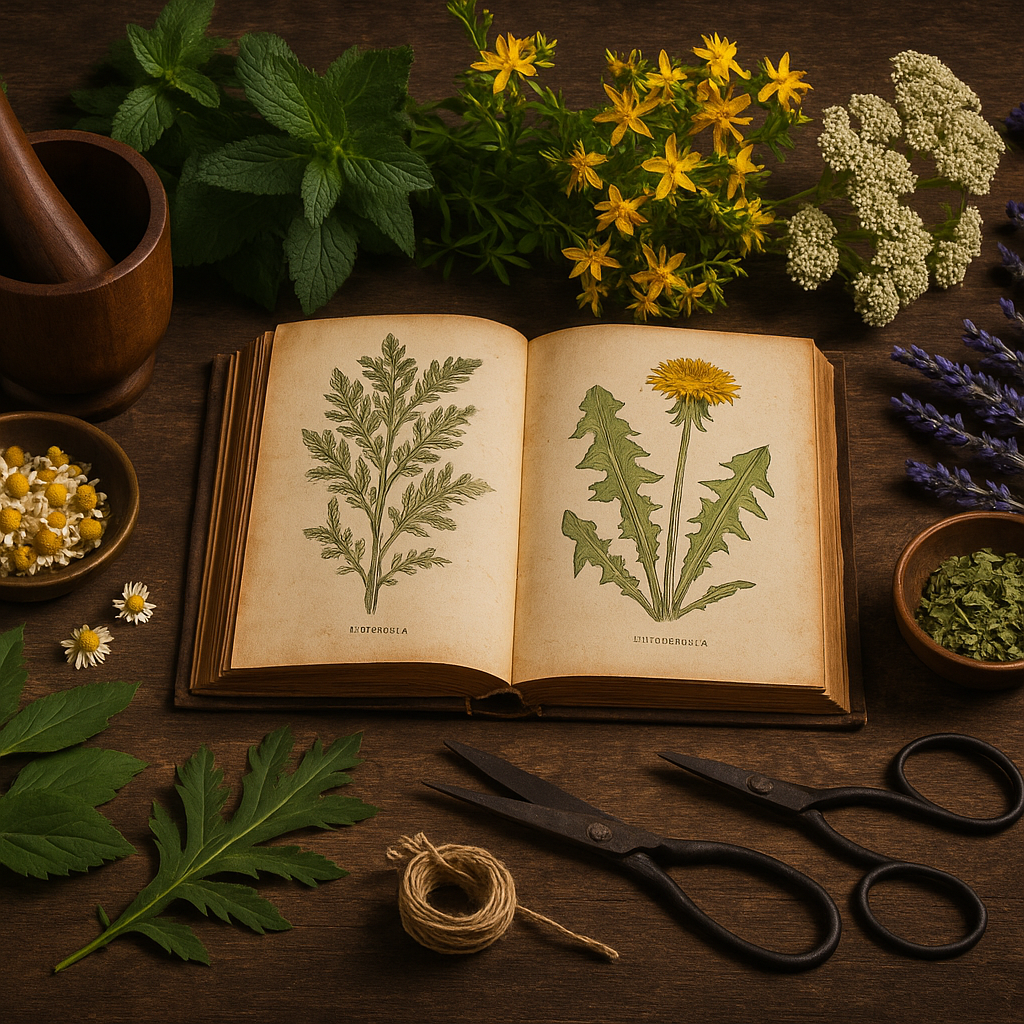
Choose materials that call to you intuitively. Traditionally, oak, birch, willow, and ivy form the base of the wreath, symbolizing strength, renewal, flexibility, and eternal connection. Add wildflowers and herbs according to your intention:
- Hawthorn blossoms for faery blessing and fertility.
- Rosemary for protection and remembrance.
- Violets or bluebells for peace and gentle wisdom.
- Daisies for innocence and joy.
- Rowan berries (if found from last season) for protection and magic.
- Wild fern for luck and spiritual growth.
- Oak leaves for courage and endurance.
Let your gathering be guided not by aesthetics alone, but by meaning. Each element you choose is a living ally, lending its energy to your work.
Weaving the Forest Crown
Find a quiet place to sit, preferably outdoors or near an open window. Begin by forming a base with pliable branches or vines. As you bend and twist them into a circle, speak aloud your intention: perhaps strength, joy, abundance, healing, or love. Feel your hands become extensions of the Earth’s will. You are not forcing the materials but guiding them into harmony.
As you weave, take slow breaths. Let the rhythm of your movements match your heartbeat. Each leaf you tuck in becomes a blessing; each flower a prayer. You might whisper something like:
“By leaf and bloom, by stem and thorn,
I weave the strength of life reborn.
Circle of Earth, crown of green,
Blessed be all that you have seen.”
When your wreath feels complete, hold it before you and study its form. It need not be perfect; nature rarely is. Its beauty lies in authenticity, in the energy it carries rather than symmetry. If you wish, you may adorn it further with ribbons in colors that align with your purpose — green for growth, gold for success, red for vitality, white for peace, pink for love, or blue for protection and truth.
The Wearing of the Crown
Once your wreath is complete, it becomes a tool of transformation. To place it upon your head is to claim your kinship with the Earth. It is not a crown of dominance, but of service — the reminder that to rule wisely is to care deeply, that true power flows from harmony, not control.
Stand before a mirror or in sunlight and gently place the wreath upon your head. Feel its weight — light yet grounding. The scent of leaves and flowers surrounds you, the energy of the forest flowing into your body. Whisper:
“Crowned by Earth, crowned by sky,
Rooted below, I rise on high.
May wisdom guide my every breath,
And life renew me beyond death.”
Wear your crown during meditation, ritual, or creative work. You may also use it to bless others — touching it lightly to their brow while offering words of strength or love. When not worn, hang it above your altar or on your door as a charm of protection and vitality.
The Symbolism of the Circle
The circle is the most ancient and sacred shape. It represents the eternal flow — birth, life, death, and rebirth. When you weave a wreath, you are engaging with this mystery, turning linear time into living cycle. Every stem you add echoes the spiral of existence, where endings become beginnings and all things return to source.
This is why wreaths have been used since prehistory — to mark weddings, funerals, festivals, and rites of passage. Each is a moment of transition, a movement from one phase to another. The Forest Crown on May 17 honors that transition within yourself — the shift from desire to fulfillment, from planting to flowering, from seeking to becoming.
The Forest’s Blessing
After crafting your crown, return to the place where you gathered your materials, if possible. Offer thanks — a drop of honey, a song, or a few words spoken softly to the trees. The forest listens. You might say:
“For every leaf, I give my praise,
For every root, my heart I raise.
May life and magic ever be,
Between the forest and sacred me.”
This act of gratitude closes the circle of exchange. What you take, you return — energy for energy, love for love. Such reciprocity is the foundation of all true witchcraft.
If the night is clear, wear your wreath once more beneath the stars. Feel the cool air on your face, the pulse of life beneath your feet. You are crowned not by ego, but by belonging. You are both human and holy, both creation and creator. The forest knows your name, and in this moment, you know hers.
Returning the Crown to the Earth
Eventually, the flowers will fade and the leaves will dry. When that time comes, do not mourn it. The Forest Crown, like all living things, is part of the cycle. You may return it to the Earth — burn it in ritual fire, bury it beneath a tree, or cast it upon running water. As you release it, say:
“As life decays, new life will grow,
As leaves may fall, new seeds I sow.
Circle complete, the magic flows,
From heart to Earth, forever knows.”
This final act honors impermanence as sacred — the truth that beauty does not last because it must move, transform, and return.
Living the Crown
The lesson of May 17 is not only about crafting but about embodiment. The Forest Crown is a reminder that the true crown we wear is unseen — the one made of kindness, courage, and connection. It asks us to rule our small worlds — our homes, our hearts, our communities — with the same grace that the forest rules hers: quietly, generously, and in balance.
So walk today with your invisible crown of leaves. Speak gently. Work with joy. Share your strength where it is needed. Let your presence bless others as the forest blesses the Earth. For when you honor the green world, it honors you in return — and its power becomes your own.