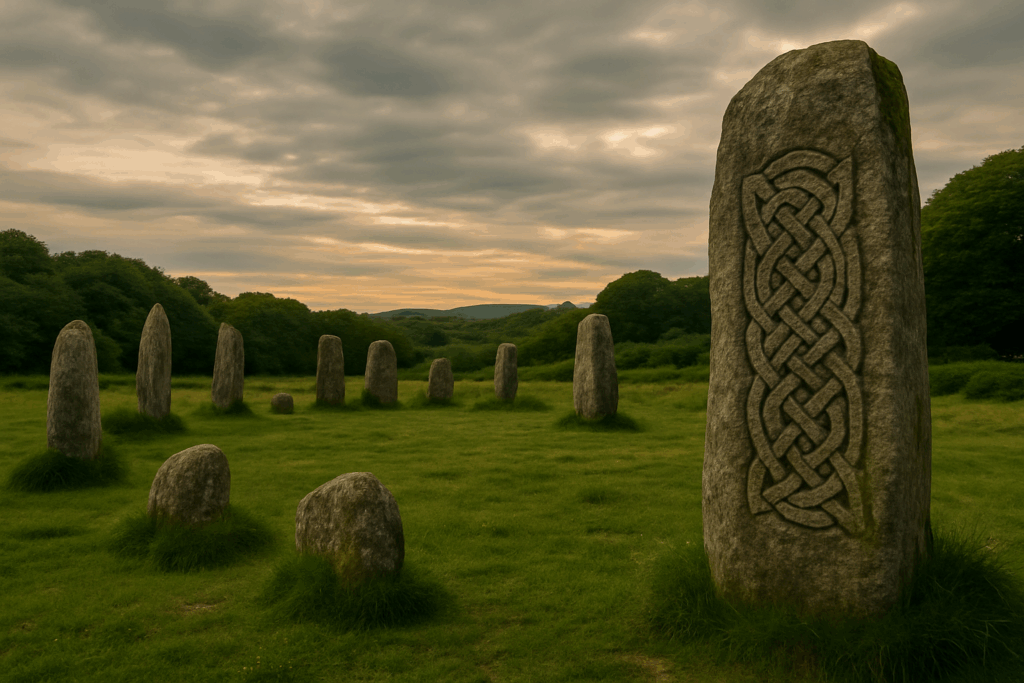
🔥 May 1 – The Fires of BeltaneLeaping the bonfire, celebrating union, life, and passion

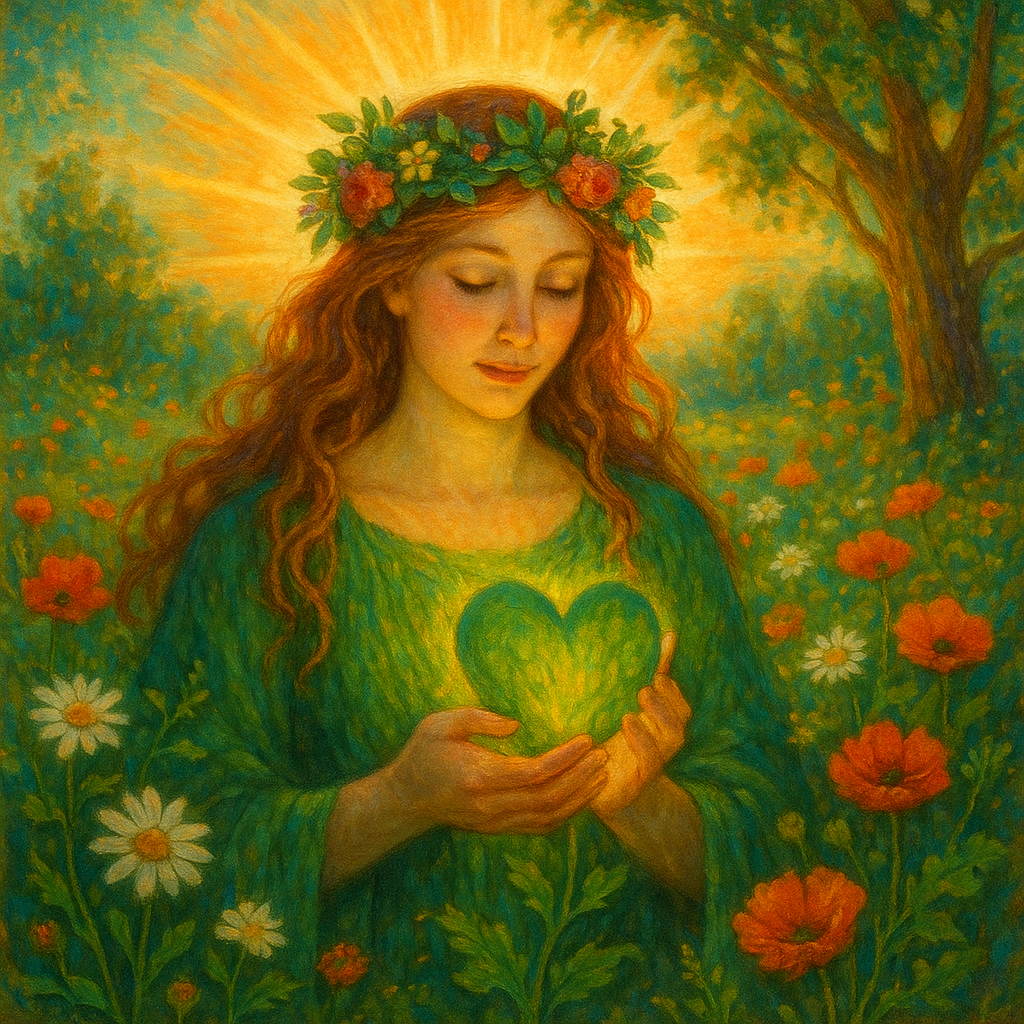
As the turning of the wheel brings us to the threshold of May, the air itself seems to shimmer with anticipation. The cold breath of winter has long faded, and the gentle warmth of spring has ripened into the vibrant promise of summer. This is the time of Beltane — a festival of fire and fertility, of union and awakening. It is the celebration of life itself, an honoring of the dance between the divine masculine and feminine, between Earth and Sky, between the mortal and the divine. The fires of Beltane burn not merely to warm the body, but to ignite the spirit, to awaken the sleeping seeds of passion and creation that lie dormant in every soul.
Beltane, celebrated traditionally on the first of May, stands opposite Samhain on the great wheel of the year. If Samhain is the season of death, remembrance, and descent into shadow, then Beltane is its radiant mirror — the season of birth, joy, and rising into the light. It marks the union of the Horned God and the Goddess, the sacred marriage of wild nature and nurturing creation. This union is not confined to myth or ritual; it unfolds around us in every blossoming tree, in the hum of bees weaving golden paths through fields of clover, in the scent of lilac that lingers on the air. The world itself is making love, and the fires of Beltane are its song of joy.
As twilight deepens on the eve of Beltane, the bonfires are kindled. In ancient times, these were twin fires lit on the high hills — the “need-fires” — through which cattle were driven to bless them with health and fertility for the year ahead. The smoke of Beltane fire was sacred, a veil between worlds and a purifying breath that carried away misfortune. To leap the flames was to court both courage and blessing, to bind oneself to the rising life force of the Earth. Couples would leap the fire hand in hand, their hearts alight with the same spark that danced in the embers, symbolizing love’s endurance and shared vitality. Even those alone might leap the flame as a rite of renewal, releasing the past and stepping forward reborn into the summer’s promise.
The Beltane fire is not merely external; it burns within. The bonfire is a reflection of the sun, the eternal light of life that glows in every creature. In lighting our own Beltane fires, whether of wood or of intention, we acknowledge the fire within ourselves — the creative spark, the desire, the passion that gives our lives purpose. To honor this fire is to honor the sacredness of our humanity: our sensuality, our joy, our connection to others, and our yearning for meaning. The ancient Celts understood that passion, far from being sinful or base, was holy — a force of the divine animating the world. To live fully, to love fiercely, to create boldly — these were offerings to the gods themselves.
For modern pagans, Beltane offers an invitation to rekindle that sacred flame. Whether through traditional gatherings, dancing around the Maypole, or quiet solitary rituals beneath the stars, the essence of Beltane lies in celebration and connection. Light a candle or a bonfire if you can; leap the flame if your spirit calls to it. Speak aloud your intentions — not the cold desires of ego, but the warm truths of the heart. What do you wish to bring to life? What passions, projects, or relationships are ready to bloom within you? Offer them to the fire, and let the rising smoke carry your prayers to the sky.
The Maypole, often at the heart of Beltane festivities, represents another layer of this sacred union. The pole itself, standing tall and proud, is a symbol of the masculine principle, while the encircling ribbons — bright with the colors of spring — embody the feminine. As dancers weave the ribbons together in joyful spirals, they enact the cosmic dance of life itself: spirit descending into matter, light weaving with shadow, love binding creation into wholeness. The ribbons become a tapestry of intention, a living spell of community and celebration. In this weaving, we are reminded that all life is interconnected — that every joy, every sorrow, every breath contributes to the great pattern of existence.
Beltane’s fire also teaches us about balance. Passion without grounding becomes chaos; desire without purpose burns out too soon. The Beltane flame must be tended, respected, and balanced with gratitude and mindfulness. After the ecstasy of the dance, the songs, and the laughter, there is a moment of stillness — a time to gaze into the embers and whisper thanks to the Earth that sustains us. Gratitude is the root of the sacred. Without it, even the brightest flame becomes hollow. So as you celebrate the fires of Beltane, remember also to honor the soil beneath your feet, the trees that give breath, and the ancestors who danced these same dances under moonlit skies long ago.
There is, too, a mystery in Beltane — a liminal shimmer where the worlds grow thin. Just as at Samhain, the veil between the mortal realm and the Otherworld is delicate at this time. But where Samhain invites communion with spirits of the dead, Beltane opens the door to the fae, to the elemental spirits of life and growth. It is said that if you walk between two Beltane fires or pass through a natural archway at dawn, you may glimpse the faery realm in its full spring glory. Offer milk or honey at your garden’s edge, whisper blessings to the flowers, and tread lightly — for this is the season of enchantment, and the land itself listens.
To leap the Beltane fire, then, is more than ritual — it is initiation. It is to declare, “I am alive. I am willing to be changed. I am ready to meet life’s passion with an open heart.” The flame may scorch, but it also purifies; it transforms fear into courage, isolation into connection, dormancy into growth. The fires of Beltane remind us that we are not separate from the Earth’s pulse. We are the Earth — embodied, aware, and burning bright.
So on this sacred day, let the fires rise high. Dance until dawn with laughter in your throat and warmth in your veins. Celebrate the miracle of your own becoming. The wheel turns, the blossoms open, and the light of summer is born anew. May your heart leap as boldly as your feet over the Beltane flames, and may passion, love, and life guide your every step through the bright days ahead.