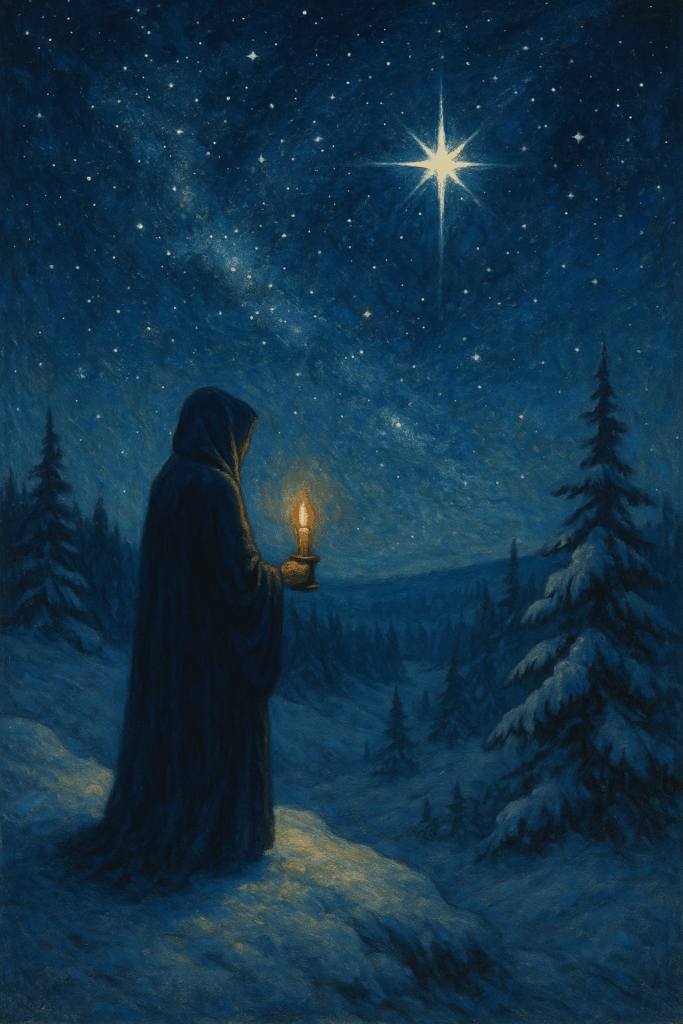
🌿 Jan 6 – Night of the Old Kings: Remembering the Yule Ancestors and Solar Spirits

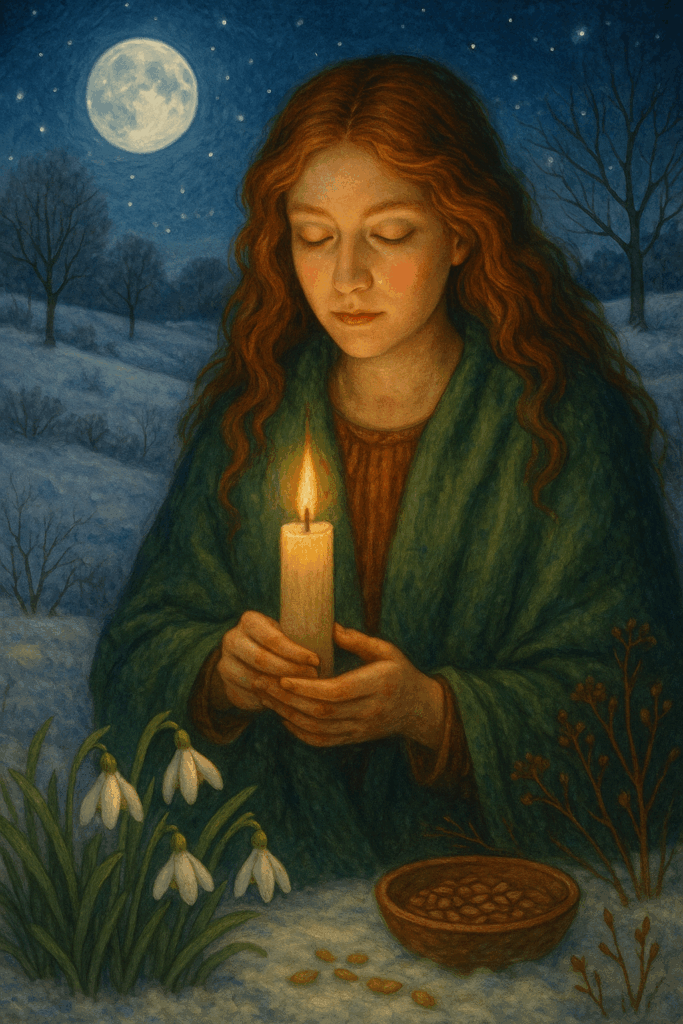
The sixth day of January carries ancient echoes that span centuries and cultures. Long before it was marked in Christian calendars as Epiphany, it was known among pagans of many lands as a night of deep ancestral power — a time when the veil between the living and the luminous dead shimmered with golden firelight. This is The Night of the Old Kings, when we remember the great ones who walked before us — not only human ancestors, but the solar spirits and divine powers who keep the light alive through the long winter. It is a night to honor wisdom, lineage, and the eternal flame of leadership that burns within every soul.
Winter has reached its still heart by this date. The Yule fires have dimmed, yet the promise of returning sun glows steady upon the horizon. In this balance between fading festivity and the quiet of deep winter, the old kings stir — the ancestors of blood and spirit who embody courage, stewardship, and illumination. They are the ancient fathers, mothers, and elders of the line — those who carried torches of knowledge through the dark so that we might see. In Celtic lands, they might be the mighty chieftains and druids of old; in Norse tradition, the jarls and gods who rule from golden halls; in Slavic myth, the solar heroes who ride the dawn’s chariot. Yet, in every tradition, their essence is the same — they are the keepers of the sacred fire of continuity.
On this night, the boundary between the living and these luminous presences softens. The “Old Kings” are not merely figures of history, but archetypal forces — embodiments of wisdom, sovereignty, and renewal. They are the golden-hearted ancestors who remind us that power must serve purpose, that light must be tended, and that every generation holds the duty to keep the sacred fire burning.
To observe this night, begin by dimming the lights and creating a quiet space. Upon your altar or hearth, place a candle of gold or deep amber, representing the sun’s enduring light. Around it, arrange symbols of lineage and continuity — a family heirloom, a photograph, a piece of jewelry, or simply a stone from the land of your ancestors. Add greenery or evergreens if you have them; their presence honors life that endures through winter’s frost.
When you light the candle, say aloud:
“I call upon the Old Kings, the wise ones, the keepers of the golden flame.
Those whose strength built the path I walk, whose light still shines in my heart.
Come, ancestors of power and grace, be with me on this winter night.”
As the flame steadies, imagine the light expanding outward, illuminating not just your space but the long lineage that stands behind you. See them — shadowy at first, then clearer — figures robed in starlight, eyes filled with knowing. They may appear as kings, queens, warriors, poets, healers, or as faces known and beloved from your own family line. Each bears the glow of the sun within their spirit. You may feel warmth rising through your spine or the gentle weight of presence in the air. Welcome them.
This night’s magic lies in remembrance — not only of names and deeds, but of essence. Every one of us descends from those who survived, adapted, and carried their wisdom forward. The ancestors live within us, encoded in our bones, in our instincts, in the rhythm of our breath. The Night of the Old Kings invites us to honor that inheritance — to acknowledge that we are both heirs and torchbearers of sacred continuity.
After calling them, take time to speak your gratitude. You might say:
“I thank you for the fire you kept when nights were long and uncertain.
I thank you for the courage you passed through the blood and the soul.
Through me, your light endures. Through me, your story continues.”
Offerings are a powerful part of this observance. Mead, wine, bread, or milk are traditional — simple tokens of respect and communion. Pour or place them before the candle with care, saying: “As I honor you, so may you bless this home.” Some traditions suggest also lighting a second, smaller candle to represent yourself — the living heir to the flame. The two flames, side by side, signify the bond between generations — a dialogue of light that transcends time.
In a deeper spiritual sense, the Old Kings are not only ancestors of blood but ancestors of spirit — those luminous forces that govern cycles of power and wisdom throughout creation. The Sun itself is one of these “Kings” — a radiant being whose journey across the sky mirrors the soul’s path through birth, death, and rebirth. On this night, you might meditate upon the solar fire within your own being — that steady inner light that guides your choices and defines your personal sovereignty.
True kingship, in the pagan understanding, has never been about domination but stewardship. To rule is to serve; to carry the crown is to bear the burden of care. The Old Kings remind us that power divorced from compassion leads to ruin, but power tempered by love becomes divine. As you meditate before your flame, ask: “How may I rule wisely in my own life? How may I bring light, not shadow, into the world I touch?” This is the essence of their teaching — that each of us is a sovereign being, charged with tending our own inner realm with justice and devotion.
In some traditions, the Night of the Old Kings is also a time for divination. As the candle burns, you might cast runes, draw tarot, or gaze into a bowl of water or a polished mirror. Ask for insight into the year ahead: “What legacy am I meant to continue? What wisdom must I reclaim?” Let the images or symbols guide you. Often, ancestral or solar spirits communicate through intuition rather than clear words, their messages felt more than heard.
When your communion feels complete, give thanks once more. You may say:
“Old Kings and radiant ones, I honor your light.
Through me, your fire shall burn in peace and wisdom.
Rest now in your golden halls, until I call again.”
Let the candle burn safely until it extinguishes naturally, or snuff it with respect. If you poured liquid offerings, return them to the earth the next morning as a gesture of gratitude. The act of returning to soil honors the cycle — life giving to life again.
After the ritual, take a few moments to reflect. Notice how your body feels — often a warmth settles at the heart or in the solar plexus, a subtle awakening of inner sovereignty. You have aligned yourself not only with your lineage but with the solar spirit that sustains all creation. This is the renewal of kingship within — not the crown of dominance, but the mantle of purpose and integrity.
In the broader wheel of the year, the Night of the Old Kings stands as a bridge between the revelry of Yule and the sacred renewal of Imbolc. It reminds us that we are not solitary travelers on the path of time, but links in a great chain of light stretching backward and forward through eternity. The ancestors burn in us as surely as the sun burns in the sky — and when we remember them, their strength rises once more to guide the way.
So, as you close this night, look into the last glow of your candle and whisper:
“The flame endures. The light returns. The Old Kings live within.”
Then rest in the warmth of that knowing — that you are part of a lineage of light, carrying the fire forward into the dawn.