🌿 Jan 1 – The First Flame of the Year: Kindling Hope and Magic for the Turning Cycle

The first day of the year is more than a date upon a calendar. For the pagan soul, it is a sacred threshold—a liminal dawn where the last embers of the old year fade into the twilight of memory, and the first flame of the new one is born. This flame, whether lit upon the hearth, the altar, or within the heart itself, is a symbol of continuity and rebirth. It is the spark that bridges what was and what shall be. In this moment of newness, the world feels as though it inhales deeply, holding its breath between endings and beginnings, inviting us to do the same.
The First Flame of the Year represents that spark of consciousness which awakens us to the cyclical rhythm of existence. Every turning of the year mirrors the eternal cycles of death and rebirth that govern nature—the waning and waxing of the moon, the ebb and flow of tides, the descent of the seed and its return as sprout. When we light this first flame, we are not merely performing a ritual act of tradition; we are participating in a cosmic truth. Fire is the element of transformation. It consumes, purifies, and renews. It is the very heart of creation and destruction alike.
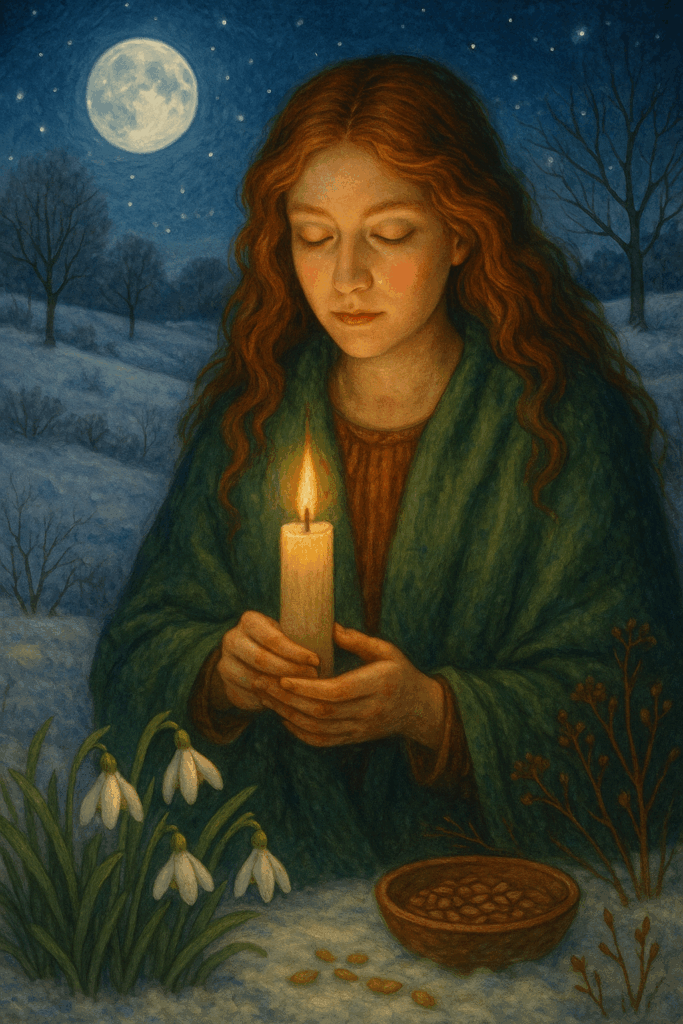
Lighting the First Flame is a powerful act of invocation and alignment. In many pagan paths, this moment calls for quiet preparation—a sweeping of the old energies from the home, a cleansing of altar tools, or a moment of gratitude for the lessons of the past year. Before lighting the flame, one may wish to take a moment to sit in darkness, in stillness, acknowledging what has been. Reflect upon the joys that illuminated your year and the shadows that taught you wisdom. Speak them aloud if you wish, or whisper them into the silence. Then, with reverence, kindle the flame.
This act of ignition marks the first spell of the year—a spell for hope, renewal, and sacred intention. As the fire flickers, envision it burning away the residues of sorrow, disappointment, and fear. See it clearing the path ahead, opening doors of opportunity that once felt sealed. Let the smoke rise as a prayer to the unseen realms: a message of readiness to co-create with the Universe once more.
For those who follow traditions of the hearth goddess—such as Brigid, Hestia, or Frigg—the First Flame is a gesture of devotion. It is said that the hearth fire connects the home to the divine. When you light it with awareness, you invite divine guardianship into your dwelling. You declare that your household shall be a place of warmth, nourishment, and magic in the turning cycle ahead. Whisper blessings into the flame: “May this fire be the heart of my home, may its light protect and inspire, may its warmth carry me through the cold.”
One may also anoint the candle or wood with sacred oils before lighting. Frankincense for spiritual awakening, rosemary for clarity, or orange peel for joy and vitality are fitting choices. These scents mingle with the smoke, carrying your intentions into the ether. As the fire burns, spend a few moments in silent meditation, gazing into its center. The flame becomes a mirror of spirit—a tiny sun that holds infinite wisdom. Watch how it dances, how it bends and flares, and ask it what it wishes to teach you.
This is also a perfect time to set intentions, though not in the mundane sense of resolutions. Pagan intention-setting is a ritual conversation with the cosmos. It is less about control and more about harmony. Instead of declaring “I will achieve,” one might whisper “I am becoming.” Instead of listing goals, allow the fire to reveal your soul’s deeper yearning. Perhaps this year calls for healing. Perhaps it asks for courage, or creative rebirth, or stillness. Whatever it is, offer it to the flame, knowing that the element of fire will transform it into energy that moves through all realms.
In older times, the rekindling of the hearth fire at the new year marked not only a spiritual renewal but a practical one. The hearth was life—it provided warmth, cooked food, and symbolized the family’s bond. When the old fire was extinguished on the final night of the year, the kindling of the new one was an act of continuity, ensuring that life and love carried forward. Today, few of us rely on the physical hearth, but we still carry its energy within us. The First Flame is our inner hearth, our will to live and to love again after the darkness of the old year.
Nature mirrors this energy. Though the land still sleeps in frost, beneath the soil, life stirs. Seeds lie dreaming of the sun. The earth’s heartbeat slows, but it does not cease. The First Flame awakens this subtle rhythm in our own bodies. We begin to feel the quiet pulse of possibility beneath the surface of our daily lives. It is a sacred reminder that renewal always begins in silence and darkness, and that hope is born not in the brightness of midday, but in the tender light of dawn.
In ritual practice, you may wish to integrate elemental balance with your First Flame ceremony. Place a bowl of water beside the candle or fire to symbolize emotional healing and flow. A stone or bit of soil can represent grounding and endurance. Incense smoke may weave in the air as a symbol of thought and spirit. Together, these elements call forth wholeness, ensuring that your new cycle begins in balance.
After the ritual, it is wise to keep a small flame or candle burning for a few hours, or even throughout the night if it can be safely tended. This maintains the connection to the divine fire through the first passage of the year. Each time you look upon it, remind yourself: This is the light that will guide me through the year’s darkness. Let that awareness become a quiet mantra that strengthens your heart when the months ahead grow challenging.
As night deepens on the first day of the year, let gratitude close the circle. Thank the flame for its lessons, for its warmth, for its willingness to bear your prayers. Allow it to burn down naturally or extinguish it with reverence—never by blowing it out, but by snuffing it softly, honoring its spirit. You may keep a small piece of the candle wax, ash, or charcoal as a talisman of your renewed purpose.
In the grand cycle of the Wheel of the Year, the First Flame is the bridge between Yule’s return of light and the coming of Imbolc’s quickening fires. It is a gentle reminder that we, too, are eternal flames in motion—sometimes bright and blazing, sometimes hidden beneath ash, but always alive within the great dance of creation.
So as you light your first candle, your first hearth fire, or even strike a match in symbolic reverence, know that you are participating in an ancient act of rebirth. You are kindling not only flame, but hope—hope for the turning cycle, for your own becoming, and for the world that turns ever onward in beauty and mystery.