
🌾 July 27 – The Spirit of the Cornfield

Ancient Reverence for the Guardians of the Grain
By the twenty-seventh of July, the fields stand tall and whispering, their golden heads swaying in unison with the wind. The world feels suspended in a sacred hush — that moment between ripeness and harvest, between creation and surrender. This is the day of The Spirit of the Cornfield, when Pagans and folk magicians throughout history have turned their hearts to the spirits that dwell within the grain — ancient, enduring guardians of fertility, growth, and the continuity of life. It is a time to walk gently among the standing stalks, to listen for the soft voices of the field, and to remember that every harvest is a covenant between humanity and the living Earth.
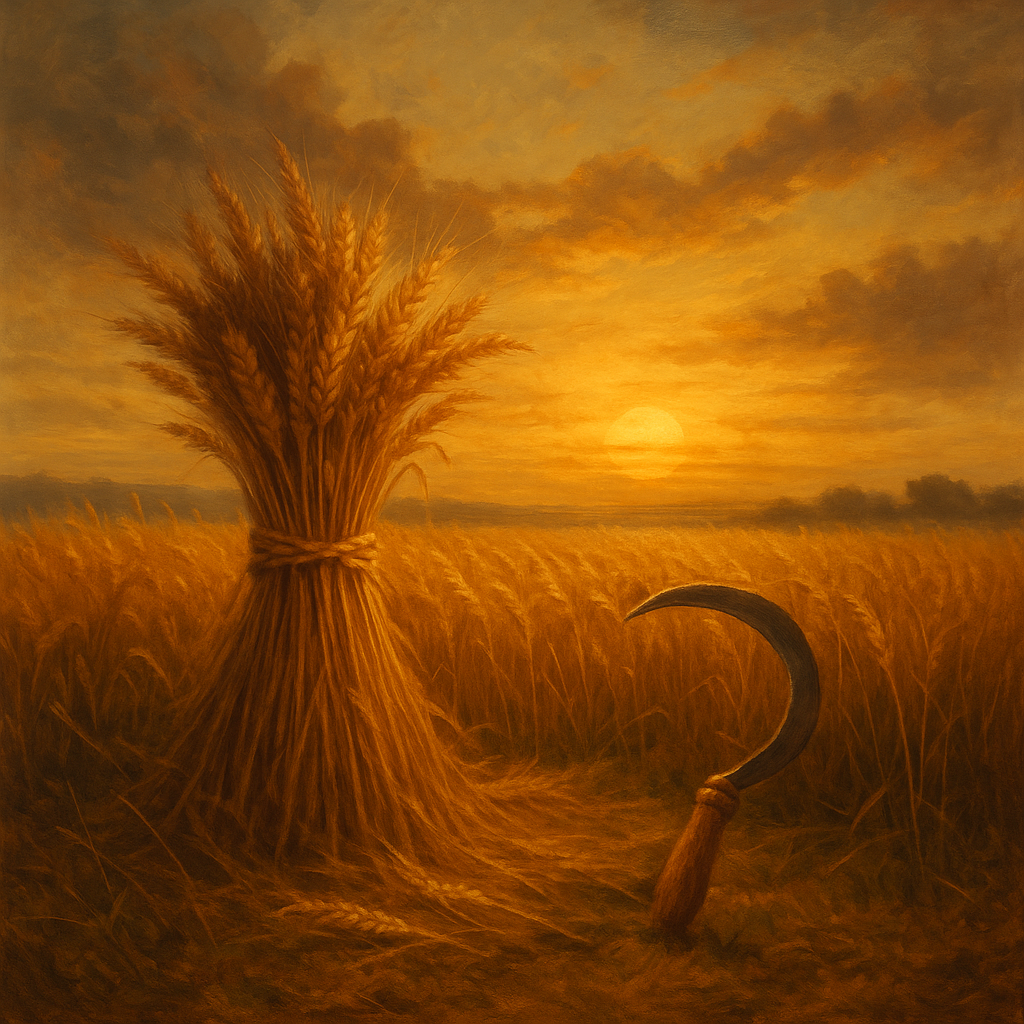
In old Europe, and especially among the Celts, Anglo-Saxons, and Slavs, the spirit of the cornfield — often called the Corn Mother, Barley Maiden, or John Barleycorn — was believed to dwell in the final sheaf of grain. To cut it was both an act of necessity and of deep reverence. The harvesters would sing songs, make offerings, or fashion the last stalks into a corn dolly — a woven effigy embodying the spirit of the field. This figure would be kept through the winter months and returned to the soil in spring, symbolizing death and rebirth, the eternal cycle of life returning to life.
To the Pagan mind, these traditions are not quaint superstitions but expressions of profound spiritual understanding. The spirit of the grain is not an external deity alone, but a manifestation of the life force that animates all growth — the vital consciousness of the Earth herself. Each field, each blade, is alive with awareness, and the act of harvesting is therefore a sacred exchange. When we cut, we must also bless; when we take, we must give back.
The Spirit of the Cornfield ritual is a way to honor this exchange, to recognize the sacred labor of the land, and to align ourselves with the rhythm of abundance and gratitude. To begin, find a quiet place near a growing field — wheat, barley, oats, or even tall wild grasses. If no field is nearby, a garden, park, or patch of wild meadow will do, for the spirit of the grain lives wherever seeds rise from soil.
Stand at the edge of the field and take a deep breath. Let the sound of the wind through the stalks surround you like a hymn. The field’s rustle is a language — a conversation between Earth and Air, between stillness and motion. Step forward carefully, mindful of where you tread, and whisper:
“Spirit of the Corn, keeper of life and sustenance, I walk in reverence through your golden realm.”
Carry with you a small bowl of milk, honey, or beer — ancient offerings to the land spirits. Pour a few drops onto the soil and say:
“For your labor and your patience, for your endless gift of nourishment, I give thanks.”
Now, kneel and choose a single stalk of grain that draws your attention. Do not pull or cut it yet — simply rest your hand against it. Feel its strength, the way it bends yet does not break, the way its energy hums quietly beneath your palm. This is the lifeblood of the Earth — the same force that pulses within your veins. Spend a few moments in silent communion, acknowledging your shared essence.
When you are ready, gently cut or pluck that stalk, leaving an offering in its place — a coin, a flower, a whispered prayer. Raise the stalk before you and say:
“I honor the Spirit of the Corn, the ancient guardian of the fields. May your strength and wisdom endure. May your blessings flow through all who live by the gifts of the Earth.”
This single stalk becomes your connection to the grain spirit, your talisman of abundance and gratitude. You may place it on your altar, weave it into a corn dolly, or keep it beside your hearth until the harvest festivals of Lammas or Lughnasadh, when it can be offered back to the fire or the soil in thanks.
For those who craft, weaving a corn dolly on this day is a deeply symbolic act. Take several stalks of grain and braid or twist them together into a human-like or spiral shape. As you weave, focus on your intention: to honor life’s cycles, to protect the home, to ensure plenty for the coming year. Speak softly as you work:
“From seed to stalk, from stalk to grain,
Life returns, again and again.
Spirit of Corn, in you I see,
The endless gift of fertility.”
When finished, tie the dolly with red or gold thread and bless it with smoke from burning sage, rosemary, or sandalwood. Keep it in a place of honor, where it may watch over your home as the embodiment of the land’s spirit.
In Druidic and Wiccan traditions, the Spirit of the Cornfield also symbolizes the sacrifice of the God — the Sun’s descent mirrored in the cutting of the grain. Just as the stalk gives up its life to nourish others, so too does the God yield his strength to sustain creation. This is not tragedy but sacred renewal, the understanding that death feeds life, and life arises anew from death. When we eat bread or drink ale, we partake of this eternal mystery. To bless your food in this spirit, place your hand over a loaf or cup and say:
“I honor the spirit within this gift —
The grain that fell, the life that lifts.
May its strength become my own,
That I may live in gratitude and growth.”
As you eat, do so slowly and mindfully, aware that every morsel is part of a great web of giving and receiving. The Spirit of the Cornfield lives within all acts of nourishment, reminding us that consumption and reverence must always walk hand in hand.
The magical energy of this day is rooted, protective, and deeply fertile. It supports spells and workings for prosperity, endurance, and right relationship with the land. You might scatter a few grains on your property for blessings, or anoint your tools with oil infused with wheat or oat essence. These acts align you with the sustaining power of the Earth — the energy that provides, protects, and renews.
As the sun begins to lower, casting the fields in a golden haze, take a final moment to honor the Spirit of the Corn. Stand with arms outstretched, feeling the heat of the day soften into the cool promise of dusk. Whisper:
“Spirit of the grain, I thank you. You who stand between life and death, between labor and reward. May your cycle continue unbroken, and may I walk in harmony with your rhythm.”
When you turn to leave, do so with reverence. The field is not merely crops — it is a breathing entity, a teacher in disguise. Each stalk bows to the wind in prayer; each seed holds eternity in miniature. And as you walk away, carrying your stalk or your dolly, know that the spirit of the corn walks with you — quiet, steadfast, ever turning the wheel of life.



Responses