
🌸 Mar 25 – The Path of BlossomsWalking meditation through blooming life

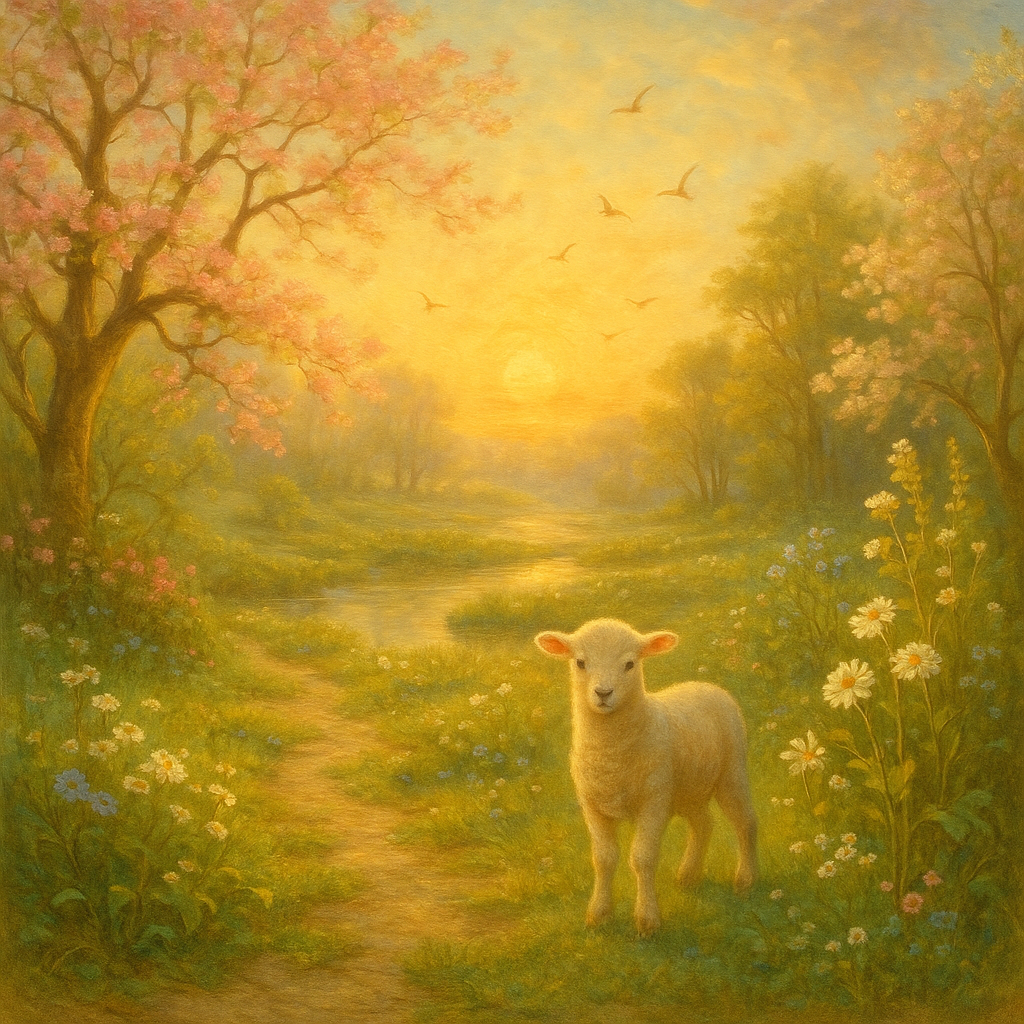
By the twenty-fifth of March, spring has settled gracefully upon the land. The first wildflowers open their faces to the sun, trees shimmer with new leaves, and the air carries both warmth and fragrance — the unmistakable scent of living renewal. Every step outdoors feels like walking through a dream of color and breath. It is the perfect day for The Path of Blossoms, a sacred walking meditation — an act of presence and reverence that invites us to walk through the living world as though we are moving through the body of the Goddess herself.
To the pagan soul, the Earth is not merely landscape but divinity incarnate — every bloom a blessing, every petal a heartbeat of the living cosmos. Walking consciously through this beauty becomes an act of prayer, a communion between feet and soil, breath and sky. The Path of Blossoms is the art of becoming fully aware of the life that unfolds beneath our steps, learning to move not through the world, but with it.
This day’s practice honors the spiritual power of the simple act of walking. In many traditions — from the druidic wanderers of the Celtic Isles to the monastic pilgrims of ancient Europe — walking was more than travel; it was devotion. To walk mindfully is to honor every part of the journey, not just the destination. As we walk among flowers, we learn again the sacred rhythm of life: blooming, breathing, fading, returning — the eternal pulse of nature mirrored in our own hearts.
To begin, find a natural place that calls to you: a garden, forest path, meadow, or even a quiet lane lined with trees. If you live in a city, a park or patch of wild growth will serve just as well. What matters is the intention — to walk in awareness, to listen to the Earth, and to feel her energy rising through the soles of your feet.
Before you begin, stand still at the entrance to your path. Take three slow breaths, each one deeper than the last. Feel the ground beneath you — solid, alive, humming with roots and water. Whisper softly:
“Mother Earth beneath my feet,
Guide my steps where hearts and blossoms meet.”
Then begin to walk slowly, in silence if possible. Move at a pace that allows you to see — truly see — the details around you: the curve of each leaf, the glint of sunlight on petals, the dance of a bee in a flower’s heart. Let your senses open fully. Smell the soil, the blossoms, the faint sweetness in the air. Feel the warmth of the sun on your skin and the caress of the wind through your hair.
Each step is a prayer. Each breath is an offering. With every movement, you enter deeper into harmony with the season’s song.
If your mind begins to wander — as minds do — gently bring your awareness back to the rhythm of your walking. You might match your breath to your steps: inhale — two steps; exhale — two steps. Or silently repeat a mantra with each pace, such as:
“I walk in beauty.”
or
“Each step is love.”
Over time, the distinction between you and the world will begin to blur. You may feel as though you are no longer walking upon the Earth, but within her — that you and the blossoms around you are breathing together, petals and lungs alike expanding in the same rhythm. This is the essence of the Path: union with the living whole.
If you find a flower that draws your attention, pause before it. Observe without plucking. Notice its color, its scent, its shape. In that moment, see it as a teacher. Every blossom knows how to open without fear, to reach for the light without arrogance, to surrender to the wind without despair. Each is a perfect model of acceptance and grace. Whisper to it:
“Teach me how to bloom as you do —
open, free, unafraid of time.”
Then move on, carrying that wisdom within your heart.
If the season allows, you may also collect fallen petals or leaves along your path — never from living plants, but from what the Earth has already released. Gather them with gratitude and place them in a small pouch or pocket. These will serve as symbols of your journey — reminders of what you’ve learned and the beauty you’ve witnessed. Later, they can be placed upon your altar or returned to the soil as an offering.
At the midpoint of your walk, stop for a few moments of reflection. Feel your heart beating, your lungs expanding, your body alive with movement and scent. Look around you — see how life surrounds you in infinite forms, each one distinct yet woven into the same tapestry. Speak quietly, to the land or to your own spirit:
“I am part of this blooming.
I am one with all that grows.”
This recognition — that we are not separate from nature’s flourishing, but expressions of it — is the true revelation of the Path of Blossoms. The same life that stirs within the sap of trees moves within our blood. The same rhythm that opens flowers opens our hearts. When we walk in awareness, we remember our place within this sacred design.
As you make your return journey, walk a little slower. Let each step become an act of gratitude. You might say softly with each footfall:
“Thank you, Earth. Thank you, life.”
If you are moved to sing or hum, let it happen naturally. The Earth loves the music of those who walk in reverence; the wind will carry it farther than you can imagine.
When you have completed your walk, pause once more and close with a simple blessing. Stand still, eyes closed, hands over your heart, and whisper:
“From root to blossom, from seed to soul,
I walk the path that makes me whole.”
Take the petals or leaves you’ve gathered and scatter them gently back into the grass, saying:
“As these petals return to Earth,
May gratitude renew the world’s birth.”
The Path of Blossoms is not confined to a single day. Once you have experienced it, every walk becomes a meditation, every garden a temple, every step a prayer. The practice teaches us to live in rhythm — to move through life as gently and attentively as we move through a field of flowers.
Spiritually, this day also symbolizes the journey of the soul through cycles of growth. Each step forward mirrors our unfolding awareness; each bloom we encounter reflects our inner potential. The world outside is our mirror, constantly reminding us that beauty and change are one and the same.
You may wish to record your reflections after your walk — not merely what you saw, but what you felt. What emotions bloomed within you? What thoughts dissolved? What new sense of peace or purpose emerged? The blossoms speak softly, but their wisdom lingers.
In time, you will find that this practice changes not only how you walk, but how you live. You will move through your days with greater gentleness, noticing small miracles others pass by — the way light filters through leaves, the murmur of wind, the kindness of a stranger’s smile. These are the hidden blossoms of the human path, equally sacred and equally worthy of reverence.
The Path of Blossoms reminds us that enlightenment is not a distant summit, but a way of walking. When we move with mindfulness, when we breathe with beauty, when we remember to thank the ground beneath us — then every path becomes holy. The Earth is blooming, and so are we. Each step, each breath, each heartbeat is part of that eternal flowering.
Responses