☀️ June 28 – Blessings of the Midsummer Moon — Lunar Reflection on Abundance and Emotional Harmony

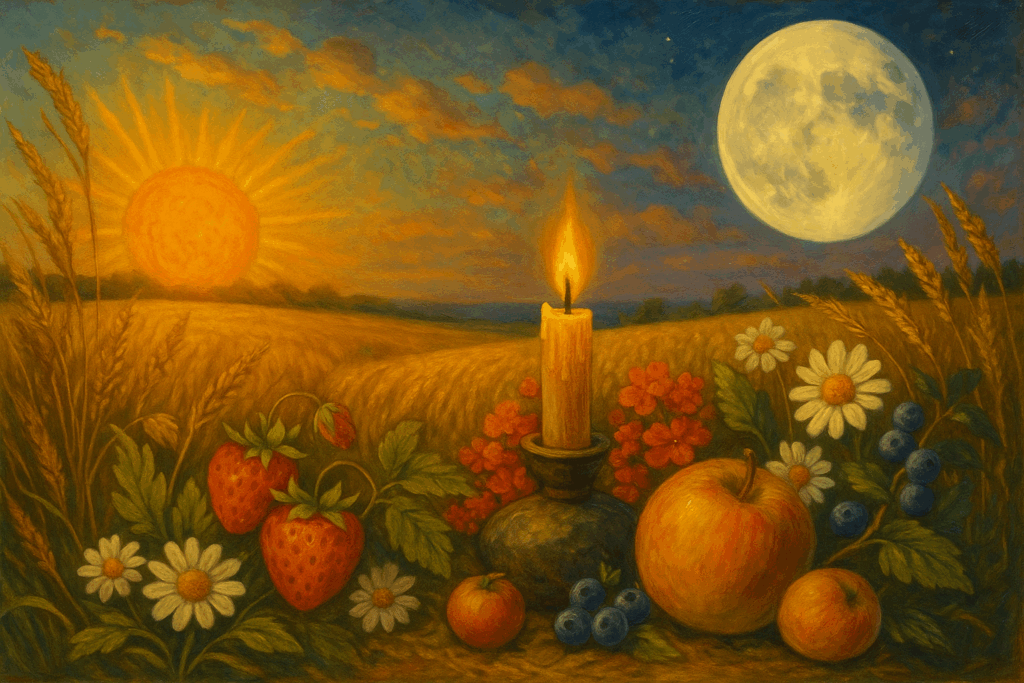
The twenty-eighth day of June glows silver and serene. The world that only a week ago blazed beneath the height of the sun now rests in a softer radiance — the light of the Midsummer Moon. This moon, round and luminous, rises over ripened fields and gardens heavy with bloom. It is the moon of abundance fulfilled and gratitude awakened, the moon that reflects the sun’s splendor through the lens of mystery and emotion. Where the solstice fire burned bright with outward joy, this lunar light turns our gaze inward, inviting calm, reflection, and balance. Tonight we receive rather than ignite. We listen rather than proclaim. It is a night of emotional harmony and sacred replenishment — a reminder that abundance without inner peace is incomplete.
In the pagan wheel, the Midsummer Moon is the counterpart to the solstice sun — the cooling breath that follows the fire’s song. It embodies the gentle half of power, the receptive and nurturing current that allows growth to become fruition. Just as the sun expands and radiates, the moon gathers and integrates. Her light does not compete with the sun’s brilliance; it softens it, reminding us that even at the height of life’s triumph, reflection must follow creation. This moon teaches the art of harvesting joy and emotion without exhaustion — to hold what we have created with tenderness, to love what is, rather than chase what might be.
As twilight falls, prepare for your Midsummer Moon Blessing. Choose a quiet place outdoors if possible, or near a window where the moonlight can touch your altar. The air tonight feels enchanted — heavy with fragrance, yet cool on the skin. You will need a silver or white candle, a bowl of water, and a small mirror or piece of polished stone to reflect the flame. Gather also flowers or herbs of lunar energy — jasmine, mugwort, white rose, or chamomile — and arrange them in a circle around your candle.
Before you begin, take a few slow breaths, letting the noise of the day dissolve into stillness. Whisper softly:
“Moon of midsummer, silver queen,
Mirror of light, calm and serene.
I welcome your peace, your sacred glow,
Teach me balance, help me know.”
Light the candle and gaze into its flame for a few moments. Then, slowly, turn your attention to the moon itself. Watch how her light shimmers on leaves, rooftops, or water — how it silvers every edge. This light is reflection made visible; it is illumination through gentleness. Breathe it in as though it were air, letting it flow into your chest, your heart, your mind. The moonlight carries both clarity and comfort, a perfect balm for the intensity of midsummer’s fire.
Now dip your fingers into the bowl of water and sprinkle a few drops upon your head, heart, and hands, saying:
“I am cooled by moonlight,
I am balanced by peace.
My heart flows with grace,
My spirit finds release.”
As the droplets touch you, imagine the water absorbing the moon’s light, soothing every part of your being that feels overextended. The Midsummer Moon restores the equilibrium that joy itself can sometimes disrupt — for even celebration, when constant, must yield to rest. This is the night to come back to center, to let emotions settle into clarity.
Take the mirror or stone in your hands and hold it so that it catches both the candle’s flame and the moon’s glow. Watch how the two lights mingle — gold and silver, solar and lunar, masculine and feminine, outward and inward. Together, they represent wholeness — the eternal marriage of energy and emotion, of power and reflection. Whisper:
“Light above and light below,
Through me your currents flow.
By sun and moon, by fire and sea,
In perfect balance, so mote it be.”
Place the mirror down and gaze into the water. Its surface will reflect both the moon and the candle, rippling softly. This is a sacred image — the harmony between motion and stillness, between the heavens and the heart. You may now perform a Lunar Gratitude Meditation, one of the oldest forms of midsummer devotion.
Think of what has blossomed in your life since the turning of spring — the projects completed, the relationships deepened, the insights gained. Let each one rise in your mind like a star reflected upon the water. Speak them aloud, softly, with reverence:
“For love that grows, for laughter shared, for lessons learned — I give thanks.”
After each statement, pause and let the gratitude sink in. The moon’s magic is strongest when paired with thankfulness; she magnifies whatever emotion we offer. By offering gratitude, we strengthen the current of abundance that sustains us.
If emotions arise — joy, sorrow, nostalgia — let them. The moon is the keeper of feelings, and her light invites expression. You may cry, you may smile, you may fall silent — all are forms of release. The Midsummer Moon teaches that emotions are not obstacles but rivers — when allowed to flow, they cleanse and renew.
To seal your ritual, hold your hands above the water once more and say:
“As the moon reflects the sun,
So I reflect the divine.
I hold abundance with peace,
And peace within abundance.”
You may choose to anoint yourself with a few drops of the moon-blessed water or pour it upon the earth as an offering. If you wish to keep it, store it in a small jar labeled Midsummer Moon Water, and use it in spells or baths for emotional balance, intuition, and serenity throughout the waning season.
After the ritual, spend time simply being beneath the moon. No words, no work — just presence. Feel her light upon your skin and know that you are seen, loved, and complete. The world needs both the sun’s courage and the moon’s compassion, both outward expression and inward reflection. You, as part of that cycle, embody both.
The ancients called this moon by many names: the Honey Moon, the Rose Moon, the Lovers’ Moon — each a reflection of its sweetness and abundance. Yet its deeper mystery is harmony — the delicate equilibrium that allows all things to thrive. It reminds us that the brightest light casts no shadow when softened by understanding.
When you are ready to close your observance, extinguish the candle and whisper:
“Moon of midsummer, my heart is clear.
Your light will guide me through the year.
As you wane, I carry your calm.
As you rise again, I’ll sing your psalm.”
Leave the flowers on your altar overnight to absorb her light, and in the morning, scatter them to the wind or into running water. The cycle of giving continues — beauty returned to beauty.
The Blessings of the Midsummer Moon remind us that after every peak comes reflection, after every song, a silence. This is not decline, but deepening — the fullness of life turning inward to nurture what is yet to come. Under her silver light, we remember that abundance is not only what we gather, but also the peace to enjoy it.
So rest tonight in her glow, heart open, spirit calm. You are illuminated by the same light that ripples upon every sea and shines within every soul. You are, like the moon herself, both reflection and radiance — complete, eternal, and whole.